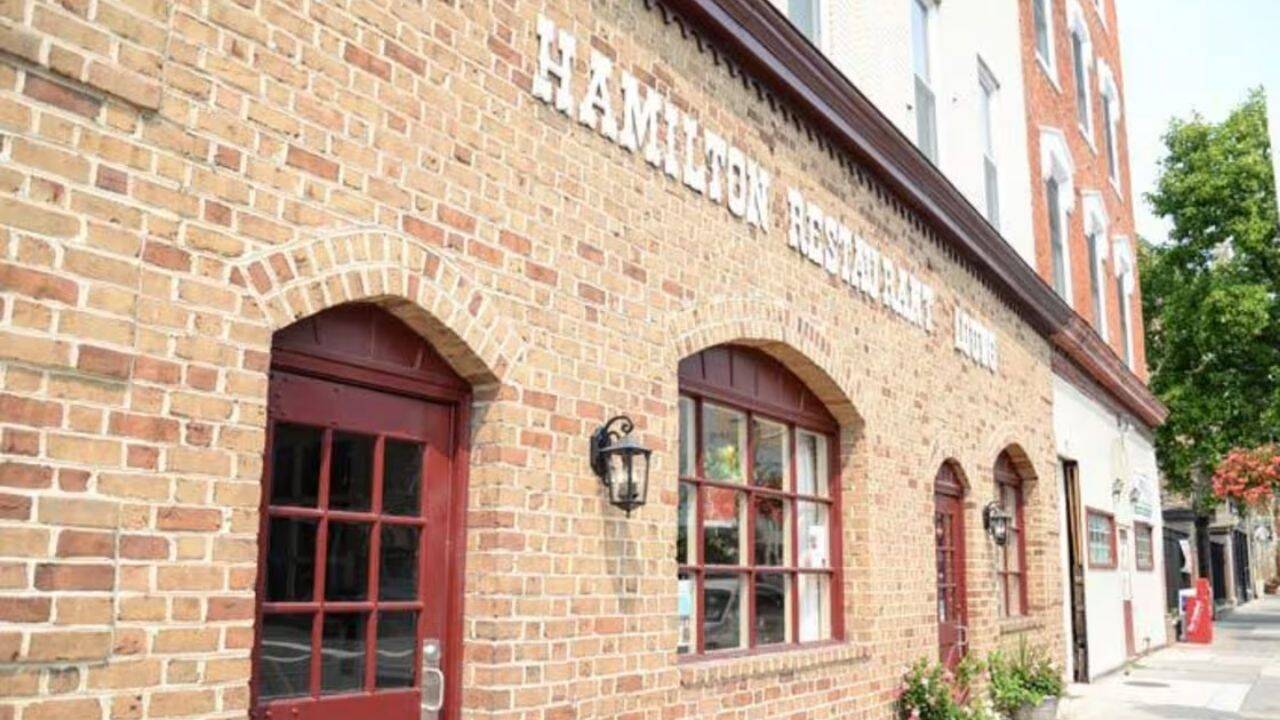
Thomas Mazias arrived in the United States in 1952 as a Greek war orphan, carrying nothing more than the linguistic confusion of an eleven-year-old dropped into central Pennsylvania. He did not speak English. He did not possess capital. Within weeks, he stood before a commercial sink at Hamilton’s Restaurant in Carlisle, scrubbing grease off heavy stoneware for wages that would barely register as statistical noise today. Decades later, that same orphan owned the historic establishment.
Media profiles love this arc. They package it as a modern fairy tale, smoothing out the jagged edges of twentieth-century immigration into an easily digestible parable about grit. But the sentimental narrative misses the mechanical reality of how small-town American hospitality actually survived for a century. The ascent from the dish pit to the deed is not a testament to magical thinking or accidental luck. It is a grueling masterclass in structural endurance, cash-flow survival, and a very specific type of generational sacrifice that modern business schools pretend does not exist.
The Economics of the Sink
The romanticized view of restaurant kitchen culture ignores the physical punishment required to enter it at eleven years old. In mid-century America, kitchens operated as informal apprenticeship systems built on exploitation and survival. Mazias did not enter a professional culinary academy. He entered a crucible where manual labor was cheap, regulatory oversight was loose, and the primary currency was sheer physical exhaustion.
When an eleven-year-old child stands on a wooden crate to reach a commercial sink, the margin for error is zero. You wash the plates, or you are replaced by the next wave of arrivals. This dynamic formed the bedrock of Greek-American immigrant entrepreneurship throughout the mid-1900s. Networks of compatriots functioned as informal labor exchanges. A cousin in Chicago wrote to a village near Sparta; a teenager crossed the Atlantic; a basement kitchen absorbed them.
The economic engine of places like Hamilton's relied entirely on this internalized labor cost. Owners could keep operating margins viable because the workforce was composed of family members or future partners who accepted below-market compensation in exchange for room, board, and an eventual stake in the operation.
The Myth of the Overnight Acquisition
People assume that working hard for forty years automatically grants you the keys to the kingdom. It does not. The transition from employee to owner requires a shift in mindset that defeats most laborers. Saving enough capital from a dishwasher's salary to purchase commercial real estate and a going concern is mathematically improbable without systemic changes in lifestyle.
Consider the mechanics of acquisition in a small Pennsylvania borough. Historic downtown properties do not change hands cheaply, even when the business inside them serves simple comfort food like the local staple Hot-Chee Dog. Mazias survived because he mastered every square inch of the operation. He knew how long a side of beef lasted, how much utility bills fluctuated during harsh winters, and which local suppliers extended credit when cash reserves dipped to zero.
When the original owners wanted out, they did not look for outside venture capital. They looked for the person who cared about the continuity of the brand as much as they did. Ownership was transferred because Mazias represented zero operational risk. He was already running the machine.
Continuity Versus Modernization
Today, Hamilton’s Restaurant stands as a relic of a vanishing American commercial ecosystem. In an era dominated by delivery apps, corporate franchise consolidation, and algorithmic menu optimization, the restaurant’s survival strategy has been absolute stubbornness.
Mazias famously encapsulated this philosophy with a simple declaration: "We don't change."
In business literature, refusing to change is treated as a fatal flaw. Consultants preach digital transformation, dynamic pricing, and omnichannel marketing. Yet Hamilton’s survived for over a century by doing the exact opposite. For generations, patrons walked through the doors knowing the interior layout, the menu items, and the face behind the counter would remain identical to their childhood memories.
This creates a profound tension when the original generation finally steps back. Recently, management discussions turned toward introducing card payment systems to a business that had operated strictly on cash for decades. Introducing a point-of-sale terminal sounds trivial to a tech startup, but for a generational institution, altering transaction friction risks alienating a core demographic of loyalists who view the cash-only policy as a badge of authenticity.
The Human Cost of the Legacy
We must look past the nostalgia to evaluate the true price of this business model. The immigrant diner model extracts an immense toll on family life. Working fourteen-hour days, six or seven days a week, leaves little room for anything outside the perimeter of the dining room.
The children and nephews who inherit these businesses face a difficult calculus. They must decide whether to honor a祖传 legacy by chaining themselves to a low-margin, high-labor commercial kitchen or to modernize the asset for a market that demands scalability and passive returns.
When Mazias sat down with college students late in his life to recount his journey, he spoke of Carlisle not as a geographic location, but as a network of personal debts repaid through labor and consistency. He did not build a scalable franchise empire. He anchored himself to a single street corner and refused to move.
The story of the Greek orphan who washed dishes and bought the restaurant is remarkable not because it proves the American dream is an easy ladder to climb, but because it highlights how few people are willing to pay the actual toll required to keep history open for lunch.