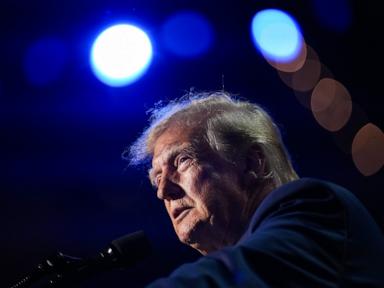
President Donald Trump’s proposal to issue a $5,000 "Trump Dividend" check to every adult U.S. citizen, conditioned upon Republicans retaining control of both the House and the Senate in the midterm elections, introduces an unprecedented mix of populist electoral strategy and severe fiscal hurdles. Delivered during a keynote address at the Republican National Committee’s midterm convention in Dallas, the pledge attempts to tie the immediate personal financial interests of roughly 245 million adult Americans directly to the legislative survival of the GOP.
Veteran observers of Washington politics recognize this maneuver as a high-stakes evolution of past economic stimulus models. Yet, beneath the political theater lies a labyrinth of budgetary constraints, constitutional limits, and economic risks that separate campaign rhetoric from governance.
The Trillion-Dollar Question
Writing checks of $5,000 to every adult citizen is not a simple administrative task. Simple arithmetic places the gross cost of such an endeavor north of $1.2 trillion. To put that figure into perspective, it eclipses the annual discretionary budget of several major federal departments combined.
The administration has previously pointed toward aggressive import tariffs or federal spending reductions as potential funding mechanisms. However, independent fiscal watchdogs point out a fundamental contradiction. Tariff revenues currently projected by analysts hover around $300 billion annually. Dedicating that entire stream exclusively to one-off dividend payouts would strip away funds intended for deficit reduction, leaving the broader national debt—already scaling past $38 trillion—entirely unaddressed.
Relying on spending cuts faces an equally steep uphill climb. Appropriations are constitutionally bound to originate in the House of Representatives. Even if Republicans maintain their legislative majorities, congressional budgeting requires navigating internal party fractures between fiscal hawks who balk at deficit expansion and populists who favor direct-to-citizen distributions.
Precedent, Pandemic Shocks, and Inflation
Broad-based government payouts carry a distinct ghost from the recent past. The economic impact payments distributed during 2020 and 2021 taught economists a harsh lesson about velocity and liquidity. Pumping trillions of liquid dollars into consumer hands during supply-constrained periods acted as an accelerant for the generational inflation spike that followed.
While proponents argue that a Trump Dividend would reward citizens for national economic growth, mainstream economists warn of the second-order effects. An abrupt injection of $1.2 trillion into consumer spending risks reigniting price pressures across housing, energy, and retail goods. The trade-off is stark. Short-term consumer relief risks triggering long-term purchasing power erosion through higher consumer prices.
Furthermore, pandemic-era checks required explicit statutory authorization from Congress. A presidential decree alone cannot disburse Treasury funds. Without a cooperative, tightly disciplined legislative branch willing to draft, vote on, and pass specific enabling legislation, the dividend remains an aspiration rather than an appropriation.
The Midterm Calculus
Why introduce such a massive fiscal promise at this exact juncture? The answer is rooted in historical electoral patterns. Midterm elections traditionally punish the party occupying the White House. Facing fierce political headwinds, sliding approval margins in competitive districts, and aggressive Democratic mobilization, the GOP needed an unmistakable rallying cry.
By framing the midterm contest as a direct referendum on a $5,000 payout, the strategy attempts to bypass abstract policy debates over tax codes or foreign policy. It translates complex legislative control into a transactional proposition. Vote to keep the House and Senate, the pitch goes, and tangible wealth arrives directly in your bank account.
Yet this approach carries latent risks for candidates in swing districts. Moderate suburban voters often prioritize fiscal restraint and institutional stability over large-scale fiscal distribution. For every populist base voter energized by the prospect of a windfall check, a fiscal conservative may grow wary of expanding national liabilities.
The Road Ahead
The viability of the Trump Dividend depends entirely on an unlikely alignment of political dominance and economic maneuvering. Courts continue to evaluate the legality of sweeping executive tariff structures, and Capitol Hill remains fiercely divided over spending priorities. Transforming a convention promise into cleared checks requires overcoming legal challenges, congressional resistance, and macroeconomic warnings.
The proposal lays bare the modern intersection of electoral politics and public finance, where massive fiscal tools are deployed as instruments of voter mobilization. Whether this gamble alters the trajectory of the midterms or collides with the unyielding reality of federal math remains to be tested at the ballot box.