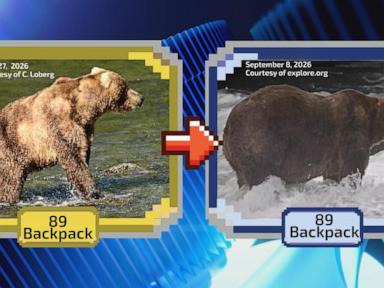
Every autumn, millions of internet users log on to participate in a bracket-style voting tournament centered entirely on how obese wild animals can get. Fat Bear Week, hosted annually by Katmai National Park and Preserve alongside explore.org, pits heavyweight brown bears against one another in head-to-head online matchups. Contestants like the legendary 747 or past champions like Grazer are evaluated by the public based on a single, highly visible metric: who managed to pack on the most colossal layer of blubber before winter.
The phenomenon began in 2014 as a modest, lighthearted experiment by a park ranger scrolling through static-heavy web camera archives, comparing summer lean silhouettes with autumn behemoths. Today, it commands global attention, generating hundreds of thousands of votes, intense social media campaigns, and deep parasocial attachments from observers thousands of miles away from the Alaskan wilderness. Yet beneath the viral memes, user brackets, and affectionate nicknames lies a rigorous, high-stakes biological reality that rarely makes it into casual social media feeds.
To understand Fat Bear Week, one must first confront the sheer biological desperation of hyperphagia. As summer transitions into late autumn along Katmai’s Brooks River, brown bears enter a physiological state driven by an unchecked hormonal switch. Leptin, the hormone responsible for signaling satiety to the mammalian brain, is effectively suppressed. The result is an endless, relentless appetite. During peak months, these animals consume massive quantities of sockeye salmon, sometimes exceeding one hundred pounds of food per day.
This feeding frenzy is not merely about indulgence; it is an absolute prerequisite for survival. When these bears retreat to their dens for a six-month winter hibernation, they enter a state of metabolic suspension. They will not eat, drink, urinate, or defecate for half a year. All bodily maintenance relies entirely on the caloric reserves accumulated during the frantic months leading up to the freeze. A bear that fails to build sufficient fat stores simply does not wake up.
The mechanics of this weight gain reveal a ruthless efficiency. At the height of the salmon run, when millions of fish choke the river, dominant bears practice a selective feeding strategy known as high-grading. Rather than consuming an entire fish, an experienced brown bear will harvest only the most calorie-dense portions—the skin, brain, and nutrient-rich roe—leaving the rest to scavengers and gulls. This behavior maximizes caloric intake per hour of effort, allowing dominant males and experienced mothers to stack on hundreds of pounds of fat with mathematical precision.
However, the river is deeply stratified by age, sex, and social dominance. The tournament brackets present these bears as equal contenders, but the reality of the Brooks River ecosystem is defined by strict hierarchies. Adult males, weighing upwards of a thousand pounds, command the prime fishing real estate at the lip of Brooks Falls. Subadults—young bears navigating their first years of independence—are frequently displaced to the margins, forced to expend precious energy hunting in less optimal locations or dodging aggressive adults.
Mother bears face an entirely different calculus. Raising spring cubs or yearlings requires immense energetic investments while managing constant threats from large adult males, who view small cubs as direct hazards. A mother must split her focus between foraging for herself and defending her offspring, making her seasonal weight gain a masterclass in risk management. When a mother bear like 901 or 128 secures a victory in the brackets, that digital crown reflects an extraordinary navigation of maternal stress, resource scarcity, and sheer physical endurance.
The broader appeal of the competition rests on this strange intersection between cuteness and raw wilderness. Observers project human narratives onto wild animals, turning territorial disputes into soap operas and weight milestones into lifestyle achievements. Yet conservation scientists view the public obsession as a rare educational victory. By transforming ursine biology into a spectator sport, the National Park Service and conservation groups successfully educate millions of people on the delicate dependencies of an intact ecosystem.
A fat bear is living proof of a functioning landscape. Katmai and the surrounding Bristol Bay watershed support the largest, healthiest runs of wild sockeye salmon left on the planet. Without clean water, protected spawning grounds, and unblocked migratory routes, the fish populations would collapse. Without the salmon, the bears would vanish. Every plump, oversized contender in the autumn bracket is a direct proxy for the health of a complex, interconnected habitat that remains remarkably untouched by modern industrial fragmentation.
This ecological stability, however, is perpetually vulnerable. The same wilderness that hosts these record-breaking salmon runs and dense brown bear populations sits adjacent to ongoing economic pressures, policy shifts, and climate-driven changes in marine and riverine temperatures. Variations in water temperature and shifting weather patterns directly impact salmon migration timing and survival rates. A poor salmon season translates directly to lean bears, lower cub survival rates, and increased mortality during the unforgiving winter months.
When voters cast their ballots for their favorite round-bellied champion online, they are participating in a ritual that obscures these underlying vulnerabilities. The digital interface turns a wild survival contest into a harmless game, masking the razor-thin margins between a thriving population and an ecological crisis. The bears do not know they are part of a global internet phenomenon. They remain entirely focused on the cold imperative of the next meal, indifferent to the brackets, the social media campaigns, and the human fascination with their immense size.
As the votes are tallied, the tournament concludes, and the winning bear is announced, the digital crowd moves on to the next viral cycle. Back on the Brooks River, the temperature drops, the water turns frigid, and the heavy-bodied champions begin their slow, deliberate trudge toward the dens. The bracket is archived, but the ecological pressures remain, quietly shaping the future of the wild landscape long after the live cameras go dark.