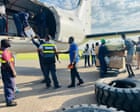
BAE Systems is currently facing a £187 million legal onslaught from EnComm Aviation after the defense giant abruptly terminated technical support for the Advanced Turbo-Prop (ATP) aircraft. This decision effectively grounded a fleet responsible for hauling thousands of tonnes of food aid to the most desperate corners of East Africa. While BAE navigates a year of staggering £3 billion profits fueled by global conflict, the humanitarian fallout of its strategic pivot has left millions in Somalia and South Sudan without a reliable lifeline. The move demonstrates a cold reality in the aerospace sector: when old platforms no longer serve the balance sheet, they are discarded regardless of their mission.
The Death of a Workhorse
The BAE ATP was never a glamorous jet. It was a rugged, twin-engine turboprop designed for the short runways and unpaved strips of regional commerce. However, its high-wing design and 8.2-tonne payload made it the perfect tool for humanitarian logistics. In places like the Democratic Republic of Congo and Somalia, where infrastructure is either non-existent or obliterated by war, the ATP was one of the few airframes capable of delivering bulk supplies to remote outposts.
Last year, BAE Systems voluntarily surrendered the type certificate for the ATP to the UK Civil Aviation Authority. This was a bureaucratic execution. Without a type certificate, an aircraft has no legal airworthiness; it cannot fly, it cannot be insured, and it cannot be sold. By surrendering this document, BAE didn’t just stop making parts; it made the existing global fleet illegal to operate overnight.
Broken Promises in Nairobi
EnComm Aviation, based in Nairobi, claims this move was a betrayal of specific, long-term assurances. The firm’s legal team at White & Case has produced correspondence suggesting BAE leadership promised continued support for at least five more years. Instead, the support was cut with zero formal consultation.
For EnComm, the damage is total. They held lucrative, long-term contracts with the United Nations World Food Programme (WFP) to service 12 destinations in Somalia. These weren't just business deals; they were the logistical backbone for a region where five million people face acute hunger. When the certificate was pulled, those contracts vanished. EnComm is now seeking damages for "negligent misrepresentation," arguing that BAE’s pivot has rendered their entire 12-aircraft fleet worthless scrap metal.
A Strategy of Pure Defense
The timing of this withdrawal is impossible to ignore. BAE Systems is currently riding a wave of record-breaking financial success. The war in Ukraine and the conflict in Gaza have triggered a massive surge in NATO defense spending, pushing BAE’s share price to historic highs. From a strictly corporate perspective, maintaining the technical infrastructure, engineering expertise, and supply chain for a handful of aging turboprops is a distraction.
Engineers who once oversaw the safety of civilian regional fleets are being redeployed to higher-margin projects like the Tempest next-generation fighter or the Aukus-class submarines. In the eyes of the board, the liability and overhead of supporting "legacy" civilian aircraft do not align with a future defined by high-tech munitions and stealth systems.
The Humanitarian Vacuum
The immediate consequence of this corporate streamlining is a gap in the global aid supply chain. The WFP estimates that a single tonne of food can sustain roughly 1,600 people for a day. EnComm’s fleet moved nearly 19,000 tonnes between 2023 and late 2025. You do the math on how many meals have been removed from the table because of a paperwork filing in London.
While BAE maintains that the number of operational ATPs was too low to justify the certificate, the reality on the ground in East Africa tells a different story. To a defense contractor, a fleet of 12 planes is a rounding error. To a famine-stricken province in South Sudan, it is the difference between survival and catastrophe.
The Legal Quagmire
BAE’s defense will likely hinge on the "voluntary" nature of the certificate surrender and the contractual fine print regarding the end of a product's life cycle. They have remained silent on the litigation, a standard posture for a firm that views legal battles as just another line item in the annual report.
But this case touches on a deeper tension in the industry. As aerospace giants consolidate and chase massive government defense contracts, they are increasingly shedding the "nuisance" of civilian support. The EnComm lawsuit isn't just about lost revenue; it's a challenge to the idea that a manufacturer can unilaterally "kill" a machine that still has years of life left, especially when that machine is the only thing keeping a population fed.
The ATP is now a ghost. The planes sit on the tarmac in Kenya, fully functional but legally forbidden from the sky. BAE has moved on to the more profitable business of modern warfare, leaving the humanitarian sector to figure out how to fill the hole left by its departure.
The message from the London boardroom is clear. If your mission doesn't fit the new defense-heavy portfolio, you're on your own.