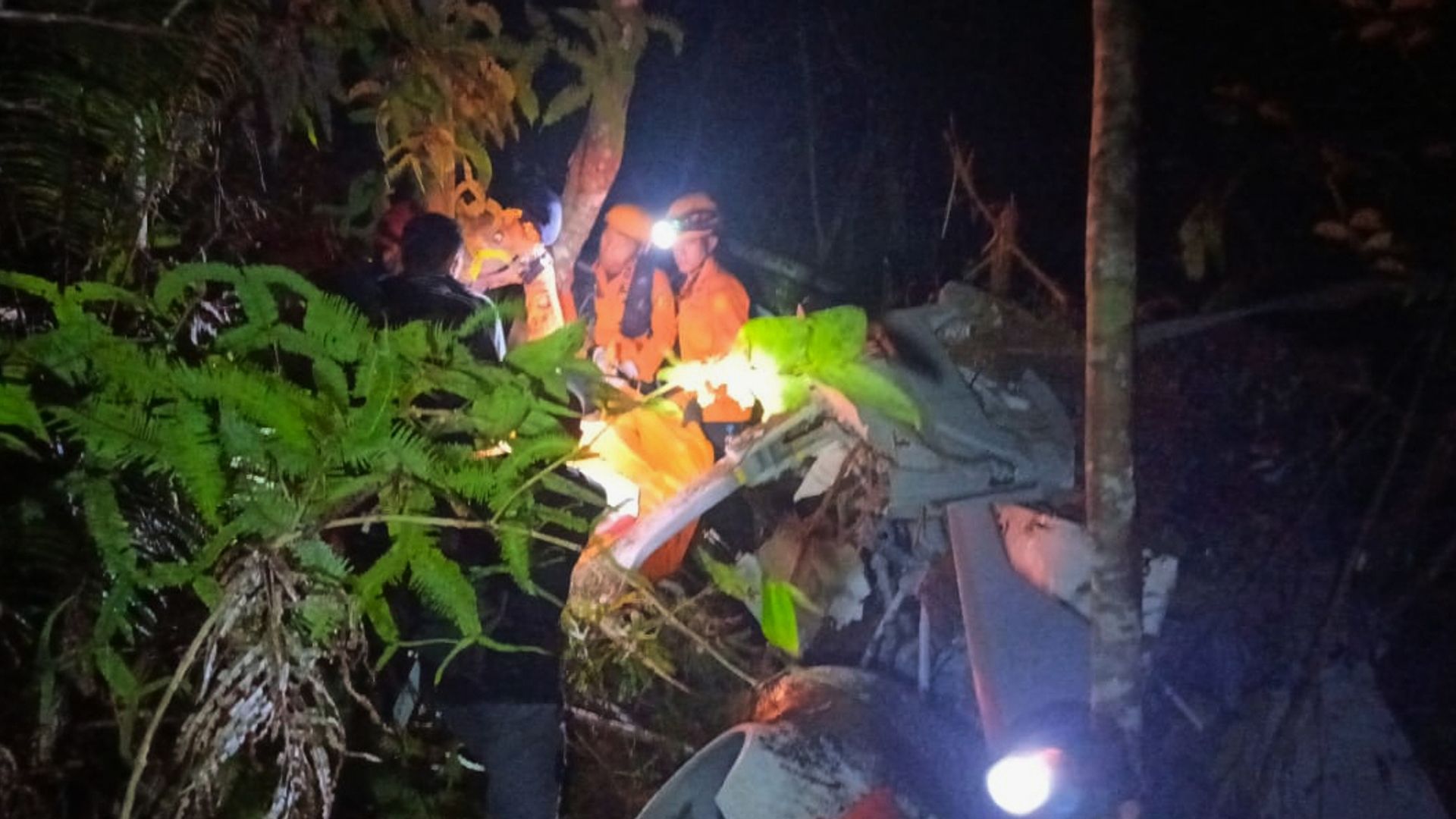
The recent tragedy involving the loss of eight lives in a helicopter crash serves as a grim reminder of the thin margin for error in vertical flight. Initial reports often focus on the immediate tragedy—the names of the lost and the wreckage on the ground—but the real story lies in the systemic failures that allow these incidents to repeat. Aviation safety is not a matter of luck. It is a rigorous discipline of engineering, maintenance, and pilot decision-making. When eight people do not return home, it is almost never because of a single isolated "accident." It is the result of a chain of failures that likely began months or years before the rotors stopped turning.
Investigators are currently combing through the debris, but veteran analysts recognize the familiar patterns. Most civil helicopter crashes of this magnitude stem from one of three areas: Controlled Flight Into Terrain (CFIT), mechanical failure of critical components, or Spatial Disorientation. To understand why this keeps happening, we have to look past the surface-level reporting and examine the hardware, the regulations, and the economic pressures that define modern rotorcraft operations.
The Invisible Killer in the Cockpit
Spatial disorientation remains the most lethal threat to helicopter pilots and their passengers. It happens when a pilot loses their visual reference to the horizon, often due to sudden fog, heavy rain, or "flat light" conditions in snowy terrain. The inner ear begins to send false signals to the brain. The pilot feels like they are flying level when they are actually in a steep, descending bank. Without high-end cockpit instrumentation to override these physical sensations, the result is inevitable.
Low-cost operators often fly older airframes that lack Synthetic Vision Systems (SVS). These systems provide a computer-generated 3D image of the surrounding terrain on the cockpit display, allowing a pilot to "see" through clouds or darkness. While the technology exists to prevent these deaths, the cost of retrofitting older fleets is high. This creates a two-tiered safety environment where your survival depends heavily on the equipment budget of the operator you chose.
The Engineering Breaking Point
Helicopters are inherently more complex than fixed-wing aircraft. They are, in the words of many mechanics, a collection of thousands of parts flying in close formation around an oil leak. Unlike an airplane that can glide if an engine fails, a helicopter relies on a complex transmission and a rotor head that is under immense centrifugal stress.
The Jesus Nut and Critical Failure Points
In the industry, the main rotor mast nut is often called the "Jesus nut" because its failure leaves the pilot with nothing to do but pray. While modern engineering has made total structural failure rare, the maintenance of the transmission and gearboxes is non-negotiable.
If investigators find evidence of "metal-to-metal" contact or thermal fatigue in the wreckage, it points directly to a maintenance oversight. We have seen a trend where supply chain delays for specialized aerospace parts lead operators to extend the service life of components just a few hours beyond their recommended limits. In a high-vibration environment, those few extra hours can be the difference between a routine flight and a catastrophic breakup in mid-air.
The Economic Pressure to Fly
Aviation safety culture often clashes with the bottom line. For a charter company or a transport service, a grounded helicopter is a liability that generates zero revenue while consuming massive overhead. There is an unspoken pressure on pilots to complete the mission, known as "get-there-itis."
When weather conditions are marginal, the decision to fly often falls on a single individual who knows that a cancellation might frustrate a high-paying client or a demanding boss. This human element is the hardest part of the safety equation to solve. Even with the best technology, a pilot who pushes into deteriorating weather without an instrument rating or a properly equipped aircraft is courting disaster.
The industry needs to move toward a model where flight risk assessment is automated and detached from the pilot’s immediate career pressures. Some top-tier firms now use third-party flight coordinators who have the final "no-go" authority, effectively taking the weight of the decision off the pilot's shoulders.
Why Mandatory Black Boxes are Overdue
One of the most frustrating aspects of investigating a crash that claims eight lives is the lack of data. While large commercial airliners are required to carry sophisticated Flight Data Recorders (FDR) and Cockpit Voice Recorders (CVR), many light and medium helicopters are not. Investigators are left to piece together the final moments from bent metal and scorched earth.
The technology for "lightweight" data recorders has been available for over a decade. These devices can capture GPS location, altitude, pitch, roll, and engine parameters for a fraction of the cost of traditional black boxes. Yet, regulatory bodies have been slow to mandate them for all commercial rotorcraft operations. Without this data, we cannot fully understand the "why" behind the crash, which means we cannot prevent the next one. We are essentially guessing at the cause, which is an insult to the memory of those who died.
The Myth of the Pilot Error Label
"Pilot error" is a convenient phrase used by insurance companies and manufacturers to close a file. It shifts the blame onto a deceased individual who cannot defend their actions. As an investigative journalist, I see this as a red flag. If a pilot makes a mistake, we must ask why the system allowed that mistake to be fatal.
- Was the cockpit layout confusing?
- Was the pilot fatigued from a punishing schedule?
- Did a warning light fail to trigger?
- Was the training program insufficient for the specific terrain?
Safety is a "defense in depth" strategy. There should be five or six layers of protection between a human mistake and a crash. When all those layers fail simultaneously, the problem is organizational, not just individual.
Survival and the Crashworthy Fuel System
In many of these high-fatality incidents, the initial impact is survivable. The tragedy occurs in the seconds following the crash when fuel tanks rupture and the wreckage is consumed by fire. This is an entirely preventable cause of death.
Crash-resistant fuel systems (CRFS) use reinforced bladders and breakaway valves to prevent fuel from spraying everywhere during a hard landing. While the FAA has tightened rules for newly manufactured helicopters, thousands of older models are still flying without these upgrades. It is a staggering reality that a passenger can survive a 30-G impact only to succumb to a fire that could have been contained by a piece of reinforced rubber.
The push for retrofitting these systems has been met with significant pushback from operators citing "prohibitive costs." But when we calculate the cost of eight lives, the legal settlements, and the loss of the airframe itself, the "prohibitive cost" argument falls apart. It is a failure of will, not a failure of technology.
Analyzing the Impact Site
The geometry of the wreckage tells a story. A concentrated debris field suggests a high-speed vertical impact, often associated with a loss of rotor RPM or a stall. A long, linear debris field usually indicates that the aircraft was moving forward at high speed when it hit an obstacle, typical of CFIT during low visibility.
In the case of this eight-person loss, the location of the wreckage—whether it was on the intended flight path or miles off-course—will reveal if the pilot was attempting an emergency landing or if they were completely lost. If the aircraft was off-course, the investigation must pivot to the navigation equipment and the pilot's situational awareness.
The Future of Rotorcraft Automation
We are entering an era where Fly-By-Wire (FBW) technology can take over in an emergency. In a fixed-wing jet, the computer won't let the pilot stall the plane. We need the same "envelope protection" in helicopters. If a pilot tries to make a maneuver that would cause a "vortex ring state"—a dangerous condition where the helicopter sinks into its own downwash—the onboard computer should intervene.
This technology is currently standard on multi-million dollar military and heavy offshore transport helicopters, but it is absent from the workhorse fleet that handles most regional charters. The democratization of these safety features is the only way to significantly move the needle on fatality statistics.
Immediate Action for the Industry
The families of the eight victims deserve more than a "thoughts and prayers" press release. They deserve a commitment to transparency. The industry must stop fighting the mandate for data recorders and crash-resistant fuel systems.
Operators must also implement mandatory "Safety Management Systems" (SMS) that allow pilots to report safety concerns without fear of losing their jobs. A culture of silence is a culture of death. If a mechanic sees a hairline crack in a rotor pitch link and feels pressured to "wait until the next inspection," that is where the crash begins.
The focus now turns to the NTSB and similar global bodies. Their report will likely take 12 to 18 months to finalize. In that time, hundreds of thousands of flights will take place using the same equipment and the same flawed systems that led to this tragedy. Waiting for a formal report before making changes is a luxury the industry can no longer afford.
Fix the fuel bladders. Install the data recorders. Give the pilots the 3D vision they need to see the ground. Anything less is just waiting for the next headline.
Stop treating safety as an optional upgrade and start treating it as the foundation of the flight. Only then will the number of dead in these reports finally hit zero.
Check the maintenance logs of every aircraft in your fleet today and look for the deferred items that everyone is ignoring.