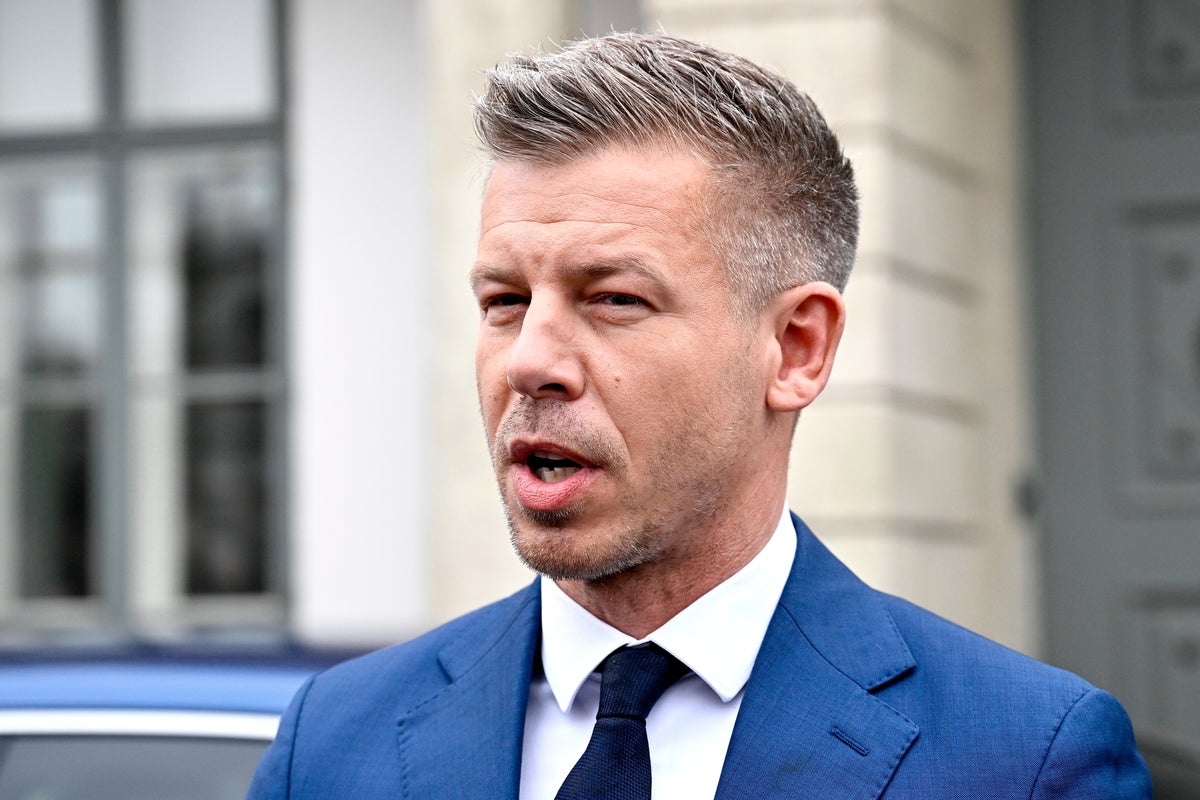
Peter Magyar has won the mandate to lead Hungary, but he has inherited a hollowed-out carcass of a state. While the streets of Budapest were filled with the euphoria of Viktor Orban’s first electoral defeat in sixteen years, the reality in the marble corridors of power is far more grim. Magyar’s Tisza Party secured a supermajority on April 12, 2026, by promising a swift return to European norms and the immediate release of billions in frozen EU funds. However, the mechanism for that recovery is not a simple light switch.
Magyar’s primary challenge is not just political opposition; it is the fact that the "System of National Cooperation" (NER) was designed to be impossible to unplug without crashing the entire country. Billions of euros in Cohesion and Recovery funds remain locked in Brussels, tied to rule-of-law milestones that require the total dismantling of the patronage networks Magyar once belonged to. To get the cash, he must destroy the very machinery of state control that his predecessors spent a decade perfecting.
The Financial Trap of the Deep State
For years, the Orban administration redirected public wealth into private foundations and corporations controlled by a tight circle of loyalists. This was not just corruption. It was a strategy for survival after a loss. Even with Magyar in the Prime Minister’s office, the boards of universities, cultural institutions, and energy giants are packed with Fidesz appointees who hold long-term contracts and constitutional protections.
Magyar has pledged to join the European Public Prosecutor’s Office (EPPO) within his first hundred days. This move is designed to signal to the European Commission that the era of skimming is over. But joining the EPPO is a double-edged sword. If the investigation into past contracts is too thorough, it risks paralyzing the current economy, which is heavily reliant on these same NER-linked firms for basic infrastructure and services. If it is too light, Brussels will keep the coffers shut.
The numbers are staggering. Hungary has roughly €20 billion in various EU funds currently suspended. Without this capital, the country cannot address the "Bring Your Own Toilet Paper" (BYOTP) crisis in hospitals or the crumbling education system that drove voters to the polls.
Negotiating with a Wounded Brussels
The European Commission is wary. They have been burned by "reformist" rhetoric before. In Brussels, the sentiment is one of "principled but pragmatic" caution. The Commission is currently drafting a phased conditionality plan for Magyar.
Under this framework, money will not be released in a single lump sum. Instead, it will be meted out in increments as specific, verifiable milestones are met:
- Judicial Independence: Restoring the powers of the National Judicial Council to oversee court appointments.
- Media Pluralism: Dismantling the Kesma media conglomerate that controls over 500 outlets.
- Public Procurement: Introducing transparent bidding processes that prevent "one-bidder" auctions.
Magyar’s first three foreign visits—Warsaw, Vienna, and Brussels—are intended to prove he is a "sovereign conservative" rather than a disruptive populist. He is walking a razor-thin line. He must satisfy the EU’s demand for liberal democratic standards while maintaining his image at home as a strong, nationalistic leader who won't be bullied by "Eurocrats."
The Ghost of Orbanism
Viktor Orban is not going into quiet retirement. As he conceded defeat, he signaled a shift to "internal resistance." With Fidesz still holding significant influence over the constitutional court and local municipalities, Magyar faces a legislative insurgency.
The new Prime Minister has proposed a two-term limit for the office of PM, a move specifically intended to prevent an Orban comeback. But the irony is thick. To pass such fundamental changes and clean out the deep state, Magyar may need to use some of the same heavy-handed executive powers he criticized during the campaign.
The economic pressure is the real ticking clock. Inflation and years of mismanagement have left the Hungarian forint volatile. Magyar has signaled a potential openness to Eurozone membership, a radical departure from the previous "economic sovereignty" mantra. This is a play for long-term stability, but it offers no relief for the immediate fiscal hole.
The Geopolitical Pivot
The most immediate shift is felt in the war in Ukraine. Orban’s "peace mission" rhetoric and his obstruction of EU military aid are gone. Magyar has labeled Ukraine the victim of Russian aggression, yet he remains a pragmatist. He has already stated that Hungary "cannot change geography" regarding energy dependence on Russia.
He opposes fast-track EU accession for Ukraine, citing the need to protect the rights of the Hungarian minority in Transcarpathia. This is a calculated move to keep his conservative base from defecting back to Fidesz. He is offering "Orbanism with a human face"—the same national interests, but pursued through diplomacy and compromise rather than vetoes and tantrums.
The true test of Magyar’s rule will not be the first hundred days of speeches and symbolic visits. It will be the moment he has to choose between firing a Fidesz-appointed judge and receiving the next €2 billion from Brussels. One path leads to a potential constitutional crisis; the other leads to financial collapse.
Magyar won the homeland back, but he hasn't yet figured out how to pay the rent.