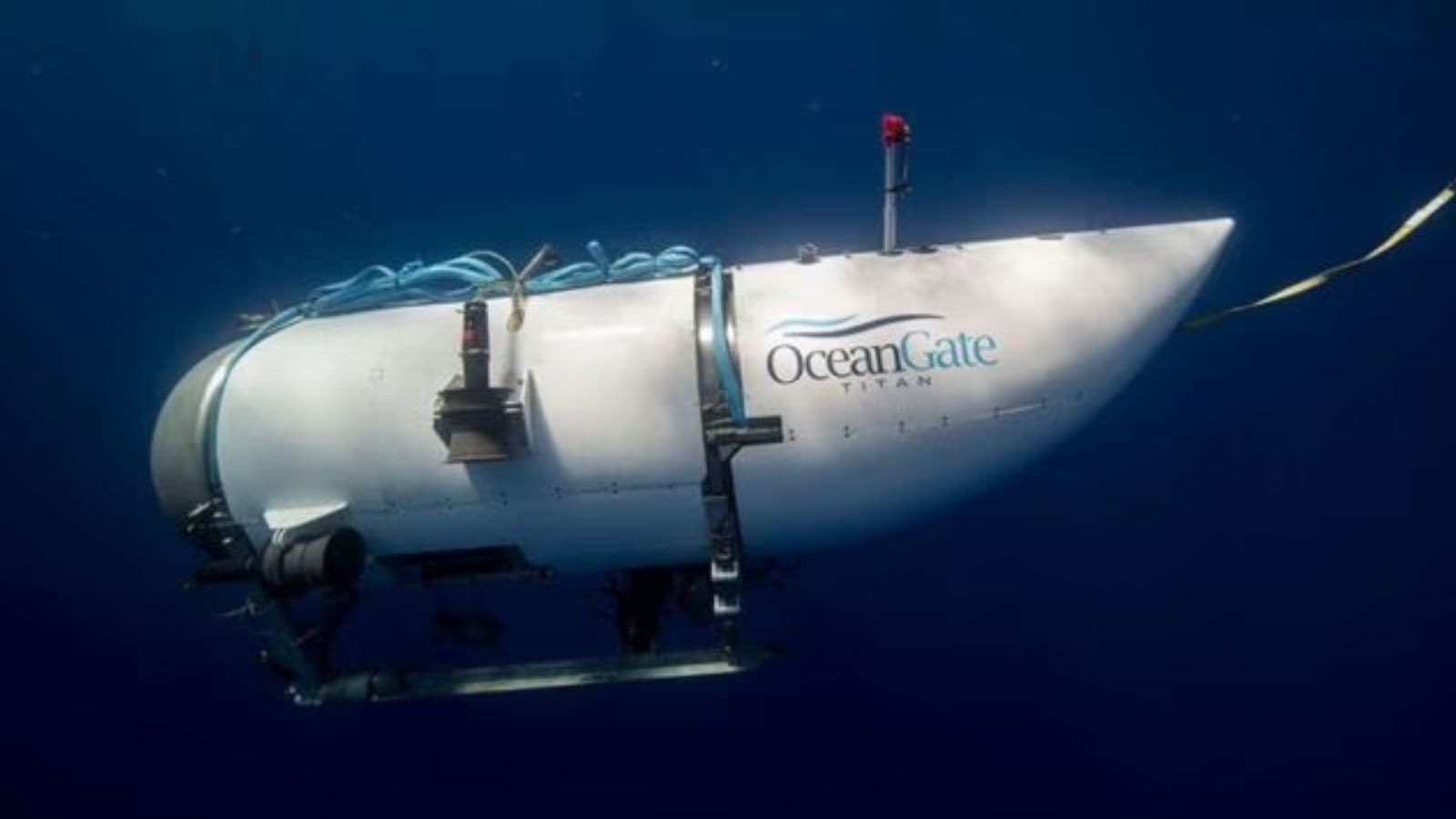
Nine months after the implosion of the Titan submersible, the recovery of human remains contained in two small boxes serves as a grim finality to a tragedy defined by hubris and engineering negligence. Christine Dawood, who lost both her husband Shahzada and 19-year-old son Suleman, recently confirmed that the personal effects and biological remains returned to the family were minimal, a direct consequence of the catastrophic pressure at 3,800 meters. This wasn't just a maritime accident; it was a predictable failure of experimental carbon-fiber construction that ignored decades of deep-sea safety protocols.
The deep ocean does not forgive. When the Titan lost contact on June 18, 2023, the physics of the situation were already working against the five men inside. The hull, a controversial mix of carbon fiber and titanium, was subjected to nearly 6,000 pounds of pressure per square inch. At those depths, a structural failure doesn't happen slowly. It is instantaneous.
The Physics of a Carbon Fiber Failure
Most deep-diving submersibles, like the legendary Alvin or James Cameron’s Deepsea Challenger, use titanium or steel spheres. These materials are isotropic, meaning they handle stress equally from all directions. OceanGate’s decision to use a carbon fiber cylinder was a radical departure from established norms, driven by a desire to reduce weight and increase passenger capacity.
Carbon fiber is exceptionally strong under tension—think of a bicycle frame or an airplane wing. However, it is notoriously fickle under compression. In the deep sea, the water is trying to crush the vessel from every angle. Critics in the industry had warned for years that repeating these dive cycles would cause "micro-buckling" within the composite layers. Each trip to the Titanic wreck likely introduced invisible cracks, weakening the structural integrity of the hull until the final, fatal descent.
The Warning Signs Ignored
Industry veterans were not silent. In 2018, the Marine Technology Society sent a letter to OceanGate CEO Stockton Rush, expressing "unanimous concern" regarding the experimental approach. They warned that a single catastrophic failure would undo decades of safety records in the submersible community. Rush’s response was famously dismissive, framed as a crusade against "stifling innovation."
The investigation by the U.S. Coast Guard’s Marine Board of Investigation has since pulled back the curtain on a culture that prioritized speed over certification. Testimony revealed that the hull had suffered a "loud bang" during a previous mission in 2020. Rather than scrapping the design, the company replaced the carbon fiber tube but maintained the same flawed engineering philosophy.
The Reality of Recovery in the Abyss
When the wreckage was finally located by a Remotely Operated Vehicle (ROV) named Odysseus 6k, the debris field told the story of an "implosion-collapse." The carbon fiber section had effectively disintegrated, leaving only the heavier titanium end caps and the landing frame on the seafloor.
Recovering remains from such a site is a technical nightmare. At the moment of implosion, the air inside the sub would have reached temperatures approaching the surface of the sun due to adiabatic compression. The physical trauma to the occupants was total. That anything was recovered at all is a testament to the forensic precision of the recovery teams, yet the small size of the boxes returned to the Dawood family underscores the violent nature of the event.
A Family Left With Questions
For Christine Dawood, the nine-month wait for these remains was a period of agonizing limbo. The process involved DNA testing and extensive maritime forensics to ensure that what was pulled from the silt of the North Atlantic was correctly identified. While the delivery of the boxes provides a semblance of closure, it does nothing to address the systemic failures that allowed a non-certified vessel to take paying passengers into the most hostile environment on Earth.
The legal fallout is only beginning. Families are looking at the liability waivers signed by the passengers, which mentioned the risk of death multiple times. However, legal experts argue that a waiver does not protect a company against gross negligence. If it is proven that the company knew the hull was compromised or failed to perform adequate non-destructive testing, the "experimental" label will not serve as a legal shield.
The Future of Deep Sea Exploration
The Titan disaster has cast a long shadow over the niche world of extreme tourism. Reliable operators are now fighting to distance themselves from the "disruptor" mindset that Stockton Rush championed. Organizations like Triton Submarines continue to push the boundaries of depth, but they do so using "classed" vessels—ships that are independently audited and certified by maritime authorities.
The industry is at a crossroads. One path leads to stricter international regulations that could make it nearly impossible for experimental craft to operate in international waters without oversight. The other path relies on the market’s own reaction; it is unlikely that any high-net-worth individual will step into a carbon-fiber submersible anytime soon.
The two boxes returned to the Dawood family are a physical manifestation of a failure that was both mechanical and moral. We must stop treating the deep ocean as a playground for unverified technology. The physics of the abyss are a hard limit, and they cannot be bypassed by branding or billionaire ambition.
The search for the Titanic has always been a pursuit of ghosts. Now, the debris field of the Titan sits alongside the original wreck, a modern monument to the same brand of overconfidence that sank the "unsinkable" ship in 1912.