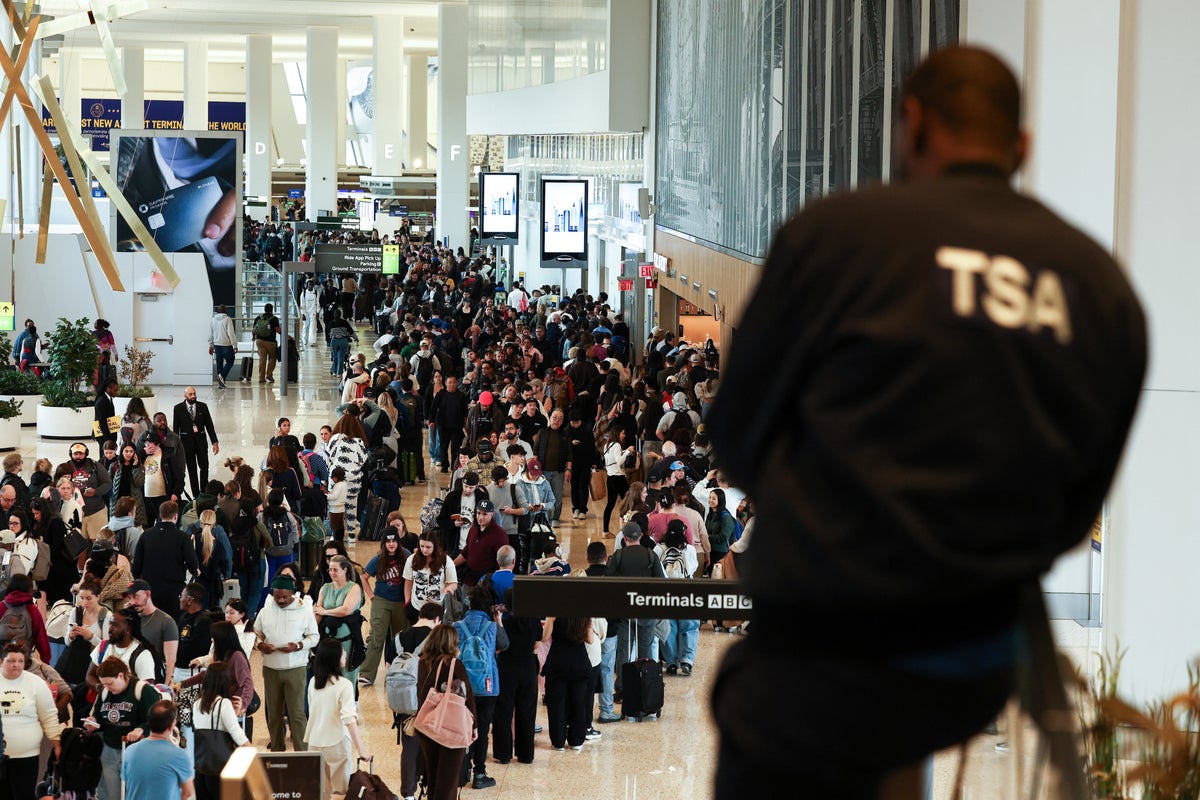
The modern traveler has been conditioned to expect chaos. Arriving at the airport gate has shifted from a routine process to a high-stakes gamble where the probability of your flight being scrubbed feels higher than ever. When the departure board flashes that dreaded red text, the blame is usually directed at the gate agent or a vague mention of weather. The reality, however, is buried deep within a system that has sacrificed resilience for short-term financial optimization.
Flight cancellations are increasing because the aviation industry has stretched its operational margins to a breaking point. Airlines are currently operating in a fragile state where the slightest disruption—a thunderstorm in one city, a staffing shortage in another, or a minor software glitch—cascades through the entire network. This is not merely a temporary hurdle; it is the predictable consequence of a business model that treats buffer capacity as waste rather than insurance. Recently making news in related news: Risk Mechanics on High Altitude Terrain The Mount Etna Safety Failure Analysis.
The Cost of Lean Operations
For decades, airlines pursued aggressive efficiency targets. The goal was to keep aircraft in the air for as many hours as possible every single day. Executives cut staffing levels to the bone, eliminated backup aircraft, and squeezed maintenance schedules to minimize downtime. When demand is steady and skies are clear, this approach generates impressive quarterly earnings reports.
The problem arises when reality strikes. Aviation is inherently unpredictable. Mechanical issues occur, crews hit legal flight-time limits, and air traffic control systems experience outages. In a system built with redundancy, a broken plane is swapped for another one parked at the hangar. In the current environment, that backup plane does not exist. If one jet is grounded, the entire chain of departures it was scheduled to fly vanishes along with it. More information on this are covered by Lonely Planet.
This lack of slack is exacerbated by the hub-and-spoke system. Most major airlines route traffic through massive central hubs. This structure makes sense for covering vast geographic areas, but it creates singular points of failure. If a thunderstorm shuts down a major hub, planes cannot land, crews cannot reach their next flights, and the resulting backlog ripples across the country for days. Passengers stranded in small regional airports are often the last to be accommodated because the airline prioritizes clearing the bottleneck at the hub first.
Staffing Vulnerabilities
Human capital is the most expensive and volatile component of airline operations. Training a pilot takes years; training a ground crew member takes weeks. During the industry downturns of the past several years, thousands of experienced employees were incentivized to retire or pushed into other sectors. When demand roared back, the industry found itself unable to ramp up hiring at the necessary pace.
This creates a personnel deficit that makes every cancellation more damaging. If a flight crew arrives late due to a delayed inbound connection, they may reach their FAA-mandated flight duty limits before they can take off again. A crew that cannot legally fly is a hard stop. There is no pool of reserve pilots sitting in breakrooms waiting for a call. When those hours are hit, the flight is cancelled, and the airline must rebook hundreds of people using a skeleton staff that is already overwhelmed by the day’s other failures.
Consider a hypothetical example to understand the scale of this friction. Imagine an airline schedules a flight crew to operate four segments in one day. If the first flight is delayed by two hours due to a late-arriving aircraft, the crew’s total duty day is extended. If the fourth flight of the day also faces a minor mechanical delay, the crew may cross their legal threshold. The airline now has a plane with no pilot, no way to swap the crew, and no spare crew in that specific city. A ripple that began with a minor two-hour delay ends with a total cancellation for the final flight.
The Technology Trap
While human and mechanical factors get the most attention, the underlying technology infrastructure remains an overlooked culprit. Many legacy carriers rely on software systems designed in the 1980s and 1990s. These systems were never built to handle the sheer volume of data or the rapid-fire rescheduling required in today's high-traffic environment.
When a major disruption occurs, these outdated systems often crash or freeze, forcing dispatchers and ground staff to resort to manual, pen-and-paper tracking. This creates a massive lag in communication. While you are standing in a line at the terminal, the person behind the counter may be receiving information that is already an hour old. They cannot rebook you because their screen is showing a phantom flight that has already been pulled from the schedule.
Investment in modernizing these systems has been inconsistent. It is far easier for an airline to justify spending money on a new fuel-efficient aircraft—which delivers tangible savings on every flight—than to justify the massive capital expenditure required to overhaul a backend reservation platform. The former is a marketing asset, while the latter is a silent, invisible utility.
Weather and Infrastructure Limitations
The narrative that weather is the primary driver of cancellations is a half-truth. While severe storms do ground flights, the frequency with which minor weather events cause massive network failures points to a lack of infrastructure hardening.
Air traffic control modernization has lagged behind airline growth. The systems used to guide planes are increasingly congested. When the weather forces controllers to increase the distance between planes for safety, the capacity of a regional airspace drops significantly. If the airport is already operating at 95 percent capacity, a 20 percent reduction in airspace capacity creates an immediate, mathematically impossible queue.
This issue is unlikely to be resolved through simple policy changes. Air traffic control is a federal responsibility, and the bureaucracy required to implement new surveillance and routing technologies moves at a glacial pace compared to the growth of the airlines. Passengers are essentially caught in the middle of a tug-of-war between private airlines pushing for more volume and public infrastructure that lacks the speed to manage it.
The Reality of Passenger Rights
The frustration regarding cancellations is amplified by the perceived lack of accountability. In many jurisdictions, airlines are not legally required to provide significant financial compensation for weather-related or air traffic control-related delays. Even when the fault is purely mechanical—and thus within the airline's control—the process to claim compensation is often intentionally opaque and difficult to navigate.
Airlines frequently use "force majeure" claims to shield themselves from the costs of mass cancellations. By labeling a failure as an "act of God" or "extraordinary circumstance," they bypass the financial penalties that would otherwise encourage them to maintain better backup fleets and larger reserve crews. As long as the financial penalty for cancelling a flight is lower than the cost of maintaining a redundant system, the cancellations will continue.
Navigating the Future
There is no immediate fix for the traveler. Expecting the industry to voluntarily adopt less profitable, more resilient operational standards is unrealistic. The current system is functioning exactly as it was designed—to maximize throughput at the lowest possible cost.
If you are traveling, the most effective strategy is to abandon the assumption of reliability. Avoid tight connections, especially when routing through major hubs. Whenever possible, book the first flight of the morning. These flights are the least likely to be affected by the cascading delays that accumulate throughout the day. Travel insurance is no longer an optional add-on for the cautious; it is a necessary tool for those who want to be protected when the system inevitably stalls.
The aviation sector is currently caught in a cycle of high demand and low reliability. Until airlines are forced to account for the true cost of their operational failures, or until infrastructure investments catch up to current traffic levels, the red ink on the airport boards will remain a constant fixture of the journey. Pack light, plan for the worst, and do not expect the system to save you when things go wrong.