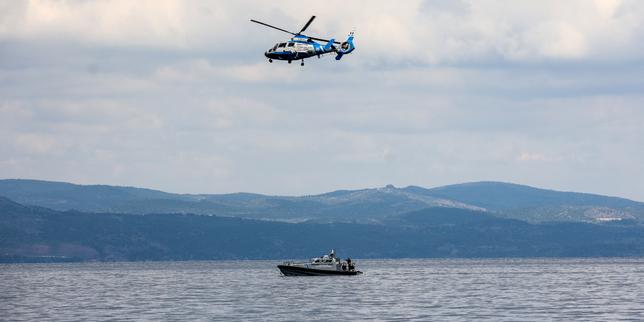
Every time a wooden hull splinters off the coast of Lesbos or a rubber dinghy deflates near the rocky outcrops of the Aegean, the headlines follow a predictable script. Condemnations are issued, coast guards are praised for their reluctant heroics, and politicians step up to microphones to denounce criminal smuggling networks. Then, the cycle resets. We treat each maritime tragedy as a discrete catastrophe, a sudden act of God or a rogue failure of policing, rather than what it actually is: the entirely predictable output of a broken economic equation that governments refuse to fix.
The conventional narrative insists that tighter blockades, harsher asylum laws, and more aggressive naval interceptions will eventually stem the tide of human movement. This is a comforting fiction for bureaucrats sitting in Brussels and Athens, and it is catastrophically wrong. The lazy consensus of the commentariat assumes that migrants are merely victims of circumstance being duped by unscrupulous operators. It ignores the cold, rational calculus of risk, capital, and survival that drives millions toward the water in the first place.
The Flawed Physics of Deterrence
For decades, the policy consensus across southern Europe has doubled down on a single, failing thesis: make the journey harder, and people will stop trying. It is the exact same logic behind the failed war on drugs. When you restrict supply while demand remains infinite, you do not eliminate the market. You merely professionalize it.
Smugglers do not force people onto unseaworthy vessels at gunpoint. They sell a service, albeit a predatory, high-risk one, because official legal channels have been choked off into non-existence. When a government closes every viable door, it hands a monopoly to the black market. Every extra patrol boat, every barbed-wire fence, and every threat of offshore detention does not deter the desperate. It merely drives up the price of passage and forces smugglers to use flimsier, more dangerous equipment to evade detection.
We are subsidizing the evolution of maritime death traps through our own obstinacy. If you want to put human traffickers out of business overnight, you do not need more cutters in the water. You need to make their product obsolete by offering safe, regulated, bureaucratic pathways that decouple mobility from criminal syndicates. But admitting that requires politicians to abandon the theater of toughness and confront uncomfortable structural truths.
The Comforting Lie of Border Control
Let us dispense with the polite fiction that European borders are genuinely defensible against mass displacement. Coastlines are porous, oceans are vast, and human instinct to escape violence, poverty, and ecological collapse will always outpace the logistical capacity of a patrol fleet.
When a shipwreck makes the news, the immediate response is a flurry of finger-pointing about jurisdiction, search-and-rescue response times, and naval obligations under international maritime law. Critics rage against the Greek coast guard for alleged pushbacks, while defenders argue that officers are stretched beyond their limits trying to police an impossible frontier. Both arguments miss the forest for the trees. Focusing entirely on the mechanics of rescue or interception is like debating the aerodynamic properties of a sinking ship while ignoring the fact that someone drilled holes in the hull.
The system is designed to fail quietly out of sight. The tragedies that break through the media cycle—the single dead body recovered, the twenty-five missing souls swallowed by the deep—are statistical anomalies compared to the daily, unrecorded attrition of human dignity at the edges of the continent. We accept this background hum of misery because the alternative requires a total rethinking of migration policy that European electorates currently lack the stomach to digest.
The Real Cost of Looking Away
Governments love to frame border enforcement as a defense of sovereignty. In reality, it is a massive, highly lucrative subsidy for the security-industrial complex. Billions of euros flow into surveillance tech, patrol vessels, and detention infrastructure, creating a permanent constituency of contractors who have a vested interest in the continuation of the crisis. If migration stopped tomorrow, entire corporate ecosystems would collapse.
Meanwhile, the economic argument for managed migration is systematically ignored out of political cowardice. Europe faces a rapidly aging population, shrinking workforces, and gaping holes in its labor markets, from agriculture to caregiving. Yet, rather than integrating willing labor through transparent, legal frameworks, the continent relies on an informal, exploitative shadow economy of undocumented workers who can be easily underpaid, abused, and discarded.
We are importing a humanitarian crisis and an ethical rot because we refuse to match our economic needs with our immigration policies. The people drowning in the Mediterranean are not anomalies; they are the shock absorbers of a dysfunctional global labor market.
Dismantling the Blueprint
If we are serious about stopping the deaths, the solution is glaringly counter-intuitive to the current political class: stop treating migration as a criminal justice problem and start treating it as a logistical and economic reality to be managed.
That means opening consular processing centers in countries of origin and transit, allowing individuals to apply for work or asylum without having to hand their life savings to a smuggler and strap themselves into a sinking rubber raft. It means decoupling humanitarian aid from border enforcement conditionality. And above all, it means telling the electorate the truth: borders can be regulated, but they can never be sealed against human desperation.
Until we stop pretending that a wall or a patrol boat can repeal the laws of economics and geography, the sea will keep taking its toll, and our outrage will remain as hollow as the hulls that carry them.