The global tourism establishment is obsessed with a single, lazy narrative: friction at the border is the enemy of prosperity.
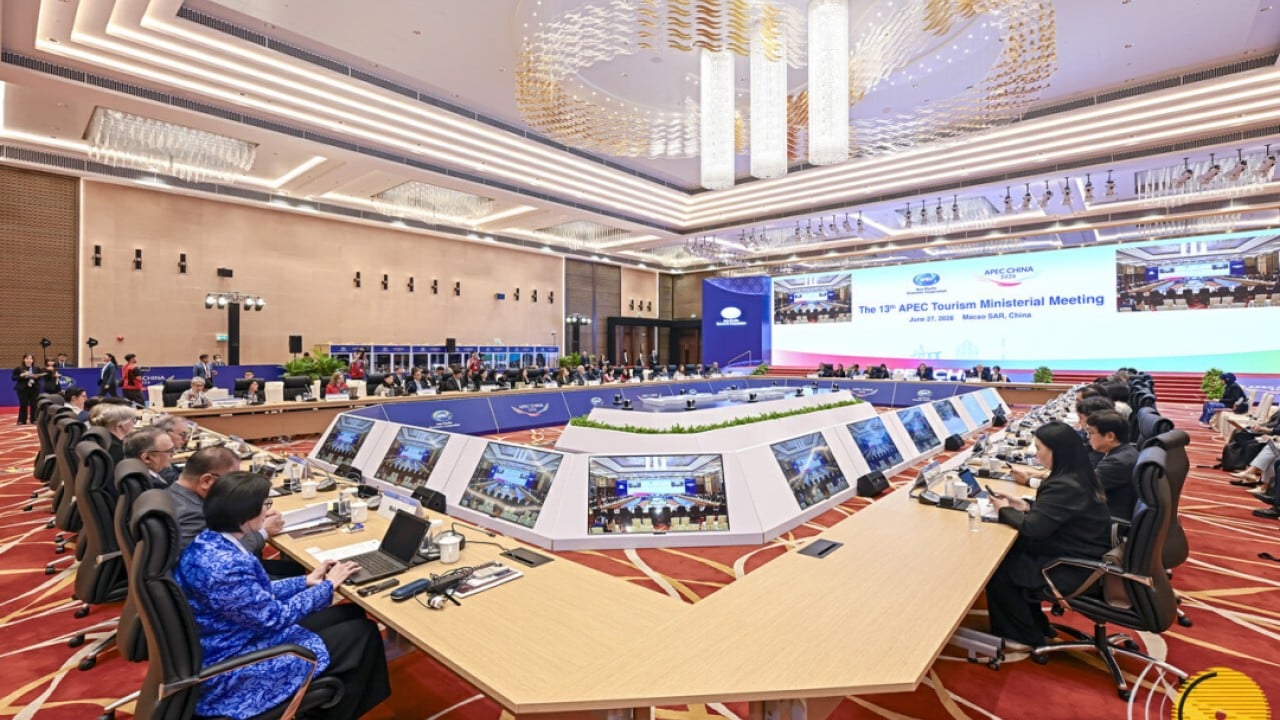
During the latest gathering of Apec tourism ministers in Macau, Chinese officials banged a familiar drum. They demanded an easing of travel barriers, a streamlining of visa processes, and the dismantling of administrative hurdles to kickstart regional economies. The room nodded in unison. The media echoed the sentiment. It is an industry gospel that fewer checkpoints equal more revenue.
It is also flat-out wrong.
This hyper-focus on border fluidity misses the structural reality of modern travel. I have spent two decades analyzing regional visa policies and tourism supply chains, watching nations blow billions chasing raw visitor volume while ignoring internal systemic decay. The truth is uncomfortable for bureaucrats who love flashy cross-border agreements. Visa liberalization does not create a sustainable tourism economy; it merely masks the structural failures of the destination.
The Volume Trap and the Myth of the Open Border
The premise championed at Macau assumes that demand is a faucet. Turn the visa valve, and high-value economic growth pours in.
It does not. What actually pours in is low-yield, high-strain mass tourism.
When you remove all friction at the border, you do not automatically attract the big spenders. You attract the most price-sensitive demographic. This is basic market mechanics. High-net-worth travelers rarely care if a visa takes three days or costs $100; they care about infrastructure, safety, and exclusivity.
Look at the data that the open-border advocates ignore. Thailand rushed into reciprocal visa-exemption agreements with China recently. The result? A massive surge in headcounts, yes. But the revenue per capita failed to track proportionally. Zero-dollar tourism schemes—where travelers buy all-inclusive packages back home, stay in foreign-owned hotels, and use foreign-owned transport—flourished. The local economy gets stuck with the garbage, the environmental degradation, and the crowded transit systems, while the actual capital leaks right back out of the country.
Opening the floodgates without fixing internal capacity is economic malpractice.
The False Promise of Regulatory Harmonization
Politicians love the phrase "regulatory harmonization." It sounds sophisticated. In practice, it means forcing wildly disparate economies into a one-size-fits-all framework.
The Apec region spans everything from hyper-developed financial hubs to developing island nations. Forcing a uniform easing of entry requirements creates a dangerous asymmetry.
- Security Externalities: Streamlining visa processing always involves a trade-off with intelligence gathering. When a border is compromised by high-speed processing mandates, the cost of increased policing and domestic security transfers to the host nation's taxpayers.
- Labor Market Distortions: Tourism visas are frequently used as a backdoor for undocumented labor markets. In economies with vast wage differentials, easing tourist entry without a massive expansion of domestic labor enforcement creates an unmanageable underground economy.
- Infrastructure Chokepoints: A visa barrier acts as a natural governor on an airport or city's capacity. Remove the governor without expanding the runway, the electrical grid, or the hotel inventory, and the entire visitor experience collapses.
Imagine a scenario where a boutique hotel with twenty rooms decides to remove its reservation system and let anyone walk into the lobby. The hotel does not get richer; it gets destroyed. Yet, this is exactly what ministers propose on a national scale.
Infrastructure Beats Policy Every Single Time
If you want to understand why a country succeeds in tourism, stop looking at their visa agreements. Look at their capital expenditure on domestic infrastructure.
Japan did not become a global travel darling solely because of visa waivers. It succeeded because a traveler can land at Haneda, board a pristine bullet train, and reach a remote village with zero friction. The friction shifted from the border to the interior. The country built a machine that distributes visitors efficiently across its geography, preventing the destructive concentration seen in places like Venice or Bali.
Contrast this with the regions begging for border relaxation. They want the quick fix. They want a signature on a piece of paper in Macau to substitute for the hard, expensive work of upgrading regional airports, training localized workforces, and building reliable transit networks.
The Real Strategy for Sovereign Tourism
The contrarian approach to tourism growth requires a complete reversal of the current playbook. Do not make it easier to get in. Make it more valuable to be there.
1. Implement Dynamic Border Pricing
Instead of abolishing visas, nations should treat border access like prime real estate. Implement dynamic visa pricing based on real-time capacity and seasonal demand. If a city is overcrowded in July, the visa fee should quadruple. If it is empty in November, lower it. Use the border as a valve to manage flow, not a door to be ripped off its hinges.
2. Mandatory Local Integration Ratios
If a nation agrees to ease entry for a specific market, it must legally mandate that a high percentage of the incoming supply chain—tour operators, guides, transport, accommodation—is entirely locally owned. If the incoming capital cannot be retained locally, the border should remain firmly closed.
3. Shift Metrics from Volume to Yield
The aviation and tourism sectors are addicted to reporting "passenger arrivals." It is a vanity metric designed to look good in government press releases. The only metric that matters is Net Local Retention per Arrival. If you welcome five million fewer tourists but retain 40% more of their spend within the domestic economy, you have won.
Admittedly, this model has a downside. It requires walking away from the easy high-volume statistics that please politicians and airline executives. It requires telling the mass-market tour operators that their business model is no longer welcome. It creates short-term friction.
But the alternative is the slow death of the destination.
Stop pretending that a smoother visa process is the antidote to economic stagnation. It is a distraction engineered by bureaucrats who prefer signing treaties to laying track. The nations that thrive in the next decade will not be those with the emptiest borders, but those with the most resilient interiors.
Close the meetings. Burn the communiqués. Build better roads.