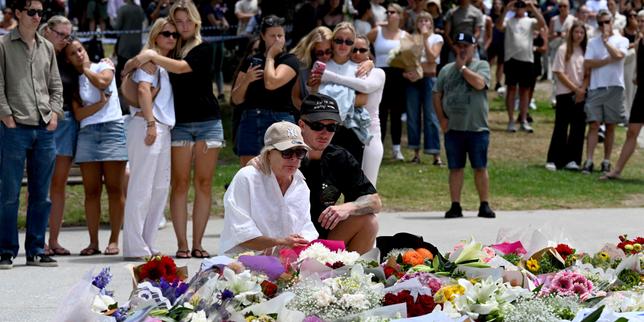
Australia’s sense of safety shattered on a sunny afternoon at Bondi Beach. Most people saw it as a random act of madness. It wasn't. We now know the authorities had clear, specific warnings about a potential antisemitic strike in that exact area. They didn't act fast enough. Families are now paying the price for a bureaucratic failure that feels increasingly unforgivable as more details emerge from the investigation.
The Bondi Beach antisemitic attack isn't just a tragedy. It's a massive red flag for how security intelligence gets handled in a high-tension global climate. When the Jewish community raises the alarm, the response should be immediate. In this case, the system stalled. We're looking at a breakdown between intelligence gathering and boots on the ground. It’s a pattern that’s becoming far too common in major cities.
Intelligence ignored before the Bondi tragedy
Security experts and community leaders didn't just have a "hunch." They provided documented threats. Reports indicate that local law enforcement received briefings regarding extremist chatter specifically targeting Jewish gathering points near the coast. This wasn't vague noise. It was actionable data.
New South Wales Police are now facing the heat. Why wasn't the patrol presence doubled? Why were the warnings filed away instead of being treated as an imminent threat? You can't just collect data and sit on it. Intelligence is useless if it doesn't lead to prevention. The failure to pivot from observation to intervention is what allowed a suspect to walk onto one of the world's most famous beaches with a weapon.
Growing antisemitism is no longer a fringe issue
We've seen a sharp rise in hate speech across Sydney and Melbourne over the last year. It’s not just online trolling anymore. It’s physical. The Bondi Beach incident serves as a grim peak of a much larger mountain of resentment that’s been building. If you’ve been paying attention to local community boards, you’ve seen the shift. The atmosphere changed months ago.
Critics often argue that police can't monitor everyone. That's true. But when a specific location like Bondi—a hub for Jewish life—is named in threat assessments, the "we can't be everywhere" excuse falls flat. Security isn't about being everywhere. It’s about being where the danger is predicted to be. In this instance, the map was already drawn for them.
The gap between federal and local response
Australian Federal Police (AFP) and state-level units often have a communication lag. It’s a classic "left hand not talking to the right hand" scenario. Federal agencies track the broad extremist movements. Local police handle the street-level patrols. When the federal level flags a risk, it sometimes gets diluted by the time it reaches the officer in the squad car.
This disconnect is deadly. We need a streamlined way to push high-priority alerts to the frontline without three days of committee meetings. The Bondi attack happened because the urgency was lost in translation. Local businesses had even requested more patrols in the weeks leading up to the event. Those requests were met with standard "we're monitoring the situation" replies. Monitoring isn't protecting.
How community safety failed at the shoreline
Bondi isn't just a tourist trap. It’s a neighborhood. People live there, pray there, and raise kids there. The lack of visible deterrents on the day of the attack gave the perpetrator a clear window. Security cameras don't stop attacks. They just record them. What stops attacks is a physical presence that says "not today."
The Jewish community in Sydney has spent millions on private security for schools and synagogues. They shouldn't have to do that for a public beach. It's the government's job to ensure that a person's faith doesn't make them a target in a public space. When the police get a tip that a risk is high, the community expects more than a follow-up phone call two weeks later.
Why the "lone wolf" narrative is often lazy
Authorities love the term "lone wolf." It's convenient. It suggests that nobody could have seen it coming because the person acted in a vacuum. But "lone wolves" almost always leave a digital trail or tell someone their plans. In the Bondi case, the warnings suggest this individual was already on the radar of certain monitoring groups.
Calling someone a lone wolf often masks a failure to connect the dots. If you have the dots, and you refuse to draw the line, you can't act surprised when the picture turns out to be violent. We have to stop letting agencies off the hook by accepting that these events are unavoidable. Many of them are entirely preventable if we value proactive defense over reactive cleanup.
Immediate changes required for public safety
This can't happen again. The fallout from the Bondi Beach attack must lead to a total overhaul of how hate crime threats are prioritized. We're talking about a shift in doctrine. Police shouldn't wait for a crime to be committed when the intent has already been documented.
- Demand transparency on why the pre-attack warnings weren't escalated to high-alert status.
- Support legislation that forces faster intelligence sharing between federal agencies and local precincts.
- Pressure local councils to increase visible security in high-risk zones during periods of elevated global tension.
- Stop accepting "lone wolf" as a valid excuse for intelligence gaps.
The victims at Bondi weren't just unlucky. They were let down by a system that had the information and chose to wait. Don't let the news cycle bury the fact that the police knew a risk existed. Accountability is the only way to make sure the next warning isn't ignored until it’s too late. If you see something, say something—but the police actually have to do something.



