The tankers sit heavy in the water, steel giants tethered to a silent hope. For weeks, the Strait of Hormuz—that narrow, jagged needle eye through which the world’s lifeblood pulses—has been a site of suffocating tension. When the passage closes, the global heartbeat skips. Logistics managers in Rotterdam stare at glowing red maps with hollow eyes. Commuters in Ohio feel a phantom pain in their wallets before they even reach the pump.
Then, a flicker of movement.
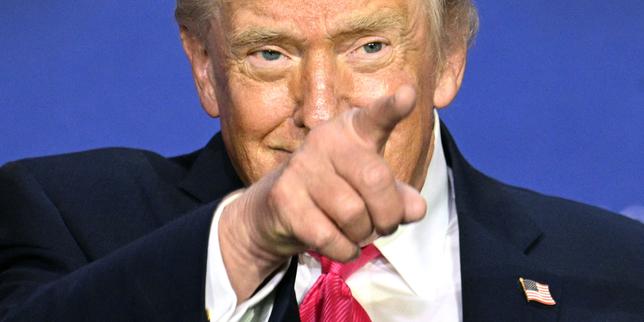
Tehran announced a temporary, conditional reopening of the strait. It is not a surrender, nor is it a peace treaty. It is a calculated exhale. In the high-stakes theater of Middle Eastern diplomacy, this is the moment the house lights dim and the protagonist steps onto the stage. Donald Trump, never one to let a vacuum of attention go unfilled, wasted no time in seizing the narrative. He claims a deal with Iran is possible within twenty-four hours.
Twenty-four hours. One rotation of the earth to solve a friction that has burned for decades.
It sounds like hyperbole. To many, it sounds like madness. But in the world of high-velocity geopolitics, the speed of the deal is often dictated by the proximity of the catastrophe. We are currently standing very, close to the edge.
The Ghost of the Tanker
Consider a man named Elias. He is a hypothetical merchant sailor, the kind of person who actually exists in the thousands but is rarely mentioned in the briefings at Mar-a-Lago or the halls of the Iranian Parliament. Elias spends his nights on the deck of a massive Suezmax tanker. To him, the "geopolitical instability" discussed on cable news is not an abstract concept. It is the sound of a drone overhead. It is the way the water looks different when you know the seabed is littered with the rusted history of previous conflicts.
When the Strait of Hormuz closes, Elias and his crew are the first to feel the stillness. It is an unnatural silence. Twenty percent of the world’s petroleum and liquefied natural gas usually flows through this twenty-one-mile-wide choke point. When that flow stops, the pressure builds. Not just in the pipes, but in the global psyche.
The reopening, even under strict conditions and "temporary" status, acts as a pressure valve. Tehran knows exactly what it is doing. By tightening the noose and then loosening it just enough for the victim to breathe, they create a specific kind of leverage. They are signaling that the world’s economy lives and dies by their permission.
The Art of the Impossible Deadline
Donald Trump’s assertion that a deal is "a day or two away" is a classic maneuver. It ignores the granular complexities of the JCPOA, the nuances of enrichment levels, and the long-standing grievances of the Revolutionary Guard. It replaces the slow, agonizing grind of traditional diplomacy with the blunt force of a deadline.
Why does he do this? Because it changes the physics of the room.
If you tell a room full of diplomats they have five years to reach an agreement, they will spend four years and eleven months arguing over the shape of the table. If you tell them the world is watching and a deal must be struck by tomorrow’s sunrise, the "impossible" becomes a matter of survival.
The Iranian leadership is playing a different game. Their economy is a bruised thing, battered by sanctions and internal unrest. They need the oil to flow as much as the West needs to receive it. By reopening the strait, they are testing the waters—literally. They are asking if there is a version of the future where they can maintain their regional influence without being choked into a total collapse.
The Invisible Stakes of a Gallon of Gas
We often talk about these events in terms of "crude oil futures" or "barrel prices." These are sanitized terms. They hide the human cost.
When Hormuz is blocked, a small bakery in a suburb of Paris suddenly finds its electricity bill doubling. A trucking company in Brazil has to lay off three drivers because the cost of diesel has eaten the profit margin. A family in a developing nation finds that the price of cooking oil—which relies on global shipping networks—has spiked beyond their weekly reach.
This is the "blue flame" at the throat of the world. It is the heat of energy dependency.
The reopening of the strait is a reprieve for these people, even if they don't know the name of the waterway. It represents a brief moment where the "invisible hand" of the market stops trembling. But the conditions imposed by Tehran suggest this isn't a return to normalcy. They are checking IDs at the door of the global economy. They are reminding every nation that their prosperity is conditional.
The Calculus of the One-Day Deal
Can a deal actually happen in twenty-four hours?
Logic suggests no. History suggests no. The sheer weight of the bureaucracy involved in international treaties suggests no.
However, we are living in an era of "disruptive diplomacy." In this framework, the formal treaty is often secondary to the "handshake of necessity." If the United States offers a path to immediate sanctions relief in exchange for a verifiable pause in specific activities, and if that offer is made with the raw directness that has become Trump's trademark, the timeline shifts.
The "deal" wouldn't be a thousand-page document. It would be a ceasefire of the soul. It would be an agreement to stop the escalation before the first shot is fired by accident. In the narrow waters of the Persian Gulf, accidents are the most common form of policy. A nervous sonar operator, a stray drone, a misunderstood radio transmission—these are the sparks that could turn the strait into a graveyard of steel.
The Weight of the Silence
As the first tankers begin to move again, the world watches the horizon. There is a specific kind of light in the Middle East at dusk—a dusty, golden hue that makes everything look ancient and permanent. But as the ships cut through the water, they leave a wake that disappears in minutes.
The reopening is that wake. It is a sign of movement, but it is not the destination.
The true story isn't found in the headlines about Trump’s confidence or Tehran’s conditions. It is found in the eyes of the people waiting for the price of bread to stop rising. It is found in the quiet relief of a captain who can finally steer his ship toward open water.
We are currently suspended in a moment of profound uncertainty. The door has been cracked open, just an inch. Through that gap, we can see two futures. One is a return to the grind of conflict, a cycle of closing and opening that eventually leads to a permanent shutoff. The other is the "day or two" deal—a sudden, jarring pivot toward a functional, if uncomfortable, peace.
The tankers move. The markets hold their breath. The clock in the Oval Office and the clock in the Grand Bazaar are finally ticking at the same speed. Whether they are counting down to a breakthrough or a breakdown is a secret held by the dark waters of the strait.
For now, the ships are moving. And in a world that has been standing still for too long, that movement feels like a miracle, however fragile it may be.
The steel giants are no longer tethered. They are sailing into a sunset that is either the end of an era or the beginning of a very long night.