The screen flickers in the amber glow of a basement monitor. It is 1989. Outside, the world is shifting on its axis—walls are literally crumbling in Berlin, and empires are sliding into the history books. Inside, a pair of oversized pixelated blocks drops into a well. Left. Right. Rotate. Drop.
There is a strange, hypnotic peace in the geometry of it all. You take the chaotic debris handed to you by an invisible, indifferent hand, and you force it into order. You make a line. The line vanishes. You breathe. Discover more on a similar issue: this related article.
Pixels were supposed to stay in the basement. They were supposed to remain trapped behind heavy glass screens, fueled by quarters and adolescent ambition. But history has a persistent habit of bleeding into our toys.
Fast forward decades later. The digital playground has expanded into a sprawling, hyper-connected digital public square where political campaigns build virtual monuments and every pixel carries the weight of a billion-dollar brand. Sometimes, those worlds collide with a loud, messy crash. Further journalism by The New York Times highlights similar perspectives on the subject.
Picture a brightly lit conference room in Moscow or Los Angeles—somewhere high above the street noise, where legal briefs are stacked taller than coffee cups. Picture the faces of the people who hold the guardianship over those falling blocks from 1989. For decades, they have guarded their intellectual property with the quiet intensity of medieval monks protecting a sacred text. They know what a falling tetromino means. They know the exact cultural weight of digital masonry.
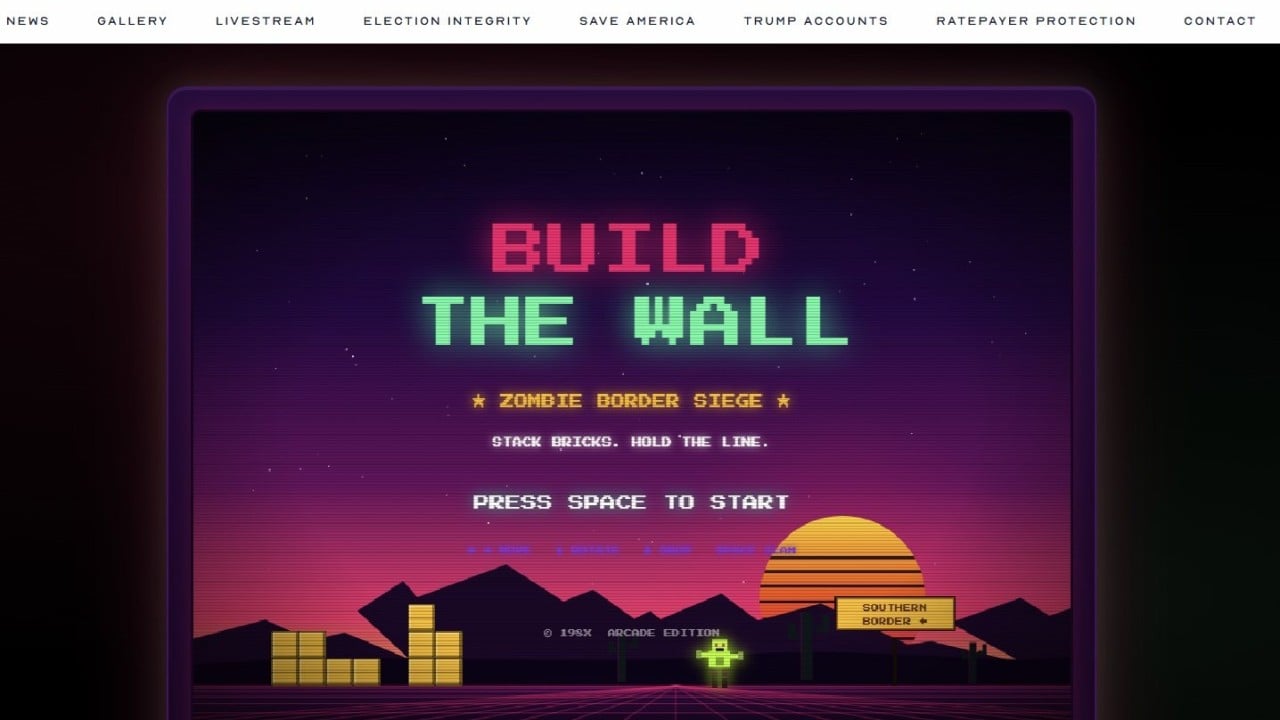
Then, the White House launches a new digital initiative, and tucked away inside its interactive corridors is an arcade-style diversion: a game called Build the Wall.
Silence. Then, the storm.
The guardians of the classic puzzle franchise did not just issue a routine corporate press release. They lashed out. They looked at the neon-lit political proxy sitting inside a government interface, saw the echoes of their own iconic block-stacking mechanics, and drew a hard line in the digital sand.
How did we get here?
Consider what happens when political messaging invades the arcade. For generations, gaming has been our great secular cathedral. It was a place where you could escape the jagged edges of geopolitical strife by building neat, orderly rows of digital shapes. When a government office co-opts the very architecture of casual puzzle-solving to push a specific, highly charged border narrative, it touches a raw nerve. It turns a universal metaphor—building walls versus clearing spaces—into a literal battleground.
To understand why the Tetris company reacted with such sharp indignation, you have to look past the cold legalese of copyright infringement and trademark dilution. You have to look at the psychology of stewardship.
Imagine you spent your entire professional life protecting a pristine architectural monument, only to wake up one morning and find someone had spray-painted a partisan slogan across its front columns. You would be angry. Not just because of the paint, but because the monument was supposed to belong to everyone. It was supposed to be a neutral zone.
The White House digital team likely saw a harmless nod to retro arcade culture. They thought they were being clever, tapping into the warm, nostalgic dopamine hit of 80s gaming to engage a tech-savvy electorate. They miscalculated the profound possessiveness people feel toward their shared cultural touchstones.
When corporate legal teams step into the political arena, the collision is rarely polite. The Tetris entity didn't just file a complaint; they drew a bright, neon boundary between entertainment and statecraft. They reminded everyone involved that a game about stacking blocks is not an open-source template for whatever political ideology happens to be holding the keys to power on any given Tuesday.
The irony is thick enough to cut with a dull knife. A game defined entirely by walls—by the frantic, never-ending struggle to keep the walls from stacking up so high that you lose the game—was inadvertently invoked in a debate about physical barriers. In the classic puzzle, a rising wall is the ultimate failure state. If the blocks reach the top of the screen, the music speeds up, panic sets in, and the game ends in defeat.
Perhaps that is why the clash felt so poetic to those watching from the sidelines.
We live in an era where every pixel is monetized, every inch of screen real estate is weaponized, and neutrality is treated as a design flaw. Brands are expected to take stances on everything from civil rights to supply chains. Yet, when political entities appropriate the nostalgic aesthetics of neutral gaming spaces, the friction reveals just how fragile our shared cultural commons really has become.
The dust will eventually settle around the White House arcade game. The lawyers will trade their memos, the web pages will be updated, and the digital archive will swallow the controversy whole, digesting it like yesterday's news cycle.
Yet the underlying tension remains.
We are constantly building walls, both on our screens and along our borders. We stack our beliefs, our biases, and our digital boundaries higher and higher, hoping against hope that we won't trigger the game-over screen.
Out in the quiet basement of memory, the blocks keep falling. They don't care about elections, press releases, or legal threats. They just wait for you to decide whether you are going to clear the board, or let the walls pile up until there is nowhere left to breathe.