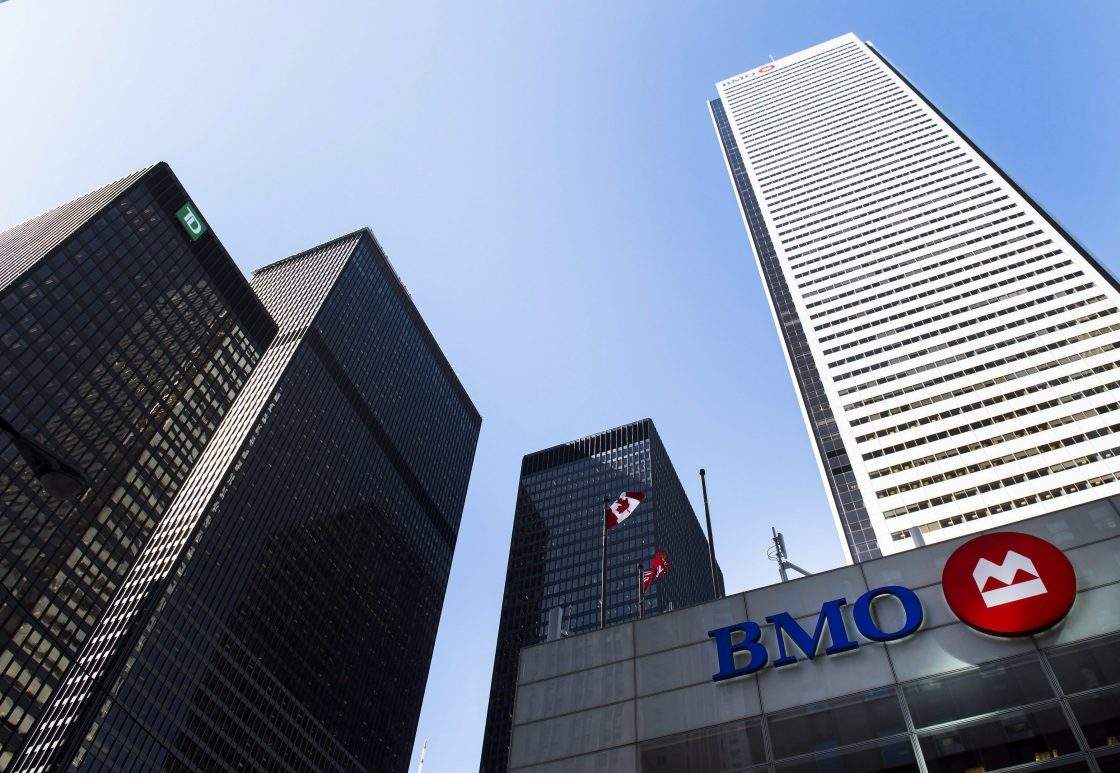
Canadian banks are not rejecting artificial intelligence when they block third-party AI agents from authenticated customer accounts; they are enforcing strict perimeter control over non-human actors that lack verifiable identity, deterministic boundaries, and clear liability assignment. Surface-level news coverage frames these restrictions around growing consumer fear, yet the underlying logic is structural. When a consumer hands banking credentials or persistent session access to an external autonomous agent, the bank loses the ability to distinguish legitimate customer intent from prompt injection, memory drift, or unauthorized execution.
This analysis breaks down how major Canadian lenders moved in late October 2026, why conventional reporting misses the deeper mechanics, and how banks, software vendors, and account holders navigate agentic access without sacrificing fraud controls or regulatory compliance.
Deconstructing the Competitor Narrative
Standard reporting on the restrictions treats the story as a binary clash between anxious institutions and helpful automation. A typical headline emphasizes bans and growing fear, listing bank statements in sequence while leaving four operational realities unexplained.
First, coverage often blurs all AI with unauthenticated third-party agents. Major Canadian banks have invested heavily in internal AI workflows—such as document classification, fraud scoring, and operational triage—where data stays inside controlled enterprise environments. Blocking external consumer agents from logging into retail banking portals is an access-control decision, not a retreat from automation.
Second, surface reporting treats credential sharing as a minor technical footnote rather than the core failure mode. Many early consumer agents operate through screen scraping, browser automation, or stored passwords. Once a third-party tool holds a username and password—or acts inside a live authenticated session—it collapses the separation between user authentication and programmatic authorization.
Third, news summaries often conflate confirmed losses with hypothetical failure modes. While incidents involving errant software agents in broader enterprise and consumer contexts have drawn scrutiny, public reporting around late October 2026 centered on preventive blocks, credential warnings, and risk assessments rather than a verified wave of Canadian retail bank drains.
Fourth, coverage rarely explains the reversibility asymmetry in payments. Moving money via instant rails or irreversible transfers turns a reasoning error into an immediate balance-sheet dispute. Unlike drafting an email or summarizing a bill, an erroneous payment cannot simply be undone by editing text.
Institutional Postures Across Canada's Major Banks
Public statements from Canada's largest lenders around October 28, 2026 reveal a spectrum of defensive postures rather than a single identical rulebook:
- Royal Bank of Canada (RBC): Blocked direct access by third-party AI agents to authenticated digital properties, including online banking, framing client information security and trust as non-negotiable prerequisites for autonomy.
- Toronto-Dominion Bank (TD): Blocked direct access by third-party personal AI agents wherever authentication is required while evaluating safeguards, authorization mechanisms, and oversight.
- Bank of Montreal (BMO): Prohibited third-party agents from accessing digital properties or executing transactions on behalf of clients, with leadership publicly warning customers against handing over banking credentials.
- Canadian Imperial Bank of Commerce (CIBC): Indicated it does not support third-party agents opening or accessing accounts.
- Bank of Nova Scotia (Scotiabank): Signaled limits on third-party AI agent access across banking platforms while monitoring emerging risks.
- National Bank of Canada: Indicated it is closely monitoring developments around consumer AI agents.
Industry-wide coordination also showed restraint: when asked about agent restrictions ahead of the late-October announcements, the Canadian Bankers Association declined to comment on members' operational matters, and federal officials noted awareness of U.S. reports surrounding unauthorized agent activity. Outside banking, parallel friction appeared when e-commerce platforms pushed back against third-party agentic integrations lacking strict boundary controls.
The Four Risk Pillars of Agentic Banking
To understand why risk teams draw a hard line at the login screen, evaluate third-party agents across four structural pillars.
1. Authentication Collapsing Into Delegation
Traditional banking security relies on proving who initiated a session and scoping what an external application is allowed to do. When a user gives a password or session token to an autonomous agent, the bank's system sees a valid customer session rather than an external delegate. That creates two immediate problems:
- Non-repudiation failure: If an agent executes an unwanted transfer after misreading a prompt or falling victim to indirect prompt injection from an external webpage or email, the bank cannot easily tell whether the customer authorized the action or a compromised model initiated it.
- Over-broad privilege: Password-based delegation grants sweeping account visibility and capability instead of narrow, time-bound, task-specific permissions.
2. Non-Determinism Inside Financial Workflows
Classic financial software is deterministic: given identical inputs and rules, it produces identical outputs. Large-language-model agents are probabilistic. Even when paired with tool-calling harnesses, multi-step planning introduces variance in how instructions are interpreted, how state is tracked across steps, and when an agent stops acting.
In a productivity workflow, a hallucinated step wastes time. In a banking workflow, misreading a decimal, selecting a wrong payee, or acting on stale context can trigger an over-payment or an unintended transfer. As a known hypothesis in agentic systems engineering, compounding error rates across multi-step chains rise sharply whenever verification gates are weak or absent.
3. Liability Asymmetry and Terms of Service
Consumer banking agreements in Canada and comparable jurisdictions routinely restrict sharing passwords, PINs, or authentication credentials. When a customer bypasses controls by handing login details to a third-party tool, disputes over unauthorized or erroneous transactions become legally and operationally messy.
The bank faces regulatory expectations around safeguarding customer data, preventing fraud, and maintaining auditability. The user faces potential exposure if account terms prohibit credential sharing. The third-party agent vendor often sits in between with limited financial indemnity for downstream execution errors.
4. Intermediation and Deposit Economics
A secondary strategic driver is balance-sheet intermediation. As a plausible hypothesis rather than a proven retail trend in Canada, if autonomous financial agents eventually route idle cash toward higher-yield instruments or automated bill strategies at scale, incumbent banks could face faster liquidity movement and margin pressure on low-cost deposits. Blocking unvetted agents today buys time before automated routing reshapes deposit stickiness.
Cause-and-Effect Chains Most Commentators Miss
Several second-order effects explain why banks act preemptively even before mass retail losses occur:
- Credential reuse multiplies blast radius: If a personal AI agent stores banking credentials alongside email, calendar, or shopping accounts, compromising or poisoning the agent's context can expose multiple sensitive surfaces at once.
- Lack of audit trails slows incident response: Banks depend on structured event logs, device signals, and behavioral baselines to flag anomalies. Headless or automated browser agents can alter behavioral telemetry, raising false positives for innocent users while masking real abuse.
- Premature openness creates lock-in debt: Allowing ungoverned scraping or credential-based access early makes it harder to enforce strict API authentication later without breaking workflows customers have grown used to.
Tactical Playbook for Key Stakeholders
For Bank Risk and Architecture Leaders
- Separate credential blocking from future delegated rails: Maintain strict blocks on password sharing and unverified scraping while defining what cryptographic consent, explicit step-up authentication, and revocation controls would be required for any sanctioned agent framework.
- Enforce read-only before write: If approved integrations ever emerge, separate account visibility from money movement, keeping payment initiation behind explicit human confirmation.
- Require verifiable provenance and kill switches: Demand clear operator accountability, revocable tokens, and granular scope limits rather than blanket session access.
For AI Agent Builders
- Eliminate raw credential storage: Design architectures around scoped, revocable authorization standards rather than asking users to paste banking passwords.
- Insert deterministic confirmation gates: Never let a probabilistic model execute an external state change—especially a payment or account modification—without explicit user sign-off on exact parameters (recipient, amount, rail, and timing).
- Build for refusal and graceful degradation: When a financial institution blocks automated access, surface clear status and stop cleanly rather than retrying aggressively or attempting workarounds.
For Everyday Account Holders
- Never share banking logins, PINs, or one-time codes with an AI agent: Treat an autonomous agent with full account credentials like a stranger holding your unlocked wallet.
- Check your account agreement before connecting tools: Review terms governing credential sharing and unauthorized-transaction liability.
- Keep final sign-off human: Even for budgeting or bill tracking, keep payment execution under your direct control.
Limitations and Unresolved Tensions
No access policy eliminates risk without trade-offs. Overly broad blocks can push determined users toward workarounds that are harder for banks to observe, while slow institutional adaptation can frustrate customers who want legitimate automation for routine financial organization. Furthermore, even well-designed permissioned tokens cannot fully solve prompt injection or upstream model errors if an agent is given broad autonomy without strict human-in-the-loop checkpoints.
Strategic Play
The durable winners in consumer finance and agentic software will not be the first to grant autonomous models raw login access to bank accounts; they will be the first to standardize scoped, revocable, human-verified delegation where every financial action carries clear identity, explicit user consent, and unambiguous accountability. Until verifiable permission standards and hard execution guardrails mature, Canadian banks will keep the authenticated perimeter closed—and agent builders that treat trust architecture as a core product requirement rather than an afterthought will capture the market once institutional doors open.