The corridors of power are rarely as silent as they seem. Usually, they hum with the low-frequency vibration of a thousand secrets being traded for a thousand favors. But inside Number 10, when the air goes still, it usually means someone has tripped over a ghost. Keir Starmer, a man who built his reputation on the forensic dissection of evidence, now finds himself staring at a piece of evidence he claims he never saw. It is a classic political haunting.
Peter Mandelson is the ghost in question. A figure so synonymous with the machinations of New Labour that his very name carries a scent of late-nineties optimism and early-aughts cynicism. He was the architect of a revolution, the "Prince of Darkness" who helped reshape the British state. Now, he was supposed to be the elder statesman, the steady hand guiding a new generation of leaders back into the light. Instead, he has become a lightning rod for a controversy that strikes at the heart of Starmer’s promise of "government by the rules."
The facts are stark, even if the narrative surrounding them is murky. A vetting process—the bureaucratic equivalent of a background check—supposedly flagged concerns regarding Mandelson’s past associations. Specifically, his historical links to Jeffrey Epstein, a name that acts as a radioactive isotope in modern politics. Anything it touches becomes toxic. Starmer’s defense is simple: he wasn't told.
The Paper Trail to Nowhere
Consider the mechanics of a high-level briefing. Information flows upward like water in a skyscraper, pushed by pumps and filtered at every floor. By the time it reaches the top office, it is supposed to be pure. Clear. Actionable. If a filter fails, the person at the top drinks contaminated water. Starmer is essentially arguing that his filtration system—the Civil Service, his advisors, the entire vetting apparatus—suffered a catastrophic blockage.
It is a difficult position for a former Director of Public Prosecutions. In the courtroom, "I didn't know" is a shield that often looks like a sieve. If the vetting process failed, it suggests a terrifying level of incompetence within the very machinery Starmer promised to fix. If the process worked but the information was suppressed, it suggests a shadow cabinet operating within the Cabinet.
Imagine a junior staffer, late at night, staring at a red flag on a computer screen. They see a name. They see a connection. They know that passing this up the chain will cause a political earthquake. Do they hit the button? Or do they wait? In the world of high-stakes politics, silence isn't just golden; it's often survival. This hypothetical staffer represents the thousands of tiny decisions that build the reality a Prime Minister inhabits. If Starmer was kept in the dark, it wasn't by accident. It was by design.
The Weight of the Past
The tension here isn't just about Mandelson or Epstein. It’s about the soul of the Labour Party. Starmer spent years purging the influence of the hard left, promising a return to "serious" government. To do that, he leaned on the survivors of the Blair years. He needed their institutional memory. He needed their grit. But those survivors come with baggage.
Mandelson is the ultimate piece of baggage. He is brilliant, connected, and deeply divisive. To some, he is the only person who truly understands how to wield power. To others, he represents a style of politics—all spin and shadowy influence—that the country is desperate to leave behind. By bringing him into the fold, Starmer was making a bet. He bet that Mandelson’s utility would outweigh his history.
The problem with bets is that the house always wins, and in politics, the "house" is the public’s memory. You cannot invite the architect of the old world into the construction site of the new one without people asking if you’re just building the same house with different curtains.
A Failure of Forensics
Starmer’s "forensic" brand is his greatest asset and his heaviest burden. When you tell the public you are a man of detail, you lose the right to be surprised by the obvious. The Epstein connection wasn't a secret buried in a lead-lined vault; it was a matter of public record, debated and discussed for years.
For the vetting process to "fail" to mention it is like a weather report failing to mention a hurricane. It doesn't just feel like a mistake. It feels like a choice. This is where the emotional core of the story lies for the British voter. It’s the feeling of being told a story that doesn't add up. It’s the weary realization that the "new" era looks remarkably like the old one, complete with the same cast of characters and the same convenient lapses in memory.
The stakes are invisible but massive. This isn't just about one peerage or one advisory role. It’s about the integrity of the vetting system itself. If the most high-profile appointments can bypass the safety checks—or if those checks can be silenced—then the entire concept of a "meritocratic" or "clean" government is a fiction. It suggests that there is a level of power where the rules simply stop applying.
The Ghost in the Machine
What does it feel like to sit in that room? The mahogany table, the portraits of past giants staring down, the weight of a nation’s expectations pressing against the windows. You ask for a report. You are given a summary. You trust the people around you to protect you from the things that could destroy you.
Then, the phone rings. A journalist has a question. A name is mentioned. Suddenly, the ground beneath your feet feels less like solid oak and more like shifting sand. You realize that your perimeter was breached months ago, and you were the last to know.
Starmer’s insistence that he was kept in the dark is a plea for the public to see him as a victim of his own system. But a leader is responsible for the system they lead. If the vetting failed, he failed. If his advisors lied, he chose the wrong advisors. In the brutal mathematics of leadership, there is no such thing as an innocent bystander at the top.
The Echo Chamber
Politics is a game of whispers. In the pubs of Westminster and the tea rooms of the Commons, the narrative is already shifting. It’s no longer about what Mandelson did or didn't do decades ago. It’s about why Starmer is so vulnerable now.
Is he too reliant on the old guard?
Is his inner circle so tight that no dissenting voices can get through?
Or is he simply a man trying to steer a massive, rusting ship through a storm, unaware that the hull is leaking in places he can't see?
The public doesn't care about the intricacies of the vetting forms. They care about the smell test. And right now, the air in Westminster is thick with the scent of something old and familiar. It’s the smell of a cover-up, or at the very least, a very convenient ignorance.
Beyond the Headlines
We often treat these political scandals like sports scores. Who’s up? Who’s down? Who’s under pressure? But the human cost is measured in trust. Every time a leader says "I didn't know," a little more of the public’s faith evaporates. It’s a slow-motion bankruptcy of the national spirit.
We are told we live in an age of transparency, where everything is tracked and every digital footprint is permanent. Yet, in the highest offices in the land, information can still vanish into a black hole. It’s a paradox of the modern age: we know everything about everyone, except for the things that actually matter to the people running the country.
The Mandelson affair is a mirror. It reflects a government that is trying to be two things at once: a radical departure from the past and a comfortable return to it. You cannot have both. You cannot claim to be cleaning up the stable while keeping the old horses in the prime stalls.
The Loneliness of the Long Distance Leader
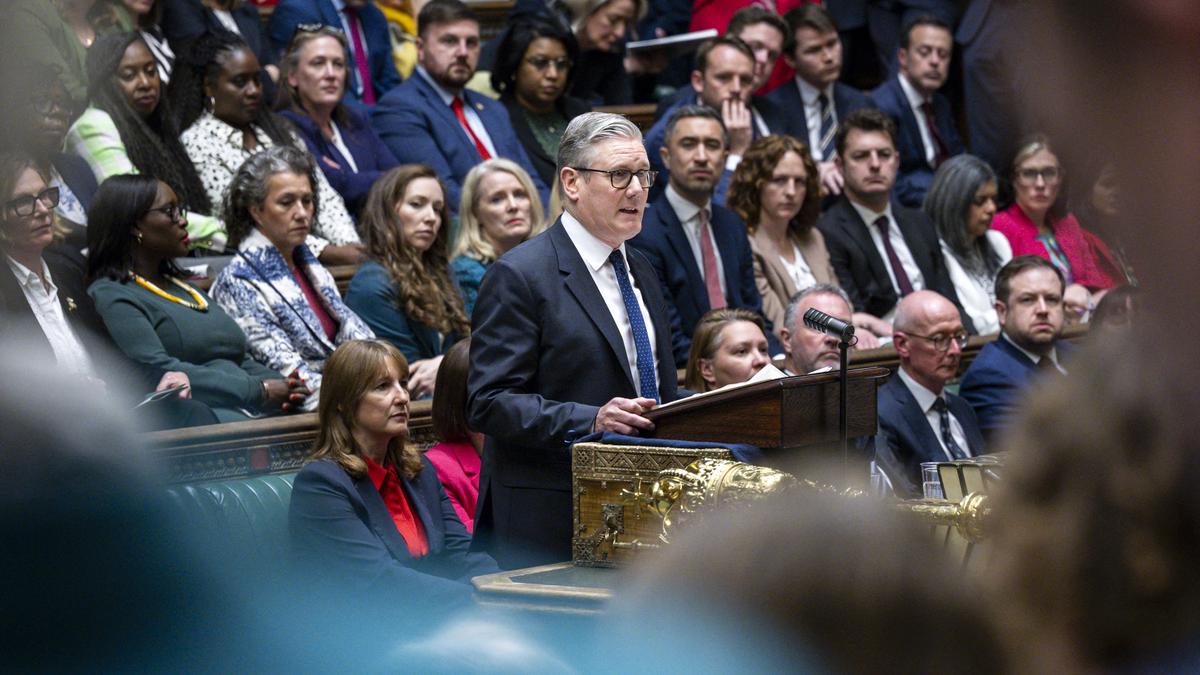
There is a specific kind of isolation that comes with high office. You are surrounded by people, yet you are entirely alone in your responsibility. Keir Starmer is currently inhabiting that isolation. He is standing at the podium, defending a blind spot.
He is asking the country to believe that the man who sees everything—the forensic prosecutor, the detail-oriented leader—somehow missed the most glaring red flag in his own office. It is a tall order. It requires a level of benefit-of-the-doubt that is rarely granted to politicians, especially those who promised to be better than their predecessors.
The ghost of Mandelson isn't going away. He will continue to haunt the halls of Number 10, a reminder of the compromises made to gain power. Every time Starmer talks about integrity, people will look toward the shadow in the corner. Every time he talks about the future, they will remember the man from the past who slipped through the net.
The real story isn't the failure of the vetting process. It’s the revelation of the blind spot. And once a blind spot is revealed, you can never quite trust your own vision again. You start looking over your shoulder. You start wondering what else they haven't told you. You start realizing that the person in charge might be the only one who doesn't know what’s really going on.
The silence in the corridor is no longer peaceful. It’s heavy. It’s the sound of a leader waiting for the next ghost to speak.