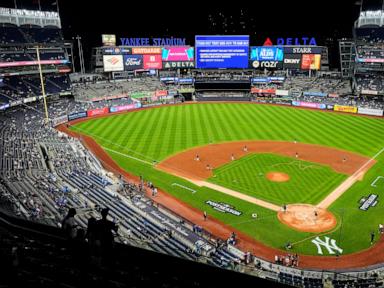
The headlines screamed about Yankee Stadium. Another outbreak in the Bronx. Media outlets painted a picture of a pristine cathedral of baseball suddenly invaded by an insidious microscopic assassin, lurking in the shadows of the hallowed grounds, waiting to strike unsuspecting fans.
It makes for a great script. It is also fundamentally illiterate about how modern water systems function. For another perspective, consider: this related article.
The lazy consensus is comforting: point the finger at a high-profile landmark, demand an emergency scrub-down, blame management for cutting corners, and pretend that once the cooling towers are blasted with chemicals, the phantom has been vanquished. Society loves a villain with a name and a physical address. It gives the news cycle a focal point and gives bureaucrats something to point to during press conferences.
The reality is far more uncomfortable. Legionella bacteria do not sneak into a stadium from outer space, nor are they a sign of sudden, cartoonish negligence. They are native inhabitants of the aquatic world. They live in municipal water supplies, inside your office building’s plumbing, and yes, circulating through the massive heat rejection systems of multi-million-person urban centers. Similar reporting on this trend has been published by Mayo Clinic.
When a cluster hits a neighborhood, the knee-jerk panic machine whirls into action. Politicians demand heads roll. Regulators hand out emergency orders to show they are awake at the switch. Facility managers panic-buy biocides. Everyone sleeps better thinking the monster has been slain. Meanwhile, the underlying thermodynamic and microbiological reality of urban water management remains completely unaddressed, guaranteeing the next outbreak is already ticking away inside another pipe miles away.
If you want to understand why these outbreaks keep happening, you have to stop looking at them as localized crimes and start looking at them as systemic symptoms of an aging, neglected civil infrastructure running on models designed in the mid-twentieth century.
The Myth of the Sterile Pipe
Let us start with the core technical misconception that drives public hysteria: the belief that a large commercial or industrial water system can ever be truly sterile.
It cannot.
Water entering Yankee Stadium or any other massive facility from the municipal grid is not pure H2O. It is a biological soup. It contains minerals, organic matter, and various microorganisms. When that water hits a cooling tower, a domestic hot water loop, or a decorative fountain, it meets an ideal environment for biological proliferation: warmth, aeration, and a buffet of nutrients.
The mainstream narrative treats the discovery of Legionella in a cooling tower as a smoking gun. It is not. It is like finding mold spores in a damp basement. The question was never whether Legionella was present. The question is why it was allowed to amplify beyond safe operational thresholds.
To understand amplification, you have to look past the water itself and look at what is clinging to the walls of the pipes: biofilm.
Biofilm is a slimy matrix of bacteria, fungi, and algae encased in a self-produced protective polysaccharide shield. Inside this fortress, bacteria are shielded from standard disinfectant levels like chlorine or bromine. Worse yet, Legionella has a symbiotic relationship with free-living amoebae that inhabit these biofilms. The bacteria hide inside the amoebae, multiplying safely away from chemical attacks.
When a facility manager tells you they sanitized the system, what they often mean is they dumped a massive dose of chlorine into the water column. That kills the free-floating bacteria swimming in the open water. It does almost nothing to the entrenched biofilm layers sleeping in low-flow pipe sections or dead legs. Within a week, the biofilm sheds, the amoebae burst, and the bacterial count shoots right back up to where it started.
Treating a cooling tower like a dirty kitchen counter that just needs a wipe-down is a catastrophic engineering failure. Yet that is the exact protocol demanded every time a public health scare hits the news.
The Architecture of Stagnation
I have consulted on facilities management for large-scale commercial real estate and municipal installations. I have watched boards of directors blow millions of dollars on reactionary chemical flushes while ignoring the physical layout of their own piping networks.
Modern buildings and massive stadiums are architectural mazes. Over decades of expansions, renovations, and seasonal closures, they accumulate what engineers call "dead legs"—sections of pipe that are capped off or rarely used, where water sits completely still.
Stagnant water is death to a disinfectant residual. In a dead leg, the chlorine or bromine decays rapidly, leaving behind warm, uninhibited water. This is a breeding incubator. When the stadium hosts a full slate of games, or when weather spikes demand maximum cooling tower output, pressure surges push that stagnant, pathogen-laden water out of the dead loops and into the active spray distribution systems.
A cooling tower acts as a giant atomizer. It takes water, heats it, and blows it into the air as a fine mist to dissipate heat. If that mist contains elevated concentrations of Legionella aerosols, and the wind carries it past the property line into the surrounding neighborhood, you have an outbreak.
Notice what is missing from this chain of events: a single bad actor.
The outbreak in the Bronx is not the result of one maintenance worker forgetting to check a gauge on a Tuesday morning. It is the predictable outcome of running complex thermal systems through aging urban infrastructure where water retention times, dead legs, and temperature dead zones create a rolling lottery of microbial growth.
Blaming the stadium is easy. Admitting that our entire urban water grid is operating on outdated engineering parameters is hard.
The Regulatory Theater of Knee-Jerk Reactions
When public health agencies step in after an outbreak, their playbook is entirely reactive. They trace cases back to a geographic footprint, identify a likely aerosol source, shut it down, test the water, sanitize it, and reopen once tests come back negative.
This process is administrative theater designed to calm the public pulse.
A negative test result for Legionella today tells you very little about what that water system will look like in fourteen days. Because biofilms are patchy and bacterial shedding is cyclical, a sample taken right after a chemical shock will often read clean even if the underlying ecosystem inside the pipes is intact.
Furthermore, current regulatory frameworks focus almost exclusively on detection after the fact. We wait for people to get sick with severe pneumonia, trace the footprint, test the suspects, and execute punitive measures. That is not public health management; that is forensic pathology applied to engineering.
If health departments were serious about preventing these crises, they would stop treating water system safety as an episodic compliance checkbox and start enforcing continuous validation standards.
What does real compliance look like? It looks like continuous online monitoring of oxidation-reduction potential, pH, and water temperature gradients. It looks like mandatory thermal eradication protocols built into the core design of building automation systems, rather than chemical band-aids applied after a public relations disaster. It looks like redesigning stadium and commercial water loops to eliminate dead legs entirely, even if it costs millions in structural repiping.
Of course, nobody wants to mandate those kinds of structural costs because they would bring urban real estate and large-scale entertainment operations to a grinding halt. So we stick with the status quo: ignore the systemic decay until an outbreak forces a temporary sacrifice, wash our hands, and wait for the next siren.
The Economics of Neglect
Why do facility owners let conditions deteriorate to the point where bacteria can amplify to dangerous levels? Follow the money.
Running a massive heat rejection system safely requires constant vigilance, expensive water treatment specialists, continuous chemical dosing automation, and frequent physical inspections. It is boring, invisible work that costs a lot of money every single month with zero visible return on investment. When a building manager looks at a tight operating budget, preventive water hygiene looks like an easy place to shave off fifty grand.
After all, nothing bad happens when you cut corners on a cooling tower for six months. The air stays cool. The games go on. The fans fill the seats. The risk accumulates silently, invisibly, underground and inside the walls, until the day the bacteria cross a critical density threshold and catch a favorable wind.
When the hammer finally drops, the owners pay out legal settlements, endure a few weeks of bad press, hire a high-priced crisis PR firm, and install new filtration gear under the glare of media cameras. Statistically, for many large operations, paying the occasional penalty or settlement is cheaper than maintaining a state-of-the-art biological mitigation program every day of the year.
The economic incentive structure rewards neglect and punishes proactive engineering. Until we change that math through severe, continuous structural penalties for poor system design—rather than temporary shutdowns after people fall ill—the cycle will repeat itself across the Bronx and every other densely packed American city.
The Contrarian Reality
Here is the bitter pill that public health advocates and sensationalist media outlets refuse to swallow: Legionella is part of our shared urban ecology. You cannot legislate it out of existence with emergency decrees. You cannot spray it away once a year and call it solved.
The obsession with finding a single villain in every outbreak is a comforting delusion that prevents us from doing the hard, unglamorous work of upgrading how our cities handle water. Every older building, every municipal authority, and every major sports complex is sitting on a ticking clock of biological physics.
Stop treating these outbreaks as freak accidents caused by sudden negligence. Start treating them as what they are: the structural tax of maintaining 19th-century water distribution logic in a 21st-century metropolis.
Until we redesign the pipes, eliminate the dead zones, and abandon the fairy tale of sterile water, the next outbreak isn't a possibility. It's just a matter of time and wind direction.