The lazy consensus on foreign policy is a comfortable armchair for people who have never spent a week inside a joint command center. The standard narrative rolls out with predictable clockwork: Washington plays the heavy-handed imperialist, sending gunboats and boots down south, crushing sovereign nations under the boot of counter-narcotics and security operations. Activists write manifestos. Pundits sigh about blowback.
It is clean. It is emotional. And it is fundamentally wrong.
If you think the expansion of United States security posture into Latin America represents a resurgence of traditional gunboat diplomacy or old-school colonial conquest, you are looking at a map drawn twenty years ago. The real mechanism operating today is not military dominance; it is a desperate, reactive scramble to outsource state failure to men in uniforms because civilian institutions across the hemisphere completely imploded.
I have watched policy briefings in windowless rooms where civilian agencies shrugged off total administrative collapse in partner nations, handing the keys straight to defense planners because nobody else possessed a budget, a satellite feed, or a functioning logistics chain.
Let us dismantle the core fiction: that the United States military is expanding its footprint in Latin America out of a predatory desire to control territory or resources. The truth is far more uncomfortable. Washington is terrified of vacuums. And Latin America is currently a series of bottomless vacuums carved out by endemic corruption, transnational cartels with better balance sheets than sovereign states, and systemic governance failures that make military intervention look like triage in a burning hospital.
The Myth of the Expanding Empire
Look at the data from the US Southern Command. Every time an operation expands from maritime interdiction to land-based advisory roles, intelligence sharing, or logistics support, human rights groups cry foul over creeping militarization. They treat every troop deployment as an aggressive chess move.
That perspective ignores the operational reality on the ground.
When a sovereign Latin American government officially requests assistance to secure porous borders, it is usually because the local police force has been entirely compromised by payroll padding from transnational syndicates. These cartels do not operate like street gangs; they operate like multinational corporations with private armies, counter-intelligence units, and enough capital to buy local judiciaries wholesale.
When civilian law enforcement is outgunned and out-financed, the host nation faces a stark binary choice: watch the state dissolve into a narco-state, or invite foreign military assistance to hold the line.
Blaming the United States military for stepping into that void is like blaming the paramedic for breaking a patient's ribs during CPR. You can complain about the methodology, but ignoring the cardiac arrest is fatal.
The real failure here does not lie in the Pentagon. It lies in the hollowed-out diplomatic and economic aid apparatuses that spent decades funding ineffective institution-building seminars while local governance rotted from the inside out. When diplomacy fails and aid vanishes into the pockets of regional kleptocrats, the military is the only instrument left in the national security toolkit that actually works on a deadline.
Why Boat Strikes and Land Campaigns are Symptoms, Not Causes
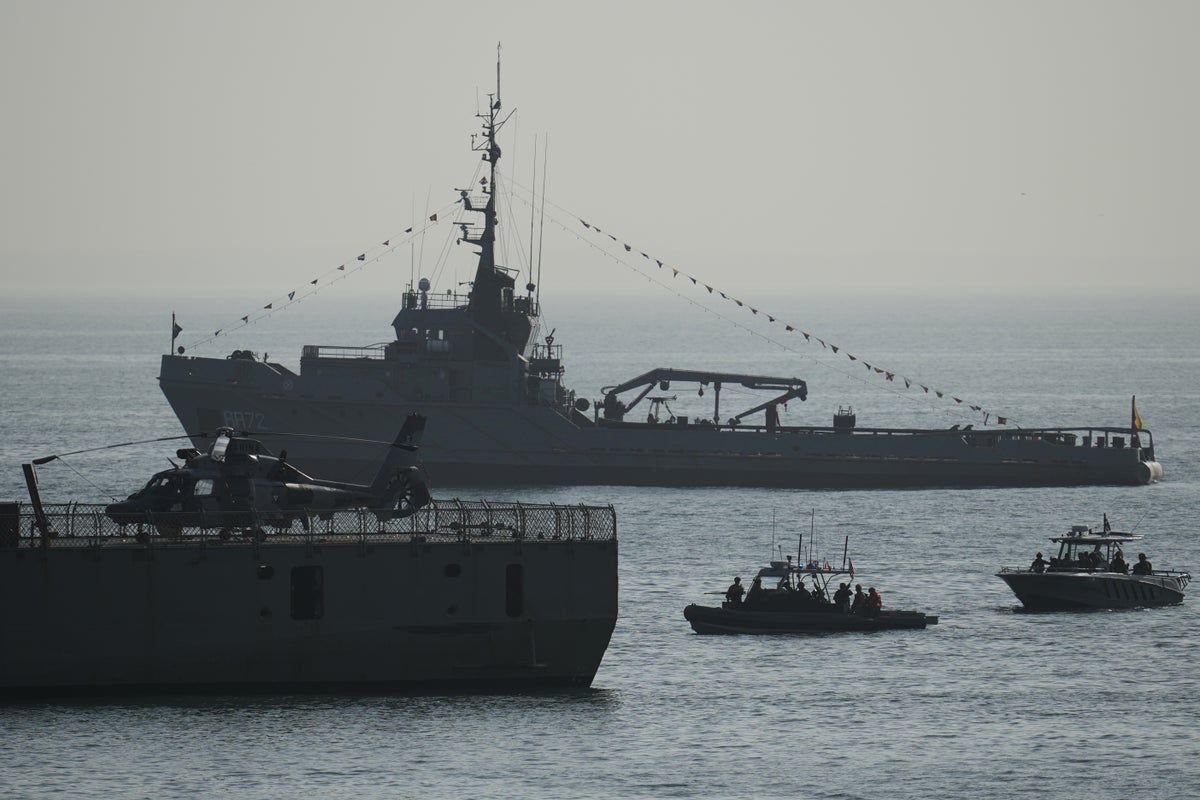
Critics love to point to kinetic actions—maritime strikes, interdiction campaigns, and expanded footprint operations—as proof of aggressive foreign policy. They argue these tactics escalate violence.
They have the causality entirely backward.
Kinetic actions are lagging indicators of institutional decay. You do not launch maritime strikes or expand land operations because things are going swimmingly. You do it because the maritime approaches are wide-open highways for illicit trafficking networks that move billions of dollars in narcotics, weapons, and human cargo with absolute impunity.
Imagine a scenario where a major shipping lane is entirely controlled by non-state armed groups who charge tax on commerce and murder local magistrates who object. When local authorities lack the radar, the fast boats, or the secure communications to contest that territory, what is the alternative? Do we issue a sternly worded diplomatic protest? Do we send an NGO with a clipboard?
The critics offer no viable alternative because there is none within the realm of conventional civilian diplomacy. They prefer the moral purity of criticism over the dirty math of containment.
Furthermore, the expansion onto land is not an offensive push; it is an attempt to secure chokepoints before transnational networks establish permanent territorial control. Cartels in parts of Central and South America do not just smuggle drugs anymore; they govern. They collect taxes, run utilities, and adjudicate disputes. When a foreign military trains local counter-terrorism or counter-narcotics units on land, they are trying to stop a cancer before it metastasizes across international borders into North America.
To call this an "expansion of a campaign" implies a grand strategic design orchestrated in Washington boardrooms to subjugate populations. The reality is far more pathetic: it is reactive firefighting by an exhausted security establishment trying to plug leaks in a sinking ship with duct tape and satellite phones.
The Costs of Pretending Sovereignty Exists
The most dangerous delusion in modern international relations is the rigid adherence to Westphalian sovereignty when dealing with failed or failing states.
Diplomats love to pretend that every government sitting in a capital city actually controls its national territory. It is a polite fiction. In vast swaths of Latin America, the central government's writ ends at the city limits. Beyond that, local warlords and criminal syndicates hold the monopoly on violence.
When international observers scream about sovereignty violations every time foreign advisors train local troops or share intelligence, they are protecting a legal fiction at the expense of human lives. Thousands of civilians are murdered annually not by foreign drone strikes or military interventions, but by the unchecked violence of non-state actors who exploit the shield of national sovereignty to slaughter their own people without consequence.
Insisting that local governments handle these crises entirely on their own, when their institutions are structurally incapable of doing so, is a form of moral cowardice. It allows outside observers to wash their hands of the carnage while patting themselves on the back for respecting international law.
If you want the United States military out of Latin America, the solution is not to demand unilateral withdrawals or decry security cooperation. The solution is to build local institutions that actually work—courts that cannot be bribed, police forces that do not moonlight for cartels, and economies that offer young people a future outside of the underground supply chain.
Until the international community is willing to make the massive, long-term investments required for actual state-building rather than performative aid packages, the men and women in camouflage will remain the only line of defense against total regional collapse.
Stop confusing the symptom for the disease. The military footprint is not the fire; it is the smoke alarm.

:max_bytes(150000):strip_icc()/lake-mead-173940030-5c25228846e0fb00014e8584.jpg)
