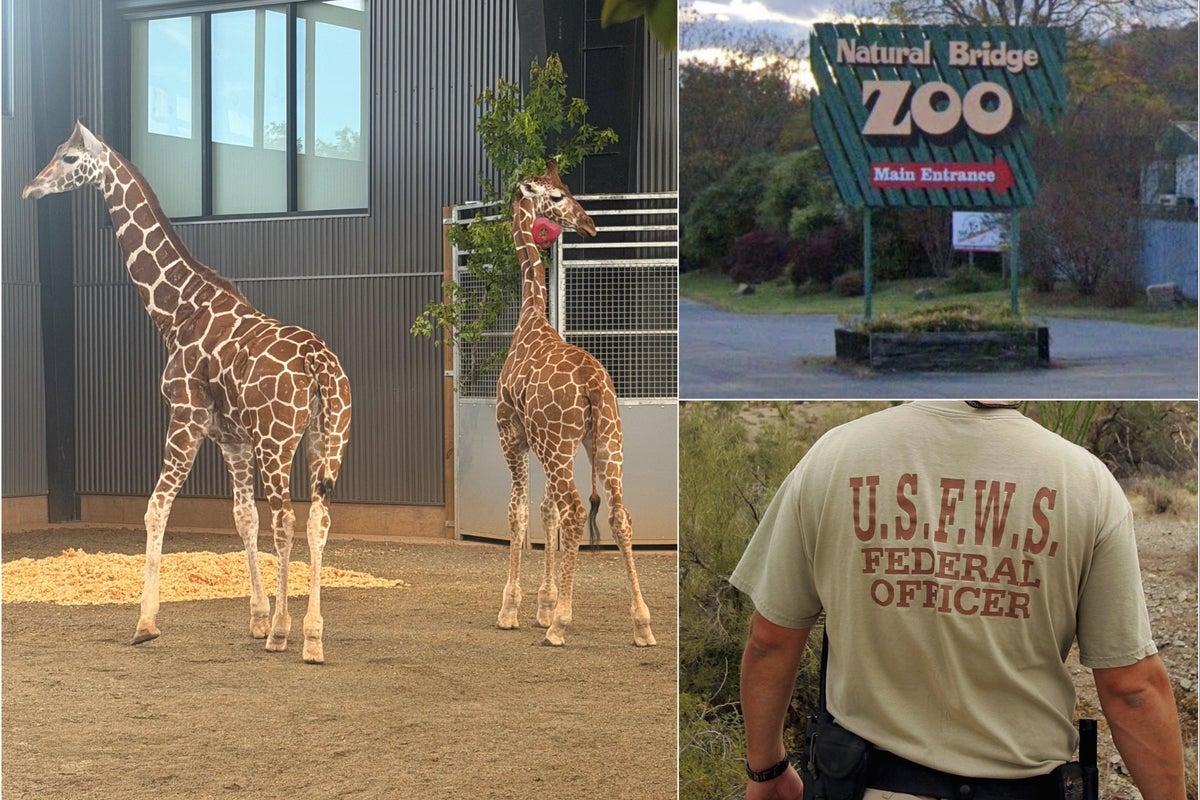
The headlines screamed about a double-crossing informant and two missing baby giraffes from a Virginia zoo. The media narrative is neat. It offers a villain, a cloak-and-dagger federal investigation, and an exotic heist storyline straight from a cheap streaming thriller.
Everyone wants to point fingers at the snitch who allegedly played both sides. It is a lazy consensus. It gives the public a neat wrapper for a messy problem.
Focusing on the informant misses the systemic rot that allowed two infant animals to vanish in the first place. I have spent years tracking illicit wildlife supply chains, security audits, and institutional compliance failures. When a high-value animal disappears, an informant is never the root cause. An informant is just a symptom of a porous ecosystem where security is an afterthought and paperwork substitutes for perimeter defense.
The Flawed Premise of the Inside Job
The standard reporting treats the double-crossing informant as the master architect of the theft. That perspective assumes a level of criminal sophistication that rarely exists in wildlife trafficking rings. Most illegal animal movement relies less on Ocean's Eleven planning and more on profound institutional negligence.
Let us look at the actual mechanics of facility security.
When federal authorities investigate missing exotic stock, they usually uncover a cascade of vulnerabilities:
- Outdated microchip tracking protocols.
- Insufficient nighttime surveillance coverage.
- Lax vetting processes for temporary handlers and contractors.
- Zero real-time inventory reconciliation.
Blaming a shady intermediary lets facility management off the hook. It shifts the burden of accountability from the executives who underfunded security budgets to a single dishonest actor. If an asset worth hundreds of thousands of dollars can walk out of a gate because a snitch lied, the gate was broken long before the lie was told.
Dismantling the Paper Trail Illusion
Exotic animal facilities love to hide behind compliance checklists. They point to USDA licenses and Association of Zoos and Aquariums accreditation as proof of ironclad safety.
This is a dangerous illusion.
Regulatory compliance is a baseline, not a shield. A facility can check every box on a federal audit sheet and still be an operational sieve. Infant giraffes require specialized neonatal care, strict temperature controls, and massive transport logistics. You cannot simply stuff a baby giraffe into the back of a sedan and drive across state lines without raising alarms unless the infrastructure itself is blind to the movement.
Imagine a scenario where the administrative staff spends more time drafting public relations statements about conservation than maintaining perimeter integrity. That is not an anomaly. That is the baseline for most underfunded regional exhibits operating on tight margins.
The Economics of Exotic Smuggling
Why steal baby giraffes? The black market demand is driven by private collectors who view endangered species as status symbols.
The economics are brutal. When the penalty for wildlife trafficking is viewed merely as a cost of doing business rather than an existential threat, criminals will continue to exploit the weakest link. Informants are cheap. Bribes are cheaper. What is expensive is upgrading to biometric access controls, 24-hour thermal imaging, and independent third-party security audits.
Facilities routinely choose the cheaper risk. They gamble that lightning will not strike. Then, when the worst happens, they search for an external scapegoat to absorb the blame.
What Real Security Looks Like
Stop treating exotic animal theft like a detective mystery. Treat it like corporate asset protection.
If you run an operation holding high-value, highly mobile, and vulnerable wildlife, your protocols need to reflect reality, not wishful thinking.
- Zero Trust Access: No employee, contractor, or volunteer should have unsupervised access to neonatal stock without dual-auth verification.
- Independent Oversight: Internal compliance reviews are worthless. Bring in external auditors who have zero stake in protecting the institution's public image.
- Immediate Redundancy: Physical barriers must be backed by secondary electronic tripwires that alert local law enforcement directly, bypassing internal notification chains where delays happen.
The informant did not steal the giraffes. The system handed them over. Until we fix the system, the next headline is already inevitable.