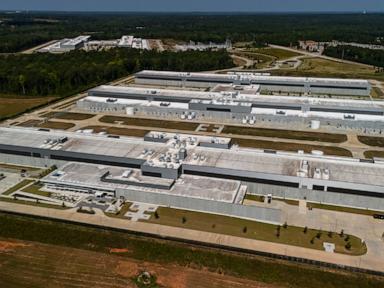
Washington just passed another piece of theater disguised as utility reform. The latest bill claims to shield everyday ratepayers from the supposed energy-hogging threat of artificial intelligence and cloud computing data centers. Lawmakers love this narrative. It provides a simple villain: the faceless tech warehouse sucking up local juice while ordinary citizens pay inflated monthly statements.
It is a clean story. It is also fundamentally dishonest.
I have spent the last fifteen years auditing grid infrastructure and negotiating power purchase agreements for heavy industrial operations. I have watched utilities use public panic as a cover to hike rates on captive residential customers while quietly cutting sweetheart deals behind closed doors. Blaming the server farm down the road lets politicians duck accountability for decades of deferred infrastructure maintenance, under-invested transmission lines, and market deregulation experiments that went sideways.
The lazy consensus holds that compute clusters are stealing power from homes. The reality is that these facilities are the only entities footing the bill for the grid upgrades we should have built twenty years ago.
The Grid Was Broken Long Before the First Server Rack Arrived
Listen to any municipal hearing on a new computing facility, and you will hear a chorus of complaints about overloaded substations and looming brownouts. The implication is that a sleepy suburban or rural grid was humming along just fine until Silicon Valley showed up with millions of power supplies.
This is revisionist history.
Our transmission infrastructure is ancient. Much of it was built during the post-war boom and designed for a linear, predictable flow of electricity from central coal and gas plants to passive consumers. That topology died when deregulation splintered generation from transmission, and it died completely when intermittent renewables disrupted load curves.
Utilities deferred maintenance for decades because state regulators capped their returns on capital investments. They starved the system. Then came the electrification wave—heat pumps, electric vehicles, and industrial reshoring. The grid was already at a breaking point.
When a hyperscale infrastructure hub moves into a region, it does not simply tap into existing excess capacity. It pays for the party.
Major cloud providers and artificial intelligence labs do not plug into the wall like an appliance. They negotiate massive interconnection agreements that require them to fund new substations, upgrade transmission corridors, and sometimes build dedicated generation assets from scratch. They inject billions of dollars of capital into regional electrical systems. Without these investments, the local grid would still fail under standard demographic growth, but ordinary ratepayers would shoulder 100 percent of the financing cost through state-approved rate cases.
The Subsidized Utility Game You Are Not Supposed to See
Let us talk about who actually pays for utility mismanagement.
When a monopoly utility wants to build a new gas turbine or string high-voltage wires across a state, it does not risk its own capital. It goes to the public utility commission and asks for a guaranteed rate of return on equity, usually locked between nine and eleven percent. That return is baked directly into your monthly bill.
For decades, utilities enjoyed a stagnant demand profile. Industrial load was flat or declining as manufacturing moved overseas. To grow their profits—because the only way a regulated monopoly grows earnings under the traditional rate-of-return model is by spending more capital—they needed a new justification for mega-projects.
Enter the artificial intelligence boom.
Utilities look at a multi-billion-dollar hyperscale campus not as a threat, but as a golden goose. They can propose billions in grid expansion, secure guaranteed investor returns, and distribute the depreciation costs across a massive volume of kilowatt-hours.
The friction arises when utilities try to shift the risk of these capital expenditures onto residential ratepayers before the new load actually materializes or when long-term contracts fall short. That is a regulatory failure, not a technology failure. If state utility commissions were doing their jobs, they would enforce strict ring-fencing rules ensuring that large-scale industrial customers pay the exact marginal cost of their infrastructure footprint without a single cent bleeding over to residential meters.
Instead, politicians pass vague bills with feel-good titles that sound proactive while changing none of the structural incentives that let utilities game the rate base.
The Co-Location Fallacy and Clean Energy Realities
Another favorite argument from the anti-datacenter lobby is that these facilities derail climate targets by keeping fossil-fuel plants online or dragging coal plants back from retirement.
Again, look at the mechanics instead of the headlines.
Compute operators are some of the most aggressive buyers of corporate renewable power on earth. They cannot meet their internal environmental mandates by burning coal. They sign multi-decade Power Purchase Agreements (PPAs) that finance the construction of new utility-scale solar, wind, and storage farms.
When a hyperscale operator approaches a grid operator today, the conversation is rarely about plugging into an existing coal plant. It is about co-locating near nuclear generation or building dedicated zero-carbon microgrids because their computing hardware requires absolute uptime and staggering quantities of power that standard retail grids simply cannot guarantee.
Nuclear energy provides the ideal baseline. We are watching tech giants scramble to restart shuttered nuclear facilities like Three Mile Island or invest directly in small modular reactor designs. Critics call this an energy grab. I call it industrial patronage that finally revitalizes the nuclear sector after thirty years of political paralysis.
If you want a decarbonized grid, you need massive capital investment in clean baseload generation. Computing infrastructure provides the anchor tenant demand required to make those multi-billion-dollar generation projects financially viable. Without that industrial anchor, building new clean energy at scale remains an uphill battle of subsidies and intermittent market spikes.
Stop Fighting the Future and Fix the Regulators
The legislation currently moving through various statehouses and federal committees operates on a panic response. It treats high-density computing as an infestation rather than an industrial transformation.
If we want to protect consumers from rising energy costs, we need to dismantle the outdated regulatory frameworks governing power markets.
First, we need true market pricing transparency. If a heavy power consumer requires dedicated transmission lines, they should pay for the entire corridor, period. No cross-subsidization hidden in complex rate design filings.
Second, we must overhaul public utility commissions. Too many commissioners are political appointees with zero engineering or financial background in modern grid architecture. They rubber-stamp utility rate hikes because they do not understand how load forecasting works in the digital age.
Third, stop pretending we can have modern technological advancement without physical infrastructure. You cannot train frontier artificial intelligence models, stream high-definition media globally, and run cloud-native financial systems on a nineteenth-century electrical grid patched together with bail wire and political prayers.
The bill passed this week does not solve high energy bills. It manages the symptoms of a decayed system while punishing the one sector willing to pay for the cure.
Next time you see a headline about server farms draining the local power supply, look past the populist panic. Follow the money to the balance sheets of the regional utilities, and ask yourself who really failed to prepare for tomorrow.