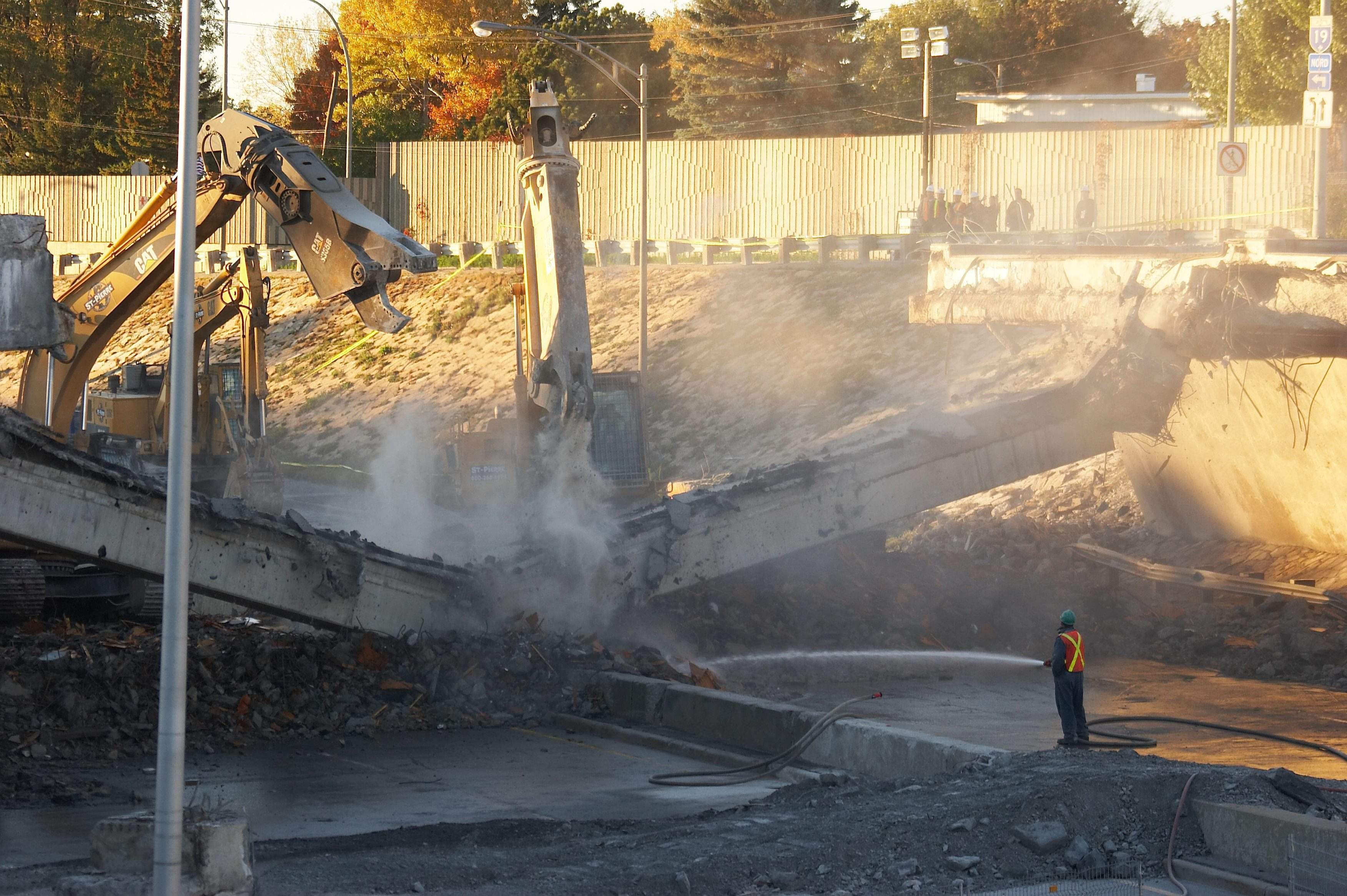
Every single year, the anniversary of the De La Concorde overpass collapse in Laval drags out the exact same lazy emotional theater. Columnists write mournful eulogies about concrete turning to dust, politicians pledge billions of dollars for fixing our aging roads, and the public is conditioned to look at every rusting steel beam above a highway as an impending catastrophe. It is a comforting narrative. It treats structural failure like a natural disaster of time, an inevitable consequence of aging materials. It is also completely, dangerously wrong.
The bridge did not fall down on September 30, 2006, simply because it was old. It collapsed because it was a textbook monument to structural hubris, executed with defective materials, approved by a broken procurement system, and maintained under an inspection regime that relied on visual guesswork instead of physics.
When we accept the lazy consensus that infrastructure fails because of the calendar, we give incompetent engineering, corrupt municipal contracting, and complacent oversight a free pass. Let us dismantle the fiction and look at why our obsession with bridge age is blinding us to actual engineering reality.
The Structural Sin of Cantilever Design
To understand why the Laval overpass failed, you have to look past the age of the structure and examine its geometry. The overpass utilized a cantilever drop-in span design, a configuration that was wildly popular during the frantic highway expansion booms of the 1960s and 1970s.
In a cantilever system, weight is supported by projecting beams that lean on each other or hold a suspended central span. It is an efficient design on paper because it saves materials and allows for faster construction. But it has a fatal flaw: zero structural redundancy.
If a redundant grid bridge loses a single load-bearing member, the surrounding network redistributes the weight. The structure finds alternate paths for the load, sagging visibly before anything catastrophic happens. A cantilever drop-in span does not negotiate. If a critical joint, shear key, or supporting corbel fails, the suspended span simply detaches and drops.
The Laval overpass did not suffer from general wear and tear; it suffered from an inherently unforgiving structural typology built without fail-safes. Engineers of that era traded safety margins for construction speed and material thrift. Blaming the concrete for being old ignores the fact that the design was a loaded gun waiting for a trigger.
The Myth of the Concrete Expiration Date
Public officials love to claim that concrete has a fixed expiration date, much like milk in a refrigerator. This is a brilliant marketing campaign for civil engineering firms looking for perpetual government refurbishment contracts, but it has no basis in physical science.
Concrete does not rot simply because time passes. The Roman Pantheon has stood for nearly two millennia using volcanic ash and lime mortar, enduring seismic activity, moisture, and centuries of environmental abuse. Modern Portland cement concrete can last for generations if proportioned, poured, and protected correctly.
The problem with mid-century infrastructure is not that concrete expires. The problem is that the construction industry during the post-war boom engaged in systemic shortcuts. At the Laval site, forensic investigations revealed that the concrete slab was poured with excessive water content, creating a porous matrix that invited moisture infiltration. Furthermore, reinforcing steel bars were placed too close to the surface, leaving inadequate concrete cover to protect the steel from corrosive agents.
When you combine porous concrete with aggressive winter de-icing salts, you create an electrochemical disaster. The salt penetrates the concrete, reaches the steel rebar, and causes it to rust. As rust forms, it expands up to six times its original volume, generating internal pressures that crack the concrete from the inside out.
That is not aging. That is chemical degradation born of poor construction practices. Treating it as an inevitable consequence of time prevents us from holding builders and contractors accountable for sub-standard work.
The Procurement Race to the Bottom
If you want to find the real root cause of infrastructure collapses, stop looking at blueprints and start auditing municipal balance sheets.
Public works projects are routinely auctioned off through a low-bidder procurement model. When a city or provincial government solicits bids for bridge maintenance or construction, the governing legislation often forces them to award the contract to the cheapest applicant.
This creates a perverse incentive structure. Contractors submit razor-thin bids to win the contract, and then spend the duration of the project finding every possible way to cut corners to avoid losing money. Engineering oversight is slashed, material quality checks are minimized, and preventative maintenance schedules are deferred to save cash.
When the lowest-bidder model dominates public infrastructure, safety is treated as a variable expense rather than a fixed requirement. Decades of deferred maintenance and deferred inspections in Laval and across North America are the direct result of politicians balancing budgets on the backs of structural integrity.
Wringing our hands over decaying roads while refusing to reform the procurement laws that reward cheap construction is pure hypocrisy. If you buy bridges from the lowest bidder, you are buying a countdown timer.
The Theater of Visual Inspections
Another comforting myth is that we can catch these failures if we just inspect bridges often enough. Governments love to announce increased funding for bridge inspections after every tragedy, as if sending a guy in an orange vest with a flashlight and a hammer is an effective shield against physics.
Visual inspections are a theater of reassurance. An inspector walking underneath an overpass can spot spalling concrete, rust stains, or surface cracking. But surface inspections are entirely blind to the internal mechanics of structural failure.
At Laval, the critical shear failures occurred inside concrete elements where visual observation was impossible without specialized non-destructive testing equipment, such as ultrasonic pulse velocity meters, ground-penetrating radar, or internal stress sensors. The internal reinforcing steel had corroded away inside the concrete core long before any obvious warning signs appeared on the exterior surface.
Relying on visual inspections to catch structural decay is like diagnosing a heart condition by looking at a patient's skin color. By the time the symptoms are visible to the naked eye, the internal failure is already catastrophic.
Yet, transportation departments continue to rely on manual visual checks because they are cheap and easy to document on a spreadsheet. Until we mandate continuous internal sensor monitoring for high-risk structural spans, our inspection regimes are nothing more than bureaucratic window dressing.
What Real Infrastructure Reform Looks Like
If we are serious about preventing another Laval, we need to stop treating infrastructure management as an exercise in nostalgic mourning and start treating it as an engineering discipline rooted in accountability.
First, ban high-risk structural typologies. Cantilever drop-in spans and unbonded post-tensioned systems that lack redundancy should be systematically identified, retrofitted with external support brackets, or demolished and replaced with redundant grid configurations. We know which designs are unforgiving; keeping them in service without heavy structural modifications is institutional negligence.
Second, dismantle the low-bidder procurement system for critical public works. Contractors bidding on bridge construction and maintenance should be evaluated on historical safety records, material quality compliance, and long-term structural warranties, not just the bottom line of the initial estimate. If a contractor cuts corners, they should be permanently barred from public bidding.
Third, replace visual guesswork with mandatory sensor technology. Fiber-optic strain gauges, acoustic emission sensors, and corrosion detectors should be embedded in every major overpass built or repaired today. Physics does not wait for an inspector's scheduled triennial visit. Monitoring systems provide real-time data on load stress and internal degradation, allowing engineers to intervene before a crack propagates into a collapse.
The Hard Truth About Safety
The public wants to believe that safety is guaranteed by time and vigilance. It is not. Safety is purchased through uncompromising design, rigorous material standards, and an absolute intolerance for cost-cutting in structural engineering.
As long as we treat catastrophic structural failures as unpredictable acts of aging infrastructure, we are inviting the next collapse. The concrete isn't failing us. Our willingness to look away from bad design, corrupt procurement, and lazy oversight is.
Stop blaming the calendar. Start fixing the system.