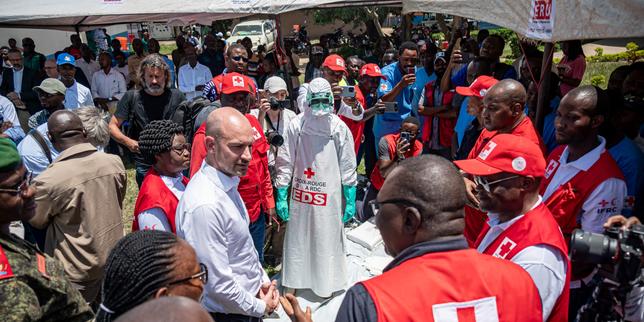
Every time an outbreak hits Central Africa, the playbook writes itself. International media outlets run the exact same panic-driven headline asking where the millions or billions went. The lazy consensus points the finger squarely at local corruption, bureaucratic incompetence, and stolen cash in Kinshasa. It is an easy narrative that sells clicks and satisfies paternalistic Western assumptions. It is also fundamentally wrong.
I have spent years watching emergency response funds get poured into complex conflict zones, only to watch the machine choke on its own architecture. The problem is not that the money simply vanishes into private bank accounts. The problem is that the entire delivery mechanism is engineered to fail before the first syringe even clears customs.
Let us look at the actual mechanics. When a massive influx of international capital arrives for a health crisis in the Democratic Republic of Congo, it triggers a hyper-inflationary localized aid economy. You land cargo planes packed with high-tech cold-chain storage equipment into regions where the primary infrastructure consists of unpaved mud tracks and intermittent diesel generators. You hire legions of international consultants flying business class, paying them per diems that exceed a local doctor's annual salary, while local health workers strike because they have not seen a paycheck in four months.
The money does not disappear into a vault of gold coins. It bleeds out through overhead, security contracting, logistics bottlenecks, and administrative tollbooths demanded by international organizations themselves. The World Health Organization and various multilateral agencies absorb a staggering percentage of funds just keeping their own security details and operational footprints intact in volatile zones like North Kivu.
Blaming local actors for embezzling every single missing dollar ignores the structural violence of how humanitarian aid is actually structured. It is a top-down model designed in Geneva and New York, dropped into a hyper-complex geopolitical reality with zero local agency. When you bypass the existing Ministry of Health structures to set up parallel supply chains, you destroy whatever institutional capacity already exists. Then, when the epidemic subsides, you pack up your tents, fly home, and wonder why the local healthcare system is weaker than when you arrived.
Stop asking where the money went. Start asking why we keep using a twentieth-century colonial funding model to fight twenty-first-century epidemics. Until money flows directly into the hands of community health workers and regional medical directors who actually know the terrain, every single emergency appeal is just expensive theatre.