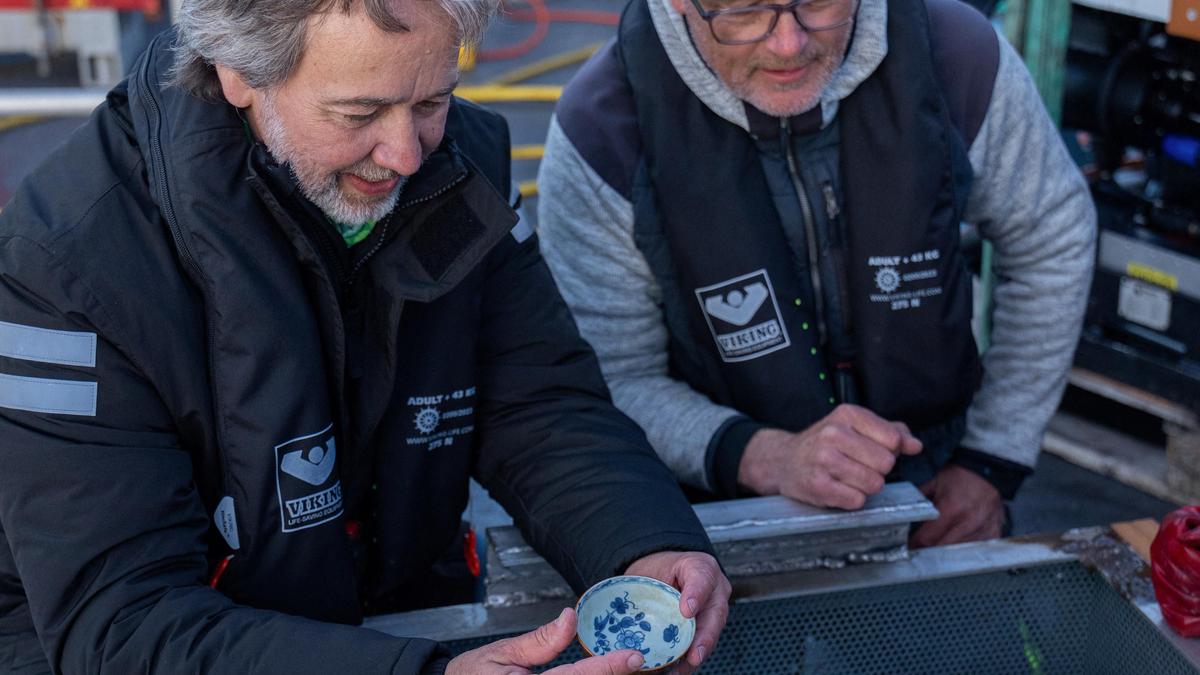
Marine archaeologists in Norway recently salvaged pristine 18th-century porcelain and elaborate chandeliers from a Baltic merchant wreck. While mainstream outlets covering the find have focused entirely on the romantic allure of sunken treasure, the real story lies beneath the bureaucratic surface. This recovery is not just a win for cultural preservation. It represents the opening volley in a fierce, quiet conflict over salvage rights, national heritage laws, and the soaring black-market value of historical artifacts.
The dive team operating off the southern coast of Norway managed to bring up remarkably preserved luxury goods from a vessel that sank over 250 years ago. Finding delicate Meissen-style porcelain and heavy brass chandeliers intact after centuries underwater is an undeniable archaeological triumph. Yet, the smooth narrative presented to the public masks a complex web of international maritime law, underfunded state institutions, and the commercial pressures that threaten to privatize human history.
The Logistics of Deep Water Preservation
Sinking into the freezing, low-oxygen environments of Scandinavian waters acts as a natural time capsule. Wooden hulls that would be chewed to dust by shipworms in the Caribbean remain structurally sound here for centuries. This unique chemistry is what preserved the delicate glaze on the recovered porcelain and prevented the copper-alloy chandeliers from dissolving into green sludge.
Recovering these items requires an agonizingly slow process. Divers cannot simply swim down and grab a artifact. Mud and silt must be cleared away using delicate hand-held suction dredges that can easily crush brittle ceramic if the pressure fluctuates. Once an item is freed from the seabed, the clock starts ticking. Exposure to oxygen and a change in atmospheric pressure can cause rapid degradation. The salt embedded in the porous clay of the porcelain will crystallize as it dries, shattering the artifact from the inside out unless it undergoes months of controlled desalination baths.
The state-funded museums tasked with this preservation work are already operating on shoestring budgets. Every plate brought to the surface represents thousands of dollars in long-term conservation costs. This financial reality creates a glaring paradox. The government celebrates the find for its cultural value, but the institutions responsible for keeping the history alive are drowning in the fiscal responsibility of maintaining it.
The Exploitation of Maritime Grey Areas
International waters and even contiguous economic zones are governed by a patchwork of outdated treaties. The 2001 UNESCO Convention on the Protection of the Underwater Cultural Heritage aims to prevent the commercial exploitation of wrecks, but its enforcement is notoriously toothless. Norway boasts strict domestic cultural heritage laws, but those laws face immense pressure the moment a wreck is tied to foreign commerce.
Consider the ownership trajectory of an 18th-century merchant vessel. The ship may have been built in the Netherlands, flying a Danish flag, carrying British cargo, and sinking in waters that now fall under Norwegian jurisdiction. Who owns the cargo?
Historical precedent shows that nations routinely clash over these definitions. Commercial salvage companies watch these state-led excavations with intense interest. They use public archaeological data to map out nearby debris fields, waiting for the state funding to dry up so they can swoop in under the guise of commercial salvage. The line between a legitimate historical excavation and glorified state-sanctioned treasure hunting is incredibly thin.
The Black Market Demand for Untraceable Antiques
The true driver of the tension surrounding these wrecks is the insatiable global demand for historical luxury goods. Wealthy private collectors are moving away from easily tracked paintings and turning toward antiquities with murky origins. A chandelier recovered by a private diver and sold through a boutique auction house in London or Zurich can easily fetch six figures.
- Anonymity: Maritime artifacts lack the paper trails of land-based art.
- Lack of Registry: There is no global database for items still trapped in unmapped shipwrecks.
- High Liquidity: Wealthy buyers view these items as alternative asset classes that resist inflation.
When the state fails to secure a wreck site completely, it essentially leaves a vault door unlocked. Private looters equipped with modern, civilian-grade sonar technology can locate these anomalies on the seabed with terrifying accuracy.
The Failure of the Public Trust Model
Relying entirely on state museums to fund, execute, and preserve these massive underwater excavations is becoming an unsustainable strategy. Governments are increasingly reluctant to allocate millions in taxpayer money toward maritime archaeology when public infrastructure ashore is crumbling.
This funding gap has forced some regions to consider public-private partnerships. On paper, it sounds reasonable. A commercial diving firm funds the excavation in exchange for a percentage of the duplicate artifacts, like standard coins or mass-produced trade ceramics, while the state keeps the unique pieces like the chandeliers.
In practice, this model fails the public trust. The moment a financial bottom line enters an archaeological dig, science takes a back seat to speed. Commercial divers are incentivized to smash through fragile hull structures to reach the high-value cargo holds, destroying invaluable structural data that tells historians how these vessels were built and navigated.
The Norwegian recovery is a reminder of what is at stake. If we continue to treat underwater archaeology as a series of feel-good human interest stories, we ignore the structural decay of the legal frameworks protecting them. The porcelain and brass resting in Oslo laboratories today are safe, but thousands of identical wrecks remain exposed to the elements and the ambient greed of international salvage syndicates.
The solution requires more than just celebrating a successful dive. It demands an immediate overhaul of international maritime boundaries, strict criminalization of illicit antiquity trading, and a realistic funding mechanism that does not leave our shared human history dependent on museum bake sales and volunteer divers. Until those systemic vulnerabilities are addressed, every item brought to the surface is merely a advertisement for the treasures waiting to be plundered by the highest bidder.