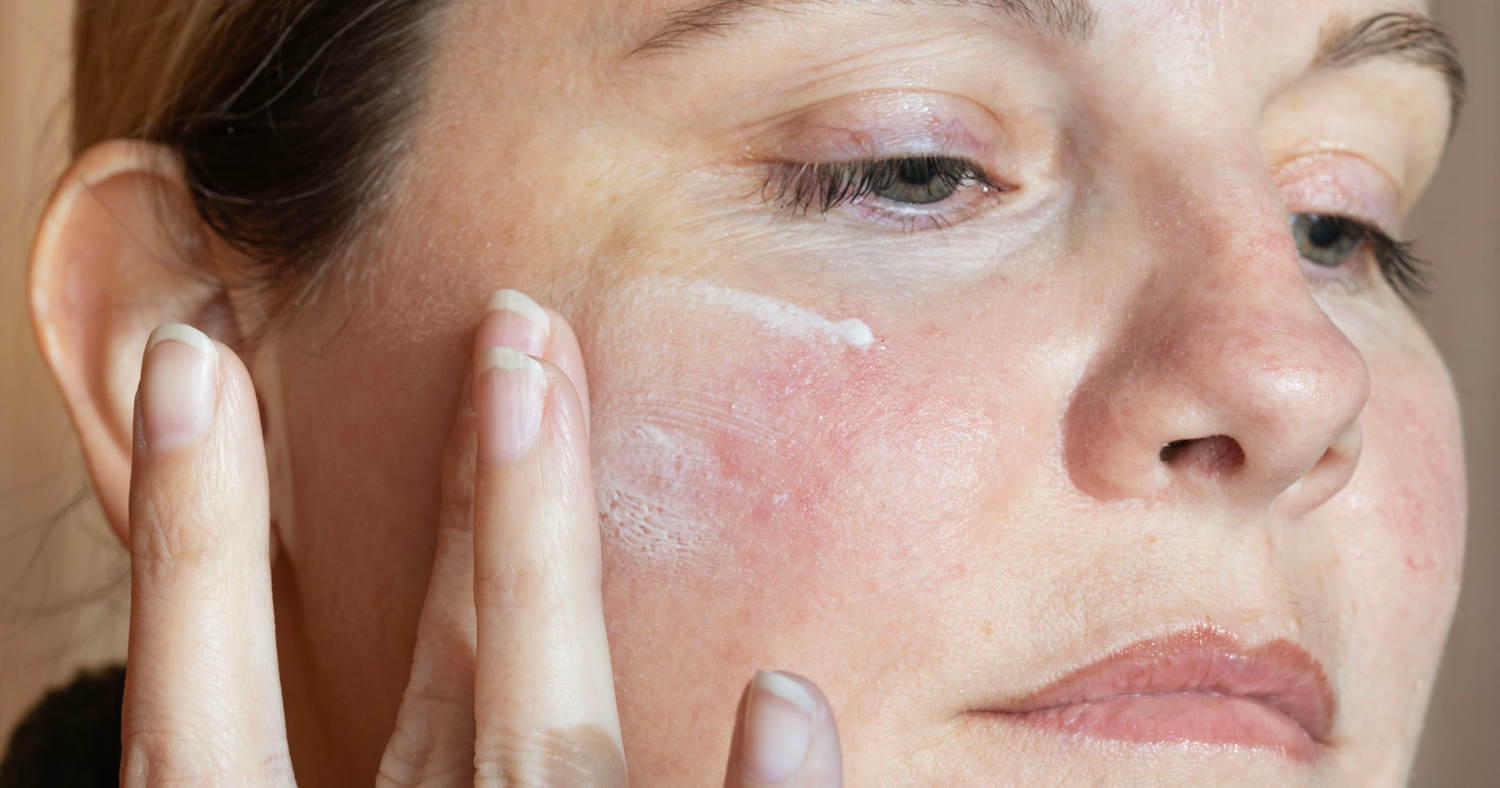
Rosacea is not merely cosmetic redness; it is a chronic, inflammatory vascular disorder characterized by neurovascular dysregulation and a compromised epidermal barrier. Standard skincare advice often relies on vague injunctions to "soothe" and "hydrate," failing to account for the underlying pathophysiological mechanisms driving flare-ups. Effective management requires an analytical framework that targets the three core drivers of the condition: barrier permeability, neurogenic vasodilation, and chronic low-grade inflammation. By mapping these drivers to specific molecular interventions, a predictable system replaces trial-and-error routines.
The Structural Failure of the Epidermal Barrier
In healthy skin, the stratum corneum acts as an impermeable brick-and-mortar structure composed of corneocytes embedded in a lipid matrix of ceramides, cholesterol, and free fatty acids. In rosacea-affected skin, this matrix suffers from a structural deficit. Ceramides are depleted, and the expression of antimicrobial peptides, particularly cathelicidins, is dysregulated and abnormally cleaved into pro-inflammatory fragments by serine proteases like kallikrein 5.
This structural degradation creates a high transepidermal water loss rate. As water escapes, external chemical and microbial irritants penetrate the deeper epidermal layers with minimal resistance. When these irritants breach the stratum corneum, they trigger keratinocytes to release cytokines, which directly activate adjacent sensory nerve endings and microvessels.
Interventions for Barrier Reconstruction
Restoring the stratum corneum requires a targeted replacement strategy rather than generic moisturization.
- Lipid Replenishment: Formulations must contain a precise stoichiometric ratio of ceramides, cholesterol, and free fatty acids approximating 3:1:1 to accelerate barrier recovery.
- Protease Inhibition: Ingredients that modulate serine protease activity help prevent the abnormal cleavage of cathelicidins. Azelaic acid functions effectively here, not only reducing inflammatory papules but also exhibiting mild inhibitory effects on the enzymatic pathways responsible for inflammatory peptide activation.
- Humectant Selection: High-molecular-weight hyaluronic acid or polyglutamic acid should be prioritized over low-molecular-weight variants. Low-molecular-weight humectants can penetrate compromised pathways too quickly, occasionally provoking stinging responses in hyper-reactive tissue.
Neurovascular Dysregulation and the Trigger Matrix
The hallmark flushing of rosacea is driven by an overactive neurovascular unit. Microvessels in the facial dermis exhibit persistent dilation and structural instability, often accompanied by an increased density of mast cells surrounding these vessels. When stimulated by thermal, chemical, or emotional triggers, transient receptor potential vanilloid type 1 channels on sensory nerve fibers open, releasing calcitonin gene-related peptide and substance P. These neuropeptides cause immediate smooth muscle relaxation in arterioles and localized mast cell degranulation, releasing histamine and tryptase, which perpetuates the flush.
Mapping the Trigger Taxonomy
Managing flare-ups requires categorizing triggers by their physiological vector:
- Thermal Vectors: Rapid ambient temperature shifts or radiant heat bypass standard thermoregulation, directly stimulating transient receptor potential channels. Protection involves physical thermal buffering rather than relying on chemical sunscreens, which can contain alcohol vehicles that strip lipids.
- Chemical Vectors: Denatured alcohols, menthol, camphor, and high concentrations of a-hydroxy acids act as direct neurosensory agonists. They provoke stinging without necessarily causing visible allergic contact dermatitis, confusing patients who mistake neurosensory irritation for efficacy.
- Mechanical Vectors: High-friction cleansing or abrasive physical exfoliants induce micro-trauma, releasing cytokines that upregulate vascular endothelial growth factor, stimulating long-term angiogenesis and persistent telangiectasia.
Formulating a Protocol Architecture
Designing an operational routine for rosacea management necessitates strict adherence to minimalism. Every compound introduced to the skin surface represents an additional variable that can disrupt the neurovascular equilibrium.
The Cleansing Phase
The primary objective of cleansing is the removal of surface pollutants and sebum without extracting intercellular lipids. Traditional anionic surfactants, such as sodium lauryl sulfate, denature stratum corneum proteins and strip barrier lipids, increasing post-cleanse tightness and flushing susceptibility.
Non-ionic or amphoteric surfactants operating at a physiological pH near 5.5 must be utilized. This acidity supports the activity of beta-glucocerebrosidase and acidic sphingomyelinase, the key enzymes required for endogenous ceramide synthesis. If the cleansing vehicle elevates skin pH, enzymatic lipid synthesis halts, extending barrier recovery timelines.
The Treatment Phase
Therapeutic agents must be selected based on their specific mechanism of action against inflammation or angiogenesis.
- Niacinamide: At concentrations between two and five percent, niacinamide upregulates de novo ceramide biosynthesis, reduces melanosome transfer, and inhibits nuclear factor kappa B pathway activation, suppressing downstream pro-inflammatory cytokine transcription.
- Centella Asiatica Extracts: Asiaticoside and madecassoside modulate fibroblast proliferation and inhibit nitric oxide production in activated macrophages, dampening the inflammatory cascade responsible for persistent erythema.
- Sulfur Preparations: Precipitated sulfur exhibits mild keratolytic and anti-parasitic properties, targeting Demodex folliculorum mites, which are frequently observed in higher densities within the pilosebaceous units of rosacea patients and can trigger localized immune reactions.
The Protection Phase
Ultraviolet radiation is a primary catalyst for matrix metalloproteinase activation, which degrades dermal collagen and weakens the structural support surrounding facial microvessels. Mineral filters, specifically micronized zinc oxide and titanium dioxide, are superior to chemical filters for rosacea-prone skin. Chemical filters absorb ultraviolet energy and dissipate it as heat within the tissue layers, directly aggravating thermal triggers. Mineral filters function via physical reflection and scattering, bypassing the conversion of light into thermal energy at the epidermal interface.
Systemic Limitations and Protocol Failures
Topical interventions operate under hard biophysical constraints. While topical agents can repair stratum corneum integrity, suppress surface inflammation, and modulate cutaneous neurosensory responses, they cannot reverse established structural telangiectasia or severe phymatous changes.
When microvessels undergo permanent structural dilation and lose their elastic recoil capability, topical vasoconstrictors or soothing agents yield only temporary cosmetic mitigation. In these instances, vascular-specific light therapies, such as pulsed dye lasers or potassium titanyl phosphate lasers, are required to selectively photocoagulate the aberrant vasculature based on the principles of selective photothermolysis.
Deploy a strict elimination protocol for two weeks, reducing the topical regimen to a non-stripping cleanser, a biomimetic barrier repair cream containing a 3:1:1 lipid ratio, and a physical mineral sunscreen. Introduce targeted anti-inflammatory actives sequentially, allowing a minimum of fourteen days between additions to isolate and identify any neurosensory or vascular reactivity before committing to a long-term maintenance schedule.