The Architecture of Survival
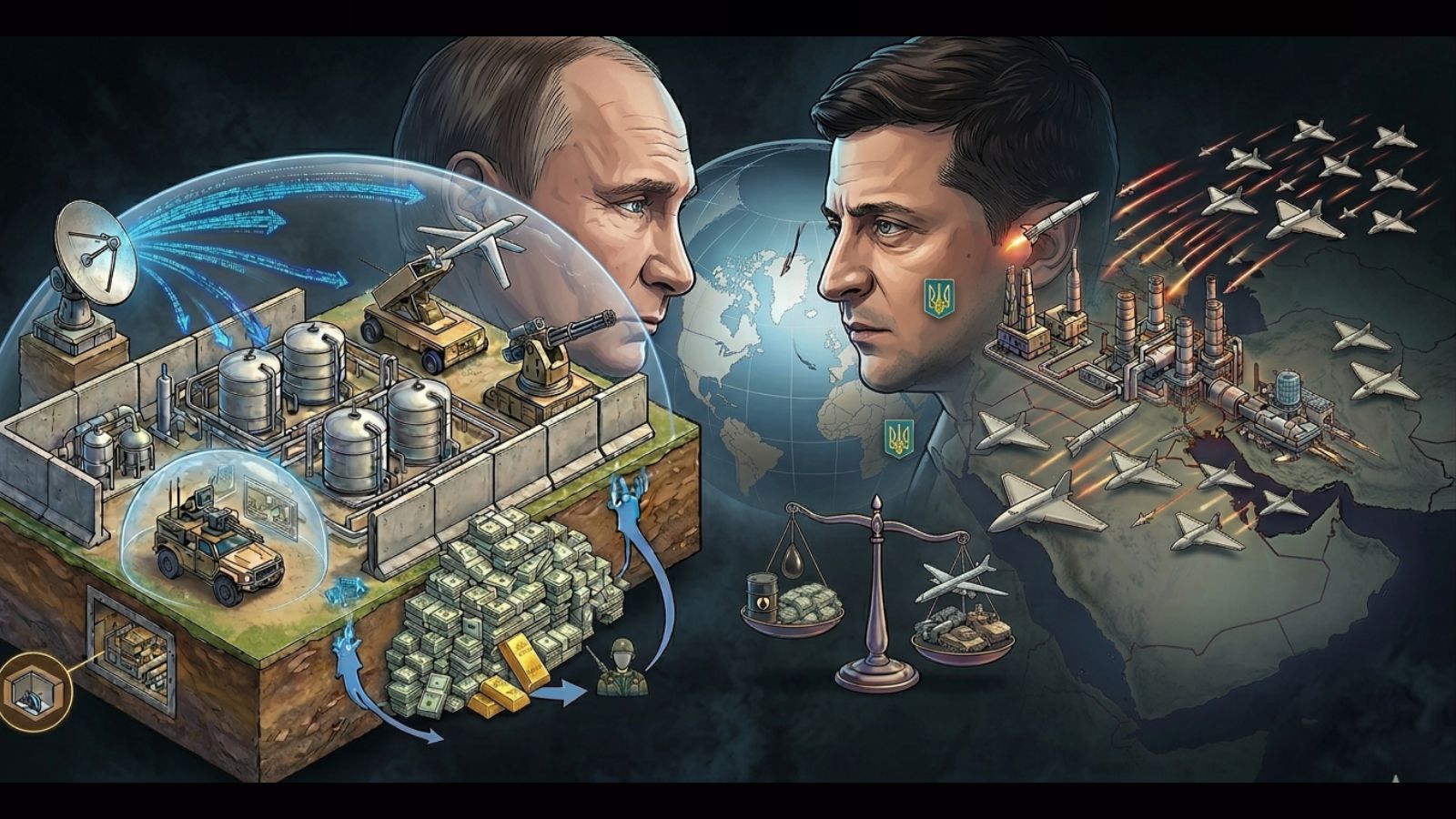
The war in Ukraine has turned civil engineering into a primary weapon of national defense. While the world watches the high-altitude interceptors and the drone dogfights, a much quieter and more expensive battle is happening on the ground. Ukraine has poured billions into "passive defense"—massive concrete shells and sand-filled barriers designed to wrap around high-voltage transformers like a suit of armor. The goal is simple. If you cannot stop the drone from reaching the target, you must ensure the target can survive the hit.
This isn't just a local fix for a regional conflict. It is a fundamental shift in how modern nations view critical infrastructure. For decades, the energy sector operated on a philosophy of efficiency and centralization. Huge, expensive transformers sat in open-air yards, unprotected because the cost of shielding them outweighed the perceived risk of a conventional war. That era is over. Now, governments from the Baltic to the Persian Gulf are looking at the Ukrainian model and asking if they can afford to leave their grids exposed to a thousand-dollar suicide drone. You might also find this related story insightful: The Ghost in the Command Chain.
The math is brutal. A single 750kV transformer can cost tens of millions of dollars and take over a year to manufacture and ship. A Shahed-type drone costs roughly as much as a used sedan. This asymmetry is what makes the grid so vulnerable. By building multi-layered protection—ranging from simple "Hesco" bastions filled with sand to massive reinforced concrete bunkers—Ukraine is attempting to rewrite the rules of modern attrition.
The Three Layers of the Shield
The defense of a power station is now categorized by the type of threat it faces. It is no longer enough to put up a chain-link fence and a few security cameras. The engineers tasked with keeping the lights on have developed a tiered system of physical fortification. As discussed in latest articles by Engadget, the implications are notable.
Level One Protection
The first layer is designed to handle the smallest, most common threats: shrapnel and debris. When a missile is intercepted nearby, the falling fragments can be just as lethal to a cooling fin or a ceramic insulator as a direct hit. The solution here is low-tech. High-tensile steel netting and sand-filled bags are stacked around the base of the equipment. It is cheap, it is fast, and it works against the "collateral" damage of the sky.
Level Two Protection
This is where the engineering gets serious. To stop a direct hit from a loitering munition, you need mass. Engineers have been surrounding transformers with "sarcophagi"—thick walls made of reinforced concrete. These walls are not just intended to block an explosion; they are designed to vent the blast pressure away from the sensitive internal components. If the walls are too tight, the shockwave itself can shatter the transformer’s bushings or cause an internal short circuit.
Level Three Protection
The final tier is the most controversial and the most expensive. It involves moving the most critical components of the grid entirely underground or beneath massive concrete slabs that can withstand cruise missile strikes. This level of protection costs more than the power station itself. In Ukraine, the government has moved to shield dozens of substations with these "second-tier" structures, but the logistical hurdles are immense. You cannot simply put a heat-generating transformer in a sealed box; it requires massive ventilation systems that, in turn, become vulnerabilities themselves.
The West Asian Shadow
The lessons learned in the mud of Eastern Europe are being studied with intense focus in the Middle East. The geography is different, but the threat profile is identical. Saudi Arabia, the United Arab Emirates, and Israel all operate highly centralized grids with massive desalination plants and refineries that are essentially giant, stationary targets.
In 2019, the Abqaiq–Khurais attack on Saudi oil facilities proved that even sophisticated missile defense systems like the Patriot can be bypassed by low-flying drones and cruise missiles. If a regional conflict breaks out in West Asia, the target will not be the tanks in the desert; it will be the transformers and the water pumps. Unlike Ukraine, where the winter cold is the primary killer, a grid failure in West Asia means the loss of air conditioning and, more critically, the loss of water desalination.
The "Ukrainian Shield" model offers a blueprint, but the cost of implementation in the Gulf would be astronomical. The sheer scale of the energy infrastructure in the region makes comprehensive "passive defense" a daunting prospect. Yet, the alternative is a total blackout that could last months while waiting for replacement parts from a global supply chain that is already stretched to its breaking point.
The Problem With Concrete
Concrete is not a magic bullet. There are three major reasons why simply "building a wall" around the power grid might fail to solve the underlying problem.
First, there is the thermal issue. Transformers generate a massive amount of heat. They are usually cooled by large radiators and fans that require a constant flow of fresh air. When you build a concrete bunker around a transformer, you create an oven. If the ventilation system fails—either through a mechanical breakdown or a secondary strike—the transformer will overheat and shut itself down, achieving the enemy's goal without them ever having to land a hit.
Second, the logistical bottleneck. There is a finite amount of high-strength concrete and specialized labor available. Building these structures takes months. In a high-intensity conflict, the pace of destruction will almost always outstrip the pace of construction. You can shield ten substations, but if the enemy hits the eleventh, the grid still fails.
Third, and perhaps most importantly, is the evolution of the threat. We are already seeing drones equipped with "shaped charges" designed to penetrate armor. A concrete wall that can stop a blast might not stop a focused jet of molten copper designed to pierce a tank's turret. The arms race between the wall-builders and the drone-makers is just beginning.
The Decentralization Alternative
Some analysts argue that the obsession with "passive defense" is a dead end. Instead of building bigger walls, they suggest we should be building smaller grids. This is the "microgrid" strategy.
If a city's power is supplied by three massive substations, those substations are high-value targets. If that same city is powered by a thousand smaller, interconnected solar arrays, wind farms, and battery storage units, there is no single point of failure. You can destroy ten percent of the grid, and the other ninety percent keeps running.
This transition is happening, but it is slow. The world is still deeply reliant on the "hub and spoke" model of energy distribution. For at least the next two decades, the big, vulnerable transformers will remain the backbone of modern civilization. And as long as they are the backbone, they will be the target.
The Cost of Staying Dark
The global insurance industry is starting to take notice. Historically, "acts of war" were excluded from most policies, but the line between state-sponsored sabotage and conventional warfare is blurring. Companies are finding it harder to insure major infrastructure projects in "high-threat" corridors unless those projects include significant physical hardening.
This adds a "security tax" to every new kilowatt of power. The cost of electricity won't just be determined by the price of gas or the efficiency of a solar panel; it will be determined by the thickness of the concrete surrounding the switchyard. This is the new reality of the 21st century. The peace dividend is gone, and in its place is a massive bill for sand, steel, and stone.
The irony is that the more we harden the grid, the more we signal its importance. By spending billions to protect these sites, we confirm to any potential adversary that these are the most vital pressure points in our society. It is a psychological game as much as a physical one.
The Global Concrete Race
We are seeing the emergence of a new industrial sector: combat-grade civil engineering. Companies that used to build bridges and skyscrapers are now pivoting to "resilience architecture." They are testing new types of ultra-high-performance fiber-reinforced concrete (UHPFRC) that can absorb massive shocks without cracking.
In the United States, the Department of Energy has begun exploring "Project Apollo," a long-term plan to create a strategic reserve of large power transformers. But having a spare in a warehouse doesn't help if the substation it’s supposed to go into is a pile of rubble. The physical site must be ready to receive the replacement, which means the hardening must happen now, before the crisis begins.
Western Asia is currently the largest market for these services outside of Ukraine. The sheer volume of capital being moved into "grid hardening" in the region is staggering. It is a quiet preparation for a war that everyone hopes will never come, but everyone is starting to believe is inevitable.
The move toward hardened infrastructure represents a loss of innocence for the global energy market. It is an admission that the globalized, interconnected world is a more dangerous place than we allowed ourselves to believe in the 1990s. We are retreating into bunkers, not for our soldiers, but for our machines.
Hardening the Invisible
The final challenge isn't the concrete; it’s the wires. You can bury a transformer, but you cannot easily bury a 400kV transmission line that runs for hundreds of miles across open desert or farmland. The pylons remain exposed. The wires themselves are fragile.
True grid resilience requires more than just protecting the "nodes." It requires a radical rethink of the "links." This means automated repair systems, rapid-deployment pylon teams, and software that can instantly reroute power around a broken segment of the line. The physical shield is only one half of the equation; the digital and logistical "self-healing" capability is the other.
As the conflict in Ukraine drags into another year, the data coming out of the energy sector will be the most valuable resource for engineers worldwide. We are learning exactly how much pressure a grid can take before it collapses, and exactly how much concrete it takes to keep the darkness at bay. This is not a theoretical exercise. It is a race against time, played out in bags of cement and rolls of steel mesh.
Determine which substations in your local jurisdiction serve the most critical life-safety infrastructure and ask your utility provider what their "passive defense" strategy looks like for the next five years.