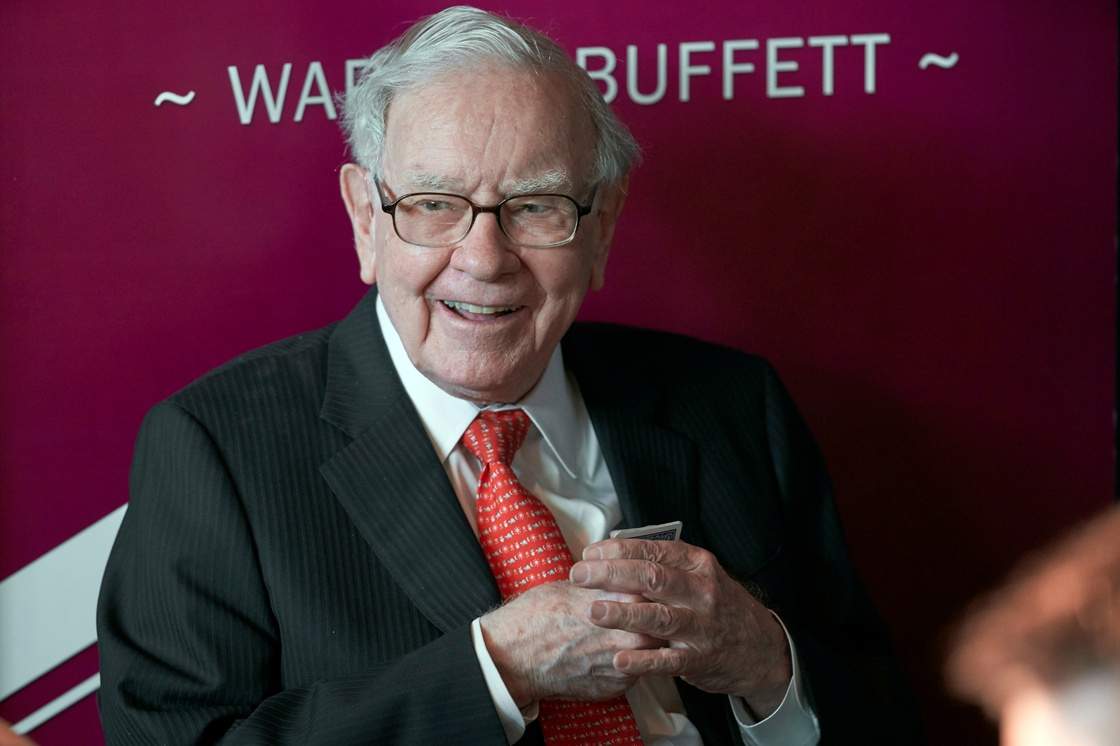
Every financial anchor on television is currently wearing black. They are clutching their pearls, mourning the departure of a ninety-six-year-old man from a leather chair in Omaha, and predicting the immediate unraveling of American capitalism. The narrative is lazy, sentimental, and profoundly ignorant of how multi-hundred-billion-dollar balance sheets actually operate.
The consensus across financial media is simple and catastrophic: Berkshire Hathaway without Warren Buffett is an empty shell, a car with no driver, a collection of disconnected assets bound together solely by the aura of an Oracle. Wall Street wants you to believe that the secret sauce of the twentieth century's greatest investment vehicle is a septuagenarian's folksy aphorisms and a daily diet of Cherry Coke.
They are wrong. Berkshire Hathaway has not been a traditional stock-picking operation for decades. Treating its leadership transition like the death of an artistic genius misses the structural reality of what the company actually is.
The Cult of Personality Hides the Balance Sheet
For fifty years, retail investors and breathless financial journalists have confused entertainment with mechanics. The annual meeting in Omaha is a masterclass in folksy branding. People fly across oceans to buy See's Candies, listen to octogenarians joke about politics, and nod along to stories about buying railroad tracks in the nineteen-eighties.
This theatrical brilliance created a dangerous illusion. It taught a generation of amateur investors that corporate success is entirely downstream of charismatic individual brilliance.
I have watched institutional allocators panic over succession plans for years, as if a multi-national conglomerate with hundreds of thousands of employees is a mom-and-pop grocery store dependent entirely on the owner behind the register. When you strip away the folksy quotes, Berkshire is a fortress built on two pillars that do not require Warren Buffett to function: insurance float and wholly owned operating subsidiaries.
Let us define terms accurately. Insurance float is money that policyholders pay upfront before claims are ever paid out. Berkshire holds tens of billions of dollars in float at a negative cost. That means insurance customers essentially pay Berkshire to hold their capital, which Buffett and his team then deploy into high-return assets. That float machine was engineered decades ago. It runs on actuarial tables, disciplined underwriting, and massive scale. Ajit Jain runs insurance operations with a ruthless, quantitative precision that has nothing to do with reading annual reports in Omahans' living rooms.
The Elephant Size Problem
Wall Street analysts crying over Buffett stepping down ignore the actual existential threat facing Berkshire Hathaway, and it has nothing to do with who sits in the chairman's office.
The real problem is math. Berkshire is too big.
When you manage a cash pile that rivals the GDP of small nations, you cannot generate twenty percent annual returns. It is mathematically impossible. There are simply not enough targets on planet Earth large enough to move the needle for a company of Berkshire's scale. If Berkshire buys a ten-billion-dollar stake in a company, it barely registers on the balance sheet.
Buffett understood this long before the media caught on. That is why Berkshire evolved into an owner of entire businesses—railroads like BNSF, utility companies like Berkshire Hathaway Energy, industrial manufacturers, and massive retail operations. These are capital-intensive, steady-state compounders. They do not need a stock picker. They need competent operators who can maintain margins, allocate capital rationally, and keep cash flows steady through economic contractions.
Greg Abel has been running Berkshire's non-insurance operations for years with surgical efficiency. He is not a charismatic storyteller. He does not quote Benjamin Graham on cable news. He is an operational executioner who understands energy grids, supply chains, and capital expenditure better than almost any executive alive. Yet the financial press treats his ascension as a downgrade because he lacks a folksy nickname.
Why Stock Picking Was Always a Minor Act
The media loves to romanticize Berkshire as the ultimate stock picker. They point to Apple, Coca-Cola, and American Express. They treat these equity bets as acts of prophetic genius.
Let us look at the actual data. For the last twenty years, the vast majority of Berkshire's intrinsic value growth has come from retained earnings of wholly owned operating subsidiaries and massive equity stakes that were accumulated because no other vehicle on Wall Street had the liquidity to absorb them.
Stock picking is a game of marginal edges for small funds. At Berkshire's scale, equity positions are macro allocations. When Buffett bought Apple shares by the truckload, it was not because he discovered some hidden discount on a small-cap balance sheet. It was because Apple had become a tollbooth on modern human existence, throwing off billions in free cash flow with zero capital intensity, and Berkshire had so much cash burning a hole in its pocket that buying massive chunks of Cupertino was one of the few moves large enough to matter.
Any competent allocator with a pristine balance sheet and a permanent capital structure could make those decisions. In fact, many institutional funds could, except they are handcuffed by redemption clauses and short-term quarterly pressures from jittery pension boards. Berkshire's true competitive advantage was never Buffett's brain; it was permanent capital.
The Conglomerate Discount is About to Reverse
For years, Wall Street has applied a conglomerate discount to Berkshire. Analysts argued that a single holding company owning everything from freight rail to underwear manufacturing was too complex, too opaque, and too tied to one man's mortality to trade at peak multiples.
That discount was always lazy analysis. Conglomerates fail when they rely on financial engineering and borrowed money to mask operational incompetence. Berkshire succeeded because its subsidiaries are left alone to run themselves while cash is sucked upward to the holding company to be deployed wherever the return on capital is highest.
When Buffett steps down, the myth of the irreplaceable founder evaporates. That is not a tragedy; it is a cleansing.
Without the distraction of the Oracle's cult of personality, institutional investors will be forced to look at Berkshire through a purely clinical lens. They will look at the massive cash hoard—often criticized as dead weight by short-sighted commentators, but actually the ultimate dry powder for systemic liquidity crunches. They will look at the predictable, boring, recession-resistant cash flows of utility grids and freight networks.
Imagine a scenario where a severe liquidity crisis hits the global banking sector tomorrow. Every hedge fund is facing margin calls. Every private equity firm is choked by high-interest debt refinancing walls. Who has eighty billion dollars in cash ready to write a check before breakfast without asking permission from a syndicate of banks?
Berkshire Hathaway.
That superpower does not evaporate because a ninety-six-year-old man stops walking into the office.
The Uncomfortable Truth About Capital Allocation
Let us address the elephant in the room that financial journalists refuse to touch: Buffett made mistakes, too.
The cult of Berkshire treats every decision as infallible scripture. They gloss over massive capital misallocations like the acquisition of Precision Castparts at the peak of the industrial cycle, which required massive write-downs. They ignore missed opportunities in technology over decades because management admitted they did not understand software business models—a blind spot that cost shareholders trillions in missed upside during the transformation of the global economy.
Buffett was a brilliant practitioner of mid-century value investing, adapted from Graham and Dodd. But the modern economy is built on intangible assets, software networks, and platform monopolies that do not fit neatly onto a balance sheet featuring heavy physical plant and equipment.
Greg Abel does not carry the religious baggage of mid-century value investing. He is pragmatic, operational, and unburdened by the historical dogma of what a "Berkshire company" is supposed to look like. If Berkshire under new leadership becomes slightly more modern in its approach to capital deployment—perhaps acknowledging that intangible assets and digital infrastructure matter as much as freight cars—the company could unlock efficiency that has been dormant for a decade.
Stop Mourning the Oracle
The obsession with leadership transitions in corporate titans reveals a deep insecurity in modern financial markets. We want heroes because heroes are easy to understand. We want to believe that complex institutional machinery is driven by a single magic wand rather than thousands of boring daily decisions made by anonymous managers across fifty states.
Berkshire Hathaway is not a fragile ecosystem kept alive by one man's heartbeat. It is an industrial fortress designed to outlive its creators. Its insurance float is locked in. Its operating businesses provide unsexy, inescapable economic tollbooths on modern life. Its cash reserves give it sovereign-level flexibility.
The commentators crying on television are mourning the end of a good story. They are upset that they will no longer have folksy soundbites to fill Sunday morning broadcast segments.
Good. The entertainment era of Berkshire Hathaway is over. The institutional reality is about to begin, and it is far more powerful than the myth ever was.