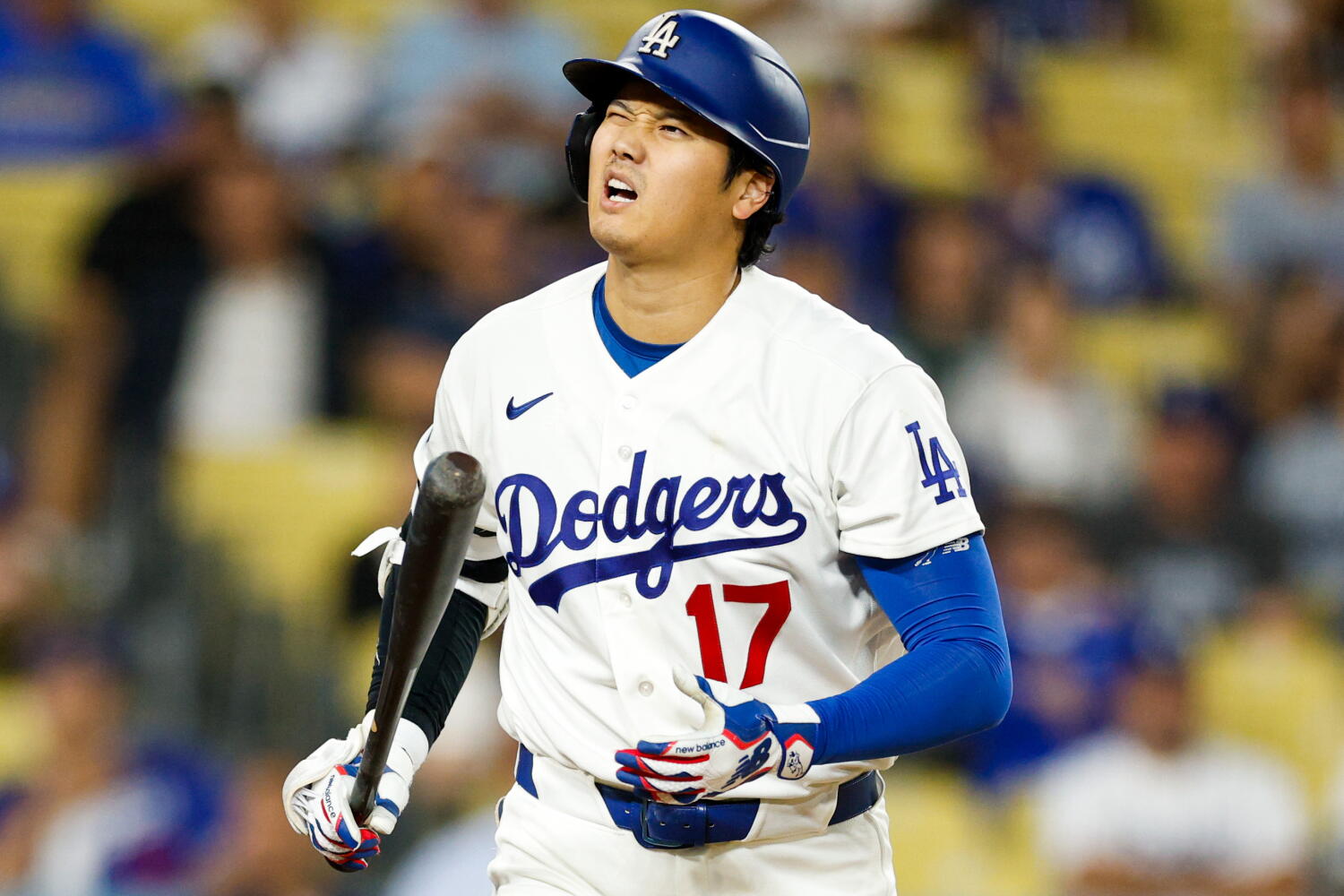
The media is having a collective meltdown. Shohei Ohtani sits for three straight games, and the panic rooms in Los Angeles overflow with hot takes. Every talking head with a microphone wrings their hands about hamstring tightness, mechanical flaws, and the catastrophic fragility of a seven-hundred-million-dollar investment. They treat a routine maintenance pause like a five-alarm fire.
They are missing the entire point.
Panic sells clicks. Caution wins World Series rings. I have spent two decades analyzing front office decision-making, tracking asset management anomalies, and watching organizations crumble under the weight of short-sighted pressure. What the Dodgers are doing with Ohtani right now is not a crisis. It is a masterclass in modern risk mitigation.
Stop treating a baseball player like an indestructible machine and start treating him like the ultimate high-yield asset.
The Fallacy of Everyday Play
The traditionalist baseball mindset demands blood. Fans want their superstars on the field for one hundred sixty-two games, bleeding for the laundry, grinding through minor discomfort until it becomes a season-ending structural tear. This is the same archaic logic that led generations of managers to ruin elite arms by letting them throw one hundred thirty pitches in August.
When a player of Ohtani's singular profile—a two-way anomaly who alters the geometric gravity of an entire lineup—feels the slightest tug in a muscle, keeping him on the bench is mandatory. Yet, the consensus narrative treats preventive rest as an indictment of his toughness.
Let us look at the raw data. Modern biomechanical tracking shows that rotational velocity and deceleration forces on a modern swing put immense strain on the oblique and hamstring complexes. When a player exhibits minor fatigue markers, the risk of a Grade 2 strain spikes exponentially if they push through. A three-day preventative timeout costs the team a fraction of a percent of regular-season run production. A torn hamstring costs them October.
Front offices that cave to the daily ticket-buying public deserve to lose. Andrew Friedman and his analytics group do not care about your weekend trip to Dodger Stadium. They care about late October.
The Asset Management Reality
Imagine a scenario where a hedge fund manager has billions parked in a hyper-volatile, appreciating tech asset. If the system throws a mild error code, does the manager force it to run at maximum capacity until it melts down? Of course not. They throttle the system, run diagnostics, and protect the principal.
Ohtani is not just a player; he is a historical outlier. Finding a hitter who slugs over .600 while simultaneously throwing upper-90s fastballs is a statistical impossibility. Treating him like an interchangeable corner outfielder who should play through minor aches is institutional malpractice.
Critics point to his historic contract as a reason he must play. That logic is backwards. Because of that exact financial and structural commitment, the margin for error shrinks to zero. Protecting the investment is the primary directive. If sitting him for a week prevents a two-month absence, every general manager in the league would make that trade ten times out of ten.
The downside of this approach? You sacrifice a bit of regular-season dominance. You drop a game or two against sub-.500 opponents. But baseball history is littered with teams that won one hundred ten games in June and limped into the postseason with a hospital ward for a roster.
Dismantling The Daily Panic
Let us address the specific hysteria floating around sports talk radio. People Also Ask why the Dodgers are being so secretive about the exact nature of the discomfort. They assume it is a smokescreen, a cover-up for a ticking time bomb in his right arm or leg.
The truth is much simpler: competitive advantage.
In professional sports, information is currency. Giving opponents a precise diagnosis invites targeted pitching strategies or defensive alignment shifts. Keeping the injury designation vague forces opposing managers to prep for both scenarios—Ohtani in the cleanup spot or Ohtani on the bench. It creates cognitive load for the opposing pitching coach. Smart organizations weaponize ambiguity.
Furthermore, the obsession with consecutive games played is a relic of the Iron Man era of Cal Ripken Jr. That era is dead. Today’s athletes are bigger, faster, and exert more rotational torque than at any point in baseball history. The human body has hard physical limits. Ignoring those limits to satisfy a box score fetish is managerial negligence.
What You Should Do Instead of Panicking
If you run a team, manage a project, or lead a high-stakes business unit, take a page from the Dodger playbook. Stop optimizing for daily utilization rates and start optimizing for output durability.
- Identify your irreplaceable assets: Know who actually moves the needle and shield them from unnecessary friction.
- Ignore external noise: The peanut gallery will always demand immediate action at the expense of long-term strategy. Let them scream.
- Embrace planned obsolescence of effort: Rest is not a reward for a job well done; it is a structural necessity for sustained excellence.
The next time a superstar gets scratched, do not look for the disaster. Look for the discipline.
Shohei Ohtani will be fine. Your addiction to instant gratification is the only thing bleeding out.