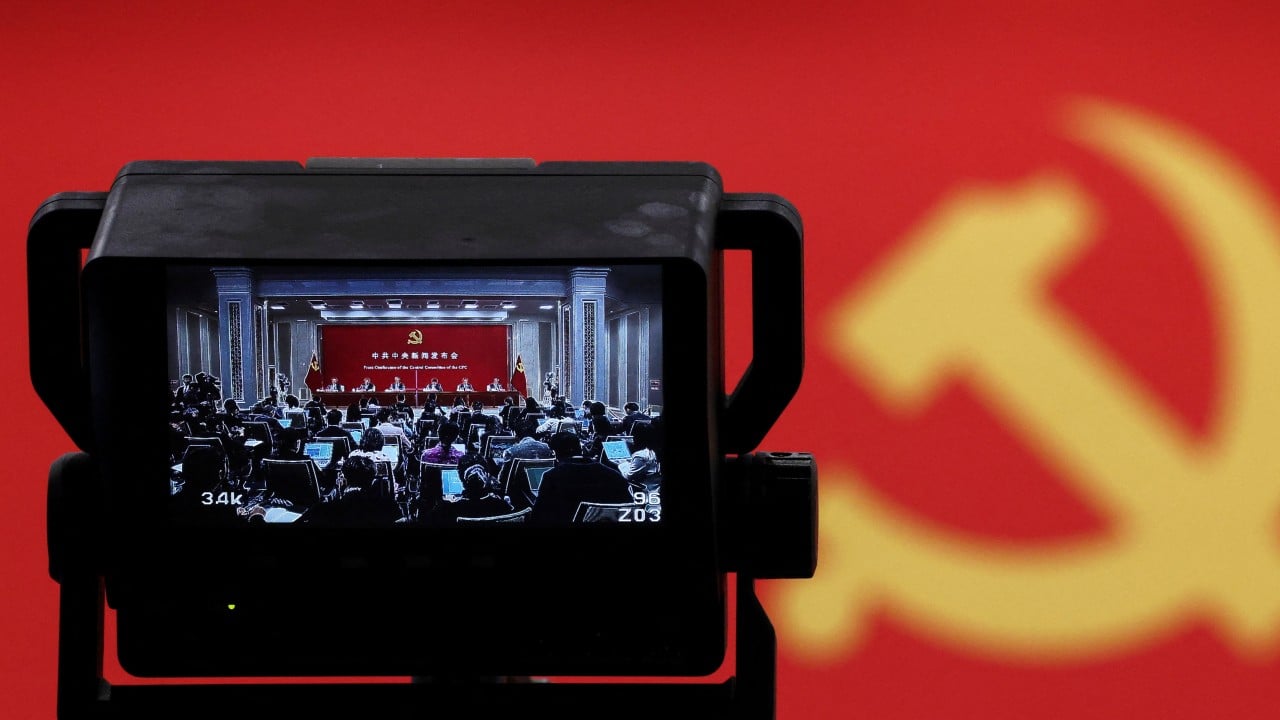
Western financial media runs the same lazy script every time Beijing updates its regulatory playbook. A bureaucrat mentions expanding Chinese Communist Party cells inside private tech firms, and commentators immediately declare the death of Chinese innovation. They paint a cartoon of commissars sitting in product meetings, vetoing algorithms, and strangling engineers with red tape.
That narrative is comforting for Silicon Valley investors, and it is completely wrong.
If you actually spend time inside the ecosystems of Shenzhen, Hangzhou, and Beijing, you see a vastly different reality. The expansion of Party committees inside digital platforms is not an ideological crusade to destroy capitalism. It is an aggressive, state-mandated restructuring designed to break domestic monopolies, redirect capital away from rent-seeking consumer apps, and force China’s richest tech giants to build hard technology that cannot be sanctioned away by Washington.
The Lazy Consensus of the "Tech Crackdown"
To understand why the mainstream coverage misses the mark, look at what Chinese tech giants were actually doing before Beijing stepped in.
By 2020, companies like Alibaba, Tencent, and Meituan had stopped behaving like innovative startups and started acting like nineteenth-century railroad barons. They used massive war chests to build walled gardens. They blocked competitors' links inside their apps. They deployed predatory pricing to wipe out local grocery vendors in lower-tier cities. They funneled billions into financial engineering, microlending, and algorithmic ad-targeting while leaving foundational R&D—like lithography, industrial software, and advanced semiconductors—to rot.
I have sat across from founders in Shanghai who burned tens of millions of dollars on hyper-subsidized food delivery wars simply because it was easier to blitzscale a consumer monopoly than to spend ten years developing enterprise cloud architecture or precision robotics. Capital in China had grown lazy. It chased quick, monopolistic rents on the backs of gig workers and small merchants.
When the Western press reads a headline like "Communist Party pledges to reach deeper into China’s tech, digital platform sectors," they view it through a purely Cold War lens: state control versus free enterprise. They completely miss the domestic anti-monopoly mechanics at play. Beijing looked at its largest platform companies and realized they had become too powerful, too extractive, and strategically useless in a geopolitical tech war.
What Party Committees Actually Do Inside Tech Giants
Let’s strip away the mystery around how Party branches operate inside private Chinese enterprises—known locally as minying qiye.
First, a precise definition: a Party committee inside a private tech firm is not a shadow board of directors that dictates daily code commits or UI design. Under China’s Company Law, enterprises with three or more Party members are technically required to establish a Party organization. For decades, in the tech sector, these groups were little more than glorified HR clubs that organized team-building retreats, charity drives, and blood donations.
The shift happening now is the operationalization of these cells as internal compliance and alignment mechanisms. Think of them less as Soviet central planners and more like an embedded, hyper-vigilant ESG and antitrust audit team that reports directly to state regulators.
Here is how that plays out on the ground:
- Pre-empting Regulatory Bombshells: Instead of launching a predatory lending product or an invasive data-harvesting feature and waiting two years to get slapped with a multi-billion-dollar fine, the internal Party committee flags the political and regulatory risk before launch. They act as an early warning system for shifts in state policy.
- Labor and Gig-Worker Stabilization: Platforms like Meituan and Didi built empires on algorithmic labor management that pushed delivery drivers to the physical brink. Party cells inside these companies now actively monitor algorithmic dispatch rules to prevent labor unrest—a top priority for a government obsessed with social stability.
- Capital Allocation Nudges: When a platform giant decides where to deploy its next $5 billion in capex, the Party committee ensures those funds align with national strategic priorities—such as AI infrastructure, rural digitization, and green energy—rather than buying another celebrity-backed e-commerce platform.
Economist Keyu Jin has pointed out in her research on China’s "mayor economy" and state-private dynamics that the Chinese model relies on a symbiotic, albeit tense, alignment between state goals and private execution. When private firms drift too far into pure extraction, the state pulls the leash. That is not the end of the market; it is the enforcement of the state's boundaries.
Dismantling the Wrong Questions
If you are an investor, a tech executive, or an analyst trying to make sense of China’s digital sector, you are likely asking the wrong questions. Let’s look at the standard anxieties circulating in boardrooms right now and break down why their premises are flawed.
Does deeper Party involvement mean Chinese tech companies will stop innovating?
This question assumes innovation only happens in an unregulated vacuum. Look at the actual output since Beijing tightened the screws on consumer platforms. ByteDance didn't stop advancing its recommendation engines; it doubled down on global expansion and enterprise AI. Huawei, operating under the most intense state alignment and foreign sanctions imaginable, built a domestic 7-nanometer chip ecosystem and an independent operating system in record time. Meanwhile, capital that used to chase bubble-tea delivery apps fled into electric vehicles, battery chemistry, and industrial automation. Innovation didn't die; it rotated from soft consumer apps to hard industrial tech.
Are private founders losing total control of their companies?
Founders in China never had the absolute, untouchable property rights that American founders enjoy in Delaware courts. Anyone who told you otherwise was selling you a prospectus. What founders are losing is the freedom to build unchecked domestic monopolies. They still control product strategy, international expansion, talent acquisition, and operational execution. However, if a founder wants to take their company public or dominate a critical infrastructure layer like cloud computing or fintech, they now have to co-govern that boundary with state-aligned stakeholders.
Will foreign investors get wiped out by state interference?
Foreign investors get wiped out when they invest in business models that rely on regulatory arbitrage—like Variable Interest Entities (VIEs) skirting foreign ownership laws, or fintech platforms operating like banks without holding capital reserves. If your thesis depends on a Chinese company exploiting a legal loophole forever, you deserve to lose your shirt. Investors who align with Beijing’s stated industrial policies—clean tech, advanced manufacturing, enterprise SaaS—have seen massive state subsidies and regulatory tailwinds prop up their portfolio companies.
The Uncomfortable Trade-Offs of State-Guided Tech
To argue that Beijing’s deeper reach forces tech companies to mature is not to say this model is painless or without massive structural flaws. Admitting the downsides is critical, because ignoring them is just as dangerous as believing the Western doom-loops.
The biggest casualty of deep Party integration is speed at the edges.
Great breakthroughs often look like stupid, frivolous consumer toys at first. Before AWS became the backbone of the internet, it was internal infrastructure built to handle holiday shopping spikes for an online bookstore. Before GPUs powered artificial intelligence, they were built so teenagers could play video games with better graphics.
When a state apparatus decides in advance what constitutes "good" innovation (semiconductors, industrial AI) versus "bad" distraction (gaming, social media, consumer fintech), it risks starving the chaotic, playful ecosystems where accidental breakthroughs happen. Bureaucrats are notoriously terrible at predicting which seemingly useless consumer app will accidentally invent the next foundational computing architecture.
Furthermore, embedding political compliance into corporate structures creates a culture of defensive bureaucracy. Middle managers inside Chinese tech firms now spend an exhausting amount of time writing ideological study reports and ensuring their projects pass political muster. That friction slows down decision-making. When engineers have to worry about whether an algorithm’s output might trigger a regulatory inquiry, they default to safe, conservative parameters. You get fewer scandals, fewer monopolies, and fewer labor strikes—but you also get fewer wild, world-altering moonshots.
How to Actually Operate in a State-Aligned Tech Ecosystem
If you are building, investing, or competing against Chinese tech companies in this environment, stop reading ideological op-eds and start adjusting your playbook to the reality on the ground.
- Follow the Five-Year Plans, Not the Pitch Decks. In Silicon Valley, you read Substack to find the next trend. In China, you read the State Council’s policy directives. If a sector is explicitly labeled as "disorderly expansion of capital," get out immediately. If a sector is designated as "new quality productive forces"—such as quantum computing, biotech, low-altitude economy (drones), or industrial AI—that is where state-backed procurement contracts and cheap credit will flow.
- Audit Your Business Model for "Extractive" Metrics. If your company or portfolio investment makes money by squeezing gig workers, hooking minors on microtransactions, or charging predatory interest rates to unbanked consumers, your runway is dead. Restructure your revenue model toward B2B efficiency, supply chain optimization, or cross-border export before a regulator forces you to do it at a fraction of your valuation.
- Treat Compliance as a Core Product Feature. Stop viewing regulatory alignment as a legal tax paid at the end of the fiscal year. The winners in China’s digital sector are the companies that build data security, algorithmic transparency, and labor protections directly into their core architecture. When you solve the state's stability headaches, the state clears the path for your growth.
- Watch the Global Spin-Offs. As domestic margins compress under tighter scrutiny, China’s platform giants are aggressively exporting their operational playbooks abroad. Look at Temu, Shein, TikTok, and AliExpress. They are taking the hyper-efficient supply chain algorithms honed in China’s brutal domestic market and deploying them globally where Beijing’s domestic social-stability rules don't apply. Never confuse a domestic regulatory leash with global corporate weakness.
The Real Lesson for the Rest of the World
Imagine a scenario where Washington forced Meta, Amazon, and Google to dismantle their ad-tech monopolies, banned them from buying up every promising startup, and mandated that 30% of their free cash flow be redirected into domestic semiconductor fabrication and electrical grid modernization.
Silicon Valley would scream tyranny. Wall Street would tank their multiples overnight. Yet five years later, the country would have the most resilient hard-tech industrial base on the planet, while its tech giants would still be wildly profitable, just less extractive.
That is the exact experiment Beijing is running right now.
Western commentators keep waiting for China’s tech sector to collapse under the weight of Party committees. They are looking at a pruning shear and calling it a guillotine. Beijing isn't killing its tech champions; it is stripping away their easy, monopolistic fat and forcing them into the trenches of industrial survival. Stop betting on their collapse and start preparing for what they look like when they come out the other side leaner, harder, and completely aligned with state power.