The door remained closed for three days before anyone realized the silence wasn't just teenage moodiness. It was an absence. Inside, the blue light of a dual-monitor setup cast long, twitching shadows against walls decorated with nothing at all. No posters. No sports trophies. Just the hum of a cooling fan and the rhythmic, metallic click of a mechanical keyboard.
We tend to look for monsters in the dark. We forget that the brightest screens create the deepest shadows.
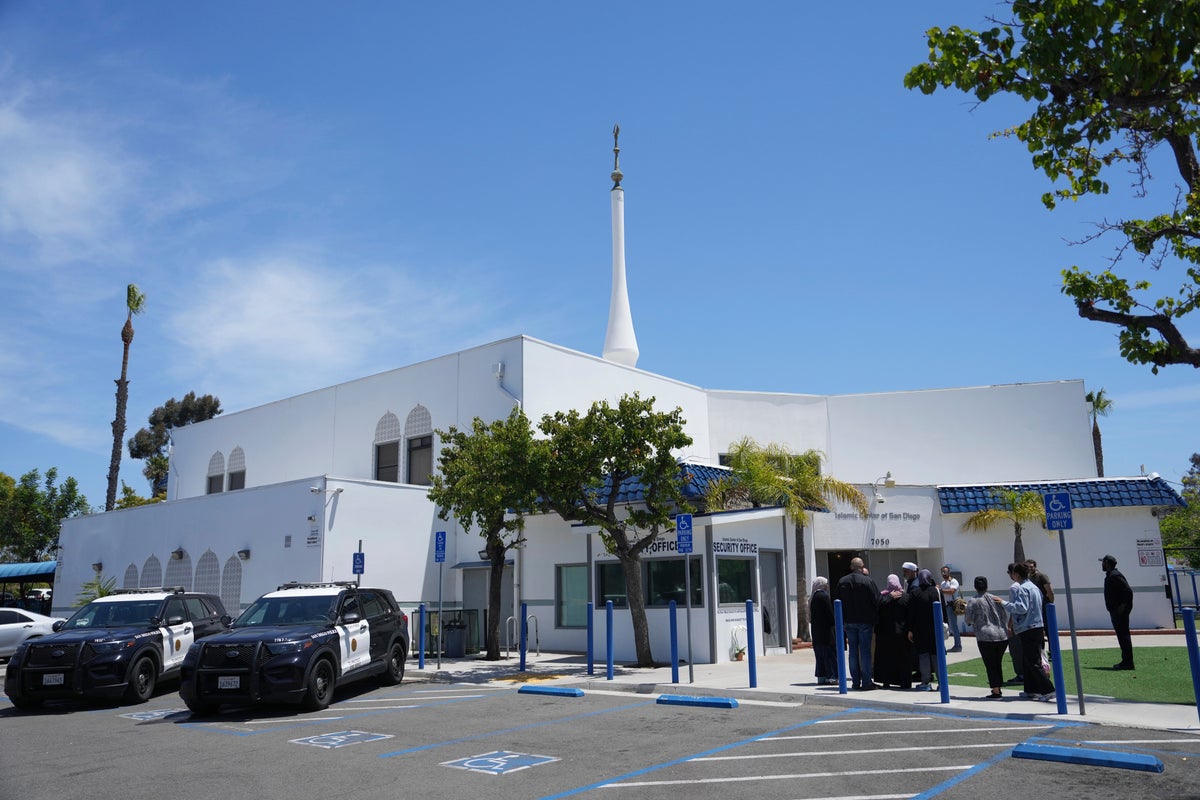
When the news broke about the shooting in San Diego, the public immediately looked for the standard blueprint of a modern tragedy. We wanted a manifesto. We wanted a clear, easily categorized villain with a history of violence and a booming voice. Instead, the details that trickled out described someone painfully quiet. A nineteen-year-old boy. Autistic. Isolated. A child who struggled to look people in the eye but found a strange, toxic comfort in the dark corners of the internet.
His family didn't offer excuses. They offered a eulogy for a mind that was stolen right under their roof. They described a vulnerable teenager who went looking for connection and found a digital cult instead.
This is not a story about a single flashpoint of violence. It is a story about the machinery that manufactures that violence out of loneliness, precision-engineered to target the minds least equipped to defend themselves.
The Architecture of the Rabbit Hole
To understand how a quiet kid from a quiet neighborhood ends up holding a weapon, you have to understand the specific geometry of online radicalization. It does not start with hatred. It starts with a search for order.
Imagine a mind that finds the physical world overwhelming. For a person on the autism spectrum, everyday human interaction can feel like trying to decode a foreign language without a dictionary. Voices are too loud. Social cues are invisible. The rules of high school change every single day without warning. It is exhausting. It is deeply, fundamentally isolating.
Then, they discover the screen.
The digital world offers something the physical world denies them: absolute predictability. On a forum or a chat server, the rules are rigid. You type a command, you get an explicit result. You post a specific meme, you get a specific reaction. For a brain that craves structure, this isn't just entertainment. It is oxygen.
But the algorithms governing these spaces are not neutral librarians. They are built to maximize engagement. They track milliseconds of attention. If a user lingers on a video out of confusion or mild curiosity, the system notes it. The next video pushes the boundary just a millimeter further.
Consider how a typical descent happens. A teenager clicks on a video analyzing a video game. The creator makes a passing, edgy joke. The teenager laughs because it feels transgressive, like an inside joke. The next recommendation is slightly edgier. The jokes stop being about games and start being about people. Political scapegoats are introduced, framed as the reason the teenager feels so lonely and misunderstood in the real world.
The algorithm does not care about the morality of the content. It only knows that outrage keeps the eyes on the screen. It is a conveyor belt of grievance, moving so slowly that the person riding it never notices the transition from loneliness to radicalization.
The Illusion of Brotherhood
The most terrifying aspect of modern extremist pipelines is how much they look like a community. They use the language of brotherhood. They create an environment where the vulnerable feel seen for the very first time.
In these anonymous forums, a teenager's perceived weaknesses are re-framed as strengths, or at least as badges of honor. Are you socially awkward? That just means you see through the lies of mainstream society. Are you isolated? That makes you part of the select few who know the real truth.
The radicalization process mimics the stages of a classic cult, but it happens without a charismatic leader at the pulpit. It is decentralized. It is crowdsourced. The group identity slowly replaces the individual identity.
For a young person who has spent years feeling like an outsider, this sudden acceptance feels intoxicating. They are no longer the quiet kid sitting alone in the cafeteria. They are soldiers in an invisible war. They are given a vocabulary, a set of enemies to blame for their pain, and a purpose.
When the family of the San Diego suspect spoke out, their grief was layered with a profound sense of bewilderment. They were living with a ghost. The boy they knew—the one who needed extra help with daily tasks, who struggled with sensory overload—had been hollowed out from the inside. In his place stood an avatar of someone else's hatred.
The Blind Spots in the System
Our collective response to these tragedies is fundamentally broken. We treat them as security failures or political debates, ignoring the psychological reality of how online grooming works.
We expect families to notice the red flags, but the red flags have changed. A teenager radicalized online doesn't usually buy a trench coat or start shouting slogans at the dinner table. They become quieter. They retreat deeper into their rooms. They wear headphones constantly, keeping the toxic audio feed entirely to themselves. To a parent, this looks exactly like normal, albeit difficult, teenage behavior.
Furthermore, our legal and social systems are completely unequipped to handle the intersection of neurodivergence and digital manipulation. Autism does not cause violence. Millions of autistic individuals live peaceful, empathetic lives. However, certain traits associated with autism—such as intense focus on specific topics, difficulty reading social intent, and a desire for rigid categorization—can be weaponized by bad actors.
Extremist groups know this. They actively target spaces where lonely, neurodivergent young men gather. They use humor as a shield, making it incredibly difficult for an outsider to distinguish between a harmless internet meme and a coded call to violence. By the time the ideology manifests as a physical threat, the psychological damage is already done.
The Quiet Aftermath
Walk down the hallway of any suburban home on a Tuesday evening. Listen to the faint, muffled sounds behind the closed doors. You will hear the rapid clicks of mice, the low thud of bass from gaming headsets, the occasional muttered phrase into a microphone.
Behind one of those doors, a kid is learning how to code. Behind another, a girl is finding a community of artists that saves her life.
But behind a third door, someone is being told that their loneliness is a weapon. They are being fed a steady diet of venom, wrapped in layers of irony and internet culture, designed to strip away their humanity until nothing is left but a trigger response.
The San Diego shooting will eventually fade from the news cycle, replaced by the next breaking news alert, the next set of statistics, the next round of talking heads arguing over the same old talking points. The courtroom will handle the legal mechanics of the crime. The internet will move on to the next viral moment.
But in a quiet house somewhere, a family is looking at an empty bedroom. They are staring at a desk, a monitor, and a chair, trying to figure out the exact moment their child slipped through the screen and disappeared entirely.


