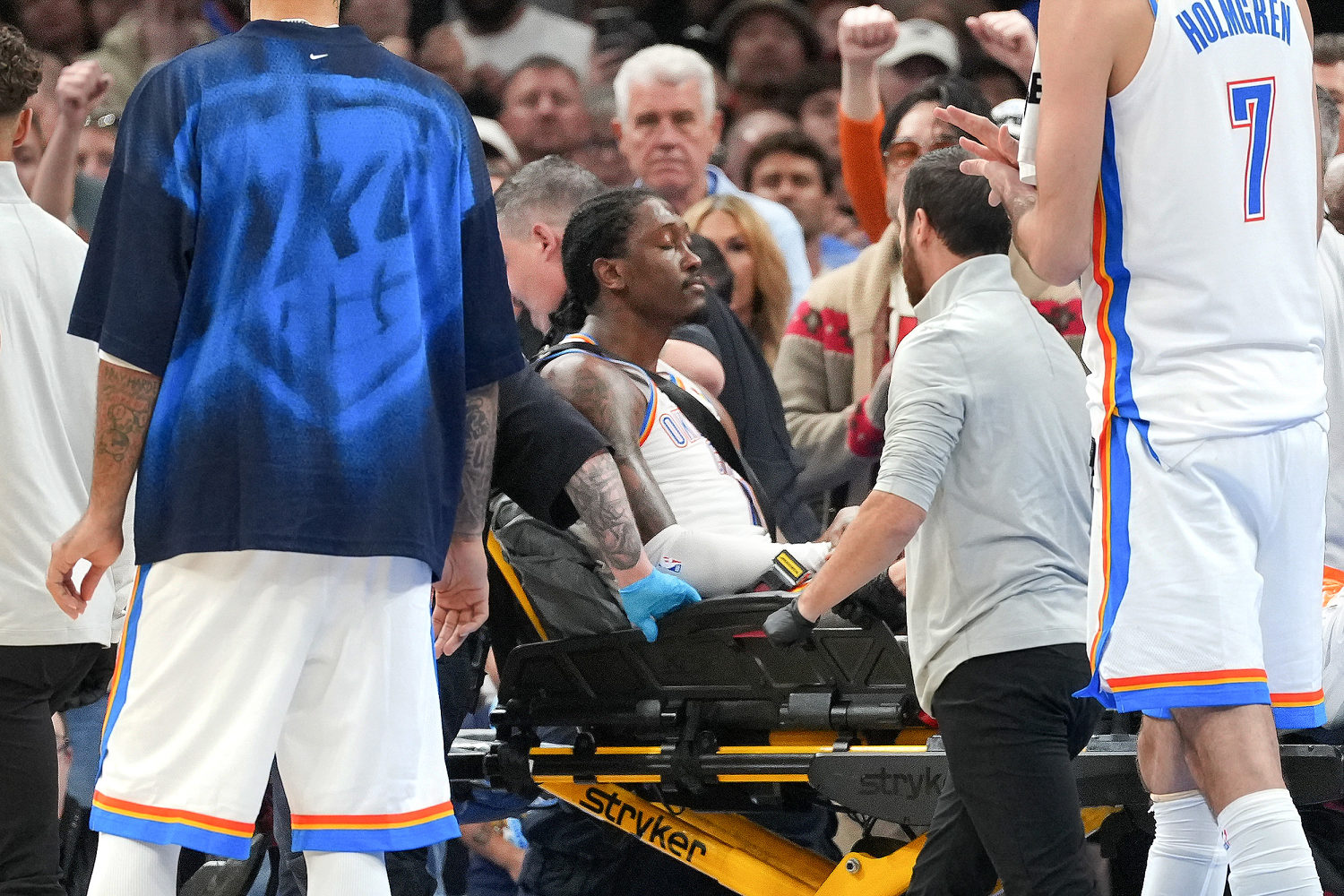
Look at the Western Conference standings right now and you'll see a glaring contradiction. The Oklahoma City Thunder sit near the top of the league with an elite record, yet their injury report reads like a triage unit. Most fans see a depleted frontcourt and assume their championship window just slammed shut until spring. They're wrong.
Oklahoma City isn't just surviving these injuries; they're proving why their roster construction makes them the most dangerous team in basketball. Even without a healthy starting lineup, the Thunder possess the exact defensive identity, MVP-caliber star power, and absurd depth required to hoist the Larry O'Brien Trophy.
The Injury Bug Hit Oklahoma City Hard
Let's be honest about the damage. Watching key rotation pieces limp off the floor is terrifying for any fanbase with championship aspirations. When a team loses major frontcourt minutes, the standard NBA script says their defense collapses, their rebounding vanishes, and opposing centers feast in the paint.
The Thunder didn't follow that script.
Instead of folding, coach Mark Daigneault leaned into small-ball chaos. When traditional bigs go down, most teams scramble to sign washed-up veterans off the waiver wire just to have a seven-footer standing near the rim. Oklahoma City took the opposite approach. They doubled down on perimeter length, relentless ball pressure, and hyper-switching schemes that turn every possession into a track meet.
Opposing offenses hate playing against five-out lineups filled with long, aggressive wings. You can't post up a traditional center if you can't even get the ball across half-court without a Thunder guard poking it away. That's the secret nobody talks about when evaluating their injury woes. Missing size hurts on the defensive glass, sure, but it forces Oklahoma City into lineups that generate turnovers at a historic clip.
Shai Gilgeous-Alexander Is an Offense Unto Himself
You can survive almost anything in the regular season when you have a top-three player on the planet. Shai Gilgeous-Alexander doesn't just score thirty points a night; he dictates the entire emotional and physical tempo of a basketball game.
Watch how he operates when the offense bogs down without secondary creators on the floor. He slithers into the paint at his own pace, absorbs contact without losing his balance, and hits mid-range fadeaways that break the spirit of elite defenders. He never rushes. He never panics.
More than his scoring, it's his durability and consistency that keep this battered roster afloat. While other superstars take nights off or disappear against physical double-teams, Gilgeous-Alexander treats every Tuesday night in November like Game 7 of the Western Conference Finals. As long as number two is healthy and lacing up his sneakers, the Thunder have the best player in almost every series they enter.
Why Jalen Williams Changes Everything
A superstar needs a running mate who thrives in the mud, and Jalen Williams has evolved into the ultimate Swiss Army knife. With the roster stretched thin, Williams has been forced to guard everyone from point guards to power forwards while carrying a massive offensive load.
He hasn't blinked. Williams attacks closeouts with violent intent, makes high-level reads out of the pick-and-roll, and shoots efficiently from deep. Having a secondary star who can seamlessly shift up or down two positions masks a mountain of roster deficiencies. When defenses load up to stop Gilgeous-Alexander, Williams punishes them immediately.
The Defensive System Is Bulletproof
Championships aren't won by outscoring teams 135-130 in May and June. They're won by getting stops when everyone in the arena knows what play is coming.
Oklahoma City's defense isn't built around one single anchor. Yes, having elite rim protection transforms their ceiling from great to untouchable, and getting healthy before the postseason remains the obvious priority. Yet their defensive floor is absurdly high because of their culture and personnel.
Look at the guys filling the gaps right now:
- Lu Dort continues to bully opposing primary scorers into miserable shooting nights, fighting over screens like his life depends on it.
- Alex Caruso brings championship-tested instincts, blowing up handoffs and taking charges that swing momentum in tight fourth quarters.
- Cason Wallace plays with the poise of a ten-year veteran, hounding ball-handlers ninety-four feet from the basket.
Sam Presti spent years hoarding long, high-IQ defenders who can dribble, pass, and shoot. People mocked the draft pick collection for years, wondering how all these players would ever find minutes. Now we see the vision. When injuries strike, Oklahoma City doesn't plug holes with G-League emergency call-ups; they just hand twenty-eight minutes to another lottery-level talent who already knows the defensive rotations cold.
The Playoff Reality Check
We need to stay grounded here. Winning regular-season games with a depleted roster is impressive, but the NBA playoffs are a completely different animal.
In a seven-game series, smart coaches hunt weaknesses relentlessly. If the Thunder enter the postseason without their full complement of big men, teams like the Denver Nuggets or Minnesota Timberwolves will try to bludgeon them on the offensive glass. Giving up fifteen second-chance points a night in the Western Conference Finals is a fast track to an early summer vacation.
Spacing also tightens up in May. When defenders are allowed to grab and hold off the ball, teams need reliable three-point shooting from their role players to punish double-teams on Gilgeous-Alexander. If the injuries linger into April, the sheer physical toll of playing undersized against massive frontlines will wear down their perimeter defenders.
That's why the timeline matters so much. Oklahoma City doesn't need to be at full strength in November, December, or January. They have banked enough wins early to comfortably absorb a few dropped games while guys rehab properly. Rushing injured players back for a meaningless mid-winter road trip would be organizational malpractice.
What Makes This Run Different From Past Pretenders
Every year, a young team racks up fifty-five wins, gets hyped up by national talking heads, and then flames out in the second round because they lack playoff scars. People love slapping that label on the Thunder.
Ignore them. This group already took their lumps in the postseason, and they responded by addressing every single flaw on their roster. They saw their rebounding struggles and went out to acquire proven physicality. They saw their need for veteran composure and brought in proven winners who know what a championship locker room actually looks like.
Even more importantly, surviving this current wave of injuries is forging an unbreakable mental toughness. Role players who might have been nervous under bright playoff lights are getting high-leverage fourth-quarter reps right now. Bench guys are learning how to close out tight games on the road against desperate opponents. You can't simulate that kind of pressure in practice.
How to Watch This Team Moving Forward
If you want to know whether the Thunder are truly ready to win it all this season, stop obsessing over their nightly win-loss record. Watch the process instead.
Pay attention to their defensive rebounding percentage when they play small-ball lineups against physical teams. If they can limit opponents to one shot per trip through sheer gang-rebounding effort, the rest of the league is in massive trouble once their bigs return. Keep an eye on their three-point volume and accuracy from the corners, because those shots will decide tight playoff games when defenses pack the paint.
Most of all, watch how the bench responds when things get ugly. Championship teams don't make excuses about who is sitting on the bench in street clothes. They just figure out how to win the possession in front of them, and right now, nobody in the NBA does that better than Oklahoma City.