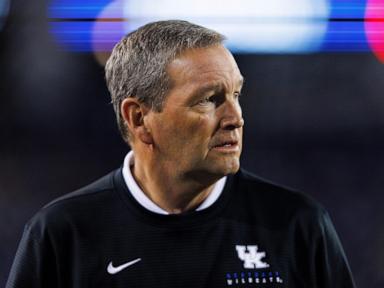
The sports media echo chamber is currently patting Mitch Barnhart on the back for his "integrity." They see a man walking away from a lucrative "special advisor" role at the University of Kentucky and they swoon. They call it a rare display of fiscal responsibility in an era of bloated athletic budgets. They are dead wrong.
This isn’t a sacrifice. This is a masterclass in exit strategy from a man who realizes the current collegiate athletic model is a sinking ship. Barnhart isn't "saving" Kentucky money; he is refusing to tie his legacy to the bureaucratic nightmare that the modern Athletic Director position has become. By rejecting the golden parachute, he maintains his status as the last of the "Pure Builders" while the rest of the SEC prepares to drown in private equity and revenue sharing. You might also find this similar article useful: The Green Cauldron and the White Storm.
The Myth of the Gracious Exit
The prevailing narrative suggests Barnhart is doing the University of Kentucky a favor by leaving money on the table. This assumes that a special advisor role is actually about advice.
In the high-stakes world of Power Four athletics, "special advisor" is usually code for "hush money" or "pension padding." It’s a way for universities to keep a former regime from sniping at the new one from the sidelines. By walking away from the contract, Barnhart isn't just being humble. He is retaining his most valuable asset: absolute autonomy. As reported in detailed coverage by Sky Sports, the implications are widespread.
I’ve watched athletic departments burn through millions on these "legacy" roles. They create a dual-power structure that paralyzes the new AD. The incumbent lingers like a ghost in the hallway, and the new hire spends half their time checking if they’re stepping on the toes of the legend in the corner office. Barnhart knows that if he stays, he is responsible for the fallout of the House settlement and the inevitable professionalization of student-athletes. By leaving now, he keeps his hands clean of the bloodbath that is coming to collegiate payrolls.
The Revenue Sharing Trap
The industry is currently obsessed with the idea that ADs need to be "fundraisers." That is 2010 thinking. In 2026, an AD is a Chief Operating Officer of a medium-sized entertainment firm with a complex, unionizing labor force.
Kentucky’s next AD isn't going to spend their time shaking hands with boosters in horse country. They are going to spend it in depositions. The "lazy consensus" says Barnhart is leaving a stable program. The truth? He’s leaving a program at the exact moment the traditional competitive advantages of a school like Kentucky—facilities and stability—are being neutralized by direct-to-player payments.
If Barnhart stayed as an advisor, he would be forced to watch the demolition of the amateurism model he spent decades defending. Why would a man with his resume want a front-row seat to the liquidation of the NCAA?
Why Compliance is a Dead Language
Everyone asks: "How will Kentucky find someone to fill those shoes?"
They are asking the wrong question. They shouldn't be looking for "Barnhart 2.0." They should be looking for a shark with a background in private equity or sports wagering. Barnhart’s refusal of the advisor role is a signal that the old playbook is burned.
- Old Playbook: Compliance, facility upgrades, booster relations.
- New Playbook: Debt restructuring, media rights arbitration, collective bargaining.
The "integrity" of Barnhart’s exit is actually a brutal honesty about the future. He is acknowledging that his expertise—built on the bedrock of the 2000s and 2010s—is becoming a relic. He is too smart to collect a paycheck for advice that will be obsolete by the next fiscal quarter.
The False Economy of the Golden Parachute
Let’s talk about the money. Critics say these advisor roles are a waste of taxpayer or donor funds. They’re right, but for the wrong reasons. The waste isn't the salary; the waste is the opportunity cost. When an AD stays on as an advisor, the university loses the ability to pivot. It creates a "sunk cost" fallacy where the board feels obligated to stick to the previous decade's strategy because the architect of that strategy is still on the payroll.
Imagine a scenario where Kentucky needs to radically downsize non-revenue sports to satisfy the $22 million annual revenue-sharing cap. Does anyone honestly think the new AD could make those cuts with Mitch Barnhart sitting three doors down? Of course not. Barnhart’s exit isn't just about his own legacy; it’s the only way Kentucky can survive the upcoming financial contraction.
The SEC’s Looming Identity Crisis
The SEC has long been the gold standard because of its "stability." Barnhart was the poster child for that. But stability is a liability in a volatile market. The "industry insiders" who are mourning his departure as the end of an era are missing the point: the era ended three years ago. We are just now seeing the final chips fall.
Barnhart’s refusal to take the advisor role is a vote of no confidence in the "special advisor" model itself. It’s a recognition that in the new landscape, there is no room for sentimentality. You are either the captain of the ship or you are off it. There is no middle ground.
Stop Looking for "Stability"
If you are a Kentucky fan or a donor, stop hoping for a "seamless transition." You don't want seamless. You want a disruption.
The most dangerous thing Kentucky could do right now is hire someone who tries to "honor the legacy" of the last twenty years. The rules have changed so fundamentally that honoring the past is a recipe for irrelevance. Barnhart knows this. That’s why he’s not sticking around to help. He’s giving the university the greatest gift an outgoing leader can provide: a clean break.
The Efficiency of Absence
There is a specific kind of arrogance in thinking you can "advise" your successor in a market shift this seismic. It’s like a horse-and-buggy manufacturer advising an internal combustion engineer. Barnhart’s "integrity" is actually high-level self-awareness. He knows his presence would only serve to slow down the inevitable.
The media wants to frame this as a heartwarming story of a loyal servant. I’m telling you it’s a cold, calculated, and brilliant move. He exits at the peak, avoids the messy transition into employee-status athletes, and refuses to be a figurehead for a version of college sports he likely finds unrecognizable.
The "special advisor" role is a trap for the ego. It’s for people who can’t let go of the spotlight or the per diem. By saying no, Barnhart has proven he is the smartest person in the room one last time. He isn't walking away from the money; he's walking away from the blame.
When the SEC eventually fractures or the "Super League" becomes a reality, Barnhart won't be the "advisor" who let it happen. He’ll be the guy who got out while the getting was good.
Quit looking for a moral lesson in a business decision. Barnhart isn't a saint. He's a professional who knows when the game has moved on. If the rest of the ADs in the country had half his sense, they’d stop signing those advisor contracts and start updating their resumes for the private sector.
The era of the "statesman AD" is dead. Barnhart just buried it.