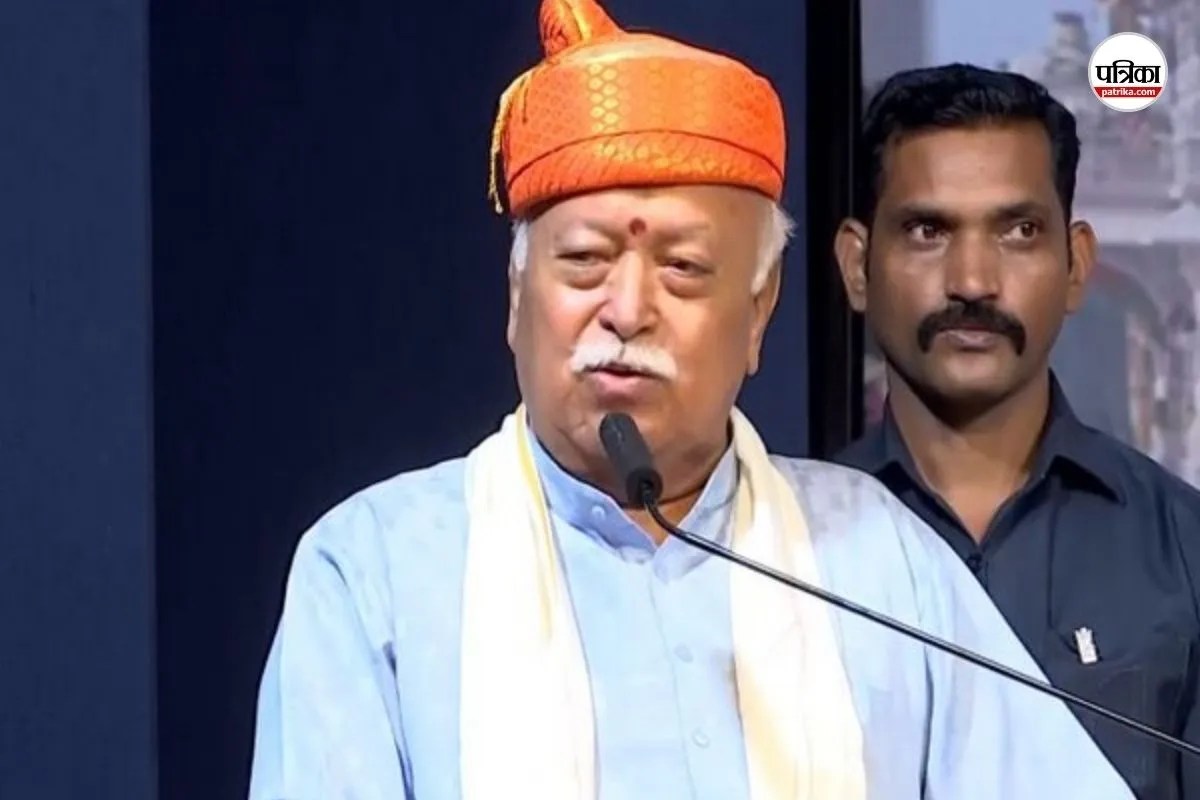
Every time a Western bureaucratic panel throws a tantrum over Indian politics, they commit a masterclass in strategic incompetence. The recent demand by United States Commission on International Religious Freedom Chair Asif Mahmood to revoke the visa of Rashtriya Swayamsevak Sangh chief Mohan Bhagwat is not a defense of human rights. It is a lifeline thrown to an ideological apparatus that thrives on external antagonism.
The lazy consensus in Washington and among activist circles states that applying pressure through visa denials and Sanctions curtails majoritarian expansion. This assumes that the RSS operates like a traditional corporate entity or a Western political lobby that folds under diplomatic coercion. It is a fundamental misreading of how ideological mass movements function. When you demand a travel ban on Bhagwat or label the organization a vector for violence, you do not weaken their domestic standing. You hand them the ultimate political currency: proof of foreign persecution. If you found value in this article, you should look at: this related article.
Let us look at the mechanics of this reactive outrage. The USCIRF functions as an advisory body, churning out annual reports that routinely recommend placing India on the Country of Particular Concern list. When figures like Mahmood call for targeted sanctions against RSS members, the immediate reaction across Delhi media is predictable defensive nationalism. The Indian Ministry of External Affairs rolls out its standard dismissal of a biased entity, and the core base of the movement tightens its ranks.
Nobody stops to ask whether a visa ban changes a single policy on the ground. It does not. Instead, it turns a domestic political debate into a civilizational showdown. For another look on this event, refer to the recent update from The Guardian.
Imagine a scenario where Washington actually follows through, revokes the visa, and bars Bhagwat from entering the United States. What happens the next morning? Does the ideological footprint of a movement with millions of active cadres shrink? Does religious friction in rural provinces evaporate because a bureaucrat in DC drew a hard line? Of course not. The leadership uses the ban to validate every narrative they have propagated for decades: that external forces, operating through domestic proxies and foreign watchdogs, are actively hostile to Hindu revivalism. You turn a local ideological actor into an international martyr.
The obsession with punitive symbolism exposes a deeper Western ignorance about the scale of the organization in question. The RSS is not a transient political campaign or a cabinet department. It is an infrastructure spanning tens of thousands of daily neighborhood assemblies, schools, and welfare networks built over a century. Treating its leadership like rogue actors subject to standard Western diplomatic isolation is like trying to drain an ocean with a kitchen sponge.
Furthermore, demanding visa denials creates a distorted incentive structure for local critics. When international bodies take up the crusade, it allows local opposition figures and activists to outsource their political battles to Washington. Instead of building organic domestic coalitions that can win elections or shift public culture through persuasion, critics wait for foreign panels to issue press releases. This reliance on Western validation neuters internal democratic pushback. It signals that local civil society cannot fight its own battles without an American stamped approval.
The hypocrisy embedded in these targeted demands also strips away moral authority. The United States routinely maintains alliances, trade partnerships, and strategic dialogues with states possessing far more restrictive religious environments. Singling out an ideological parent organization of a democratically elected government while maintaining transactional pragmatism elsewhere exposes the exercise as performative. It satisfies domestic constituencies within American diaspora politics while achieving precisely zero humanitarian progress.
If the goal is genuinely to alter the behavior of majoritarian movements or protect minority communities, the current playbook is a proven failure. Public grandstanding and demands for travel restrictions achieve the exact opposite of their stated intent. They harden resolve, silence internal moderates who might argue for a more inclusive posture, and feed the very siege mentality that drives radicalization on all sides.
Stop treating ideological adversaries as if they care about the approval of Western administrative panels. They do not. Every call for a ban only fortifies the walls.


