The sports headlines are screaming again. A minister speaks, a rumor catches fire, and suddenly the "moral" consensus is that Iran should be scrubbed from the FIFA World Cup. It’s a predictable cycle. It's also intellectually lazy.
When people argue that a nation’s domestic policy or internal strife should lead to an immediate expulsion from the pitch, they aren’t defending human rights. They are performing a ritual of empty symbolism that ignores how international sports actually function. I’ve watched governing bodies navigate these waters for twenty years, and the reality is far messier than a press release.
The Myth of the Clean Tournament
The "lazy consensus" assumes the World Cup is a meritocracy of ethics. It’s not. It’s a commercial beast governed by a Swiss-based non-profit that has historically prioritized expansion over ideology. To suggest that Iran's participation is a unique stain on the tournament’s integrity is to ignore the history of almost every host and participant since 1930.
FIFA’s primary directive is the "universality of football." This isn't just a flowery slogan; it’s a legal shield. By remaining "politically neutral," FIFA avoids the catastrophic precedent of having to adjudicate which regimes are "good enough" to play. If you bar Iran today based on the statements of a sports minister, who do you bar tomorrow? Do you boot nations involved in proxy wars? Nations with systemic police brutality? Nations that criminalize dissent?
Once you open the door to moral vetting, the World Cup stops being a global tournament and becomes a curated invitational for the "Western-Approved Eleven."
The "Sports Minister" Fallacy
Critics point to the Iranian Sports Minister’s comments as a "smoking gun" for government interference. This is the amateur’s mistake. In dozens of nations, the line between the football federation and the state is a blur.
In many AFC (Asian Football Confederation) member associations, the "independence" of the football board is a polite fiction. Singling out Iran for state involvement is like arresting one person for speeding in the middle of the Indy 500. It’s selective enforcement masquerading as principle.
Furthermore, the argument that "Iran cannot participate" often stems from a misunderstanding of FIFA Statute 14 and 19. These statutes target the suspension of a federation when a government replaces its officials. It is a technicality designed to protect the bureaucrats, not a moral clause designed to protect the citizens. If the Iranian government is smart enough to keep its hands off the formal paperwork of the FFIRI (Football Federation Islamic Republic of Iran), FIFA has no legal mechanism to act.
Punishing the Wrong People
Let’s look at the actual casualties of a ban. It isn't the ministers. They’ll still have their villas, their security details, and their power.
The people you hurt are the players and the fans. For many Iranian athletes, the World Cup is the only window to the outside world—a chance to secure a contract in the Bundesliga or Ligue 1 and escape the very system the West claims to despise.
By banning the team, you don't weaken the regime; you give them a "West vs. Us" narrative on a silver platter. There is nothing an autocrat loves more than a foreign boogeyman to blame for the country’s isolation. You aren't "liberating" the Iranian people by taking away their 90 minutes of pride; you’re handing the state a monopoly on their identity.
The Revenue Reality
If you want to understand why Iran will likely stay on the pitch, stop looking at Twitter and start looking at the balance sheet.
- Broadcasting Rights: The AFC and FIFA have massive broadcast deals that rely on total market penetration. Iran has a population of over 85 million people. They are football-obsessed. Removing them isn't just a "moral" choice; it’s a massive hit to viewership metrics and ad revenue in the Middle East.
- Sponsorship Contracts: Tier-one sponsors hate instability. They pay hundreds of millions for a predictable global event. A last-minute expulsion creates a legal nightmare for brackets, scheduling, and marketing activations.
- The Precedent of Chaos: If FIFA yields to political pressure now, they lose their leverage. Every future host would be subject to a "moral audit" by whatever group has the loudest megaphone that month.
A Thought Experiment in Consistency
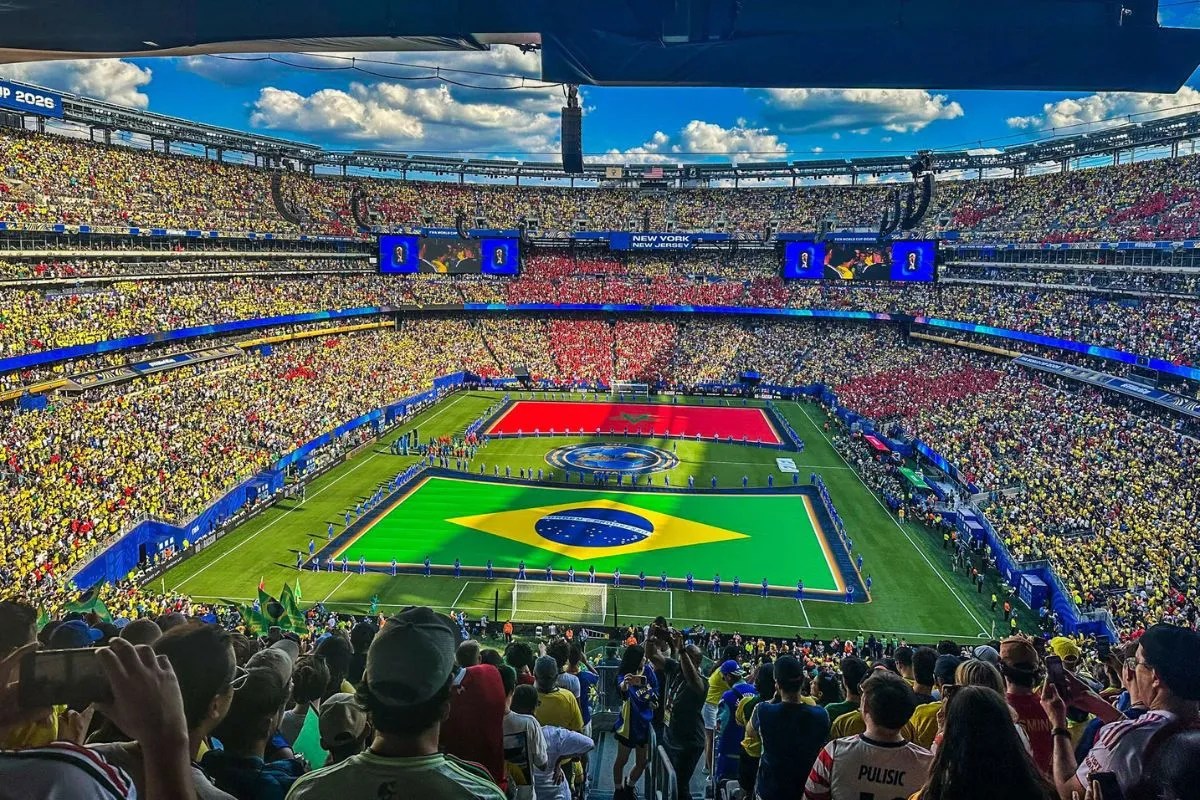
Imagine a scenario where the 2026 World Cup, hosted by the US, Canada, and Mexico, faced a boycott because of the US's military interventions or its border policies. The outcry from the very people currently demanding Iran’s head would be deafening. They would argue—correctly—that "the players shouldn't be punished for the actions of the Pentagon."
Why doesn't that logic apply to the 11 men from Tehran?
The inconsistency is the point. The calls for a ban aren't about the Iranian people; they are about the comfort of the Western viewer who wants to watch a "clean" game without being reminded that the world is a complicated, often brutal place.
The Strategy of Engagement
History shows that isolation rarely breeds reform. It breeds resentment.
The most effective "disruption" isn't a ban. It's the visual of Iranian players standing on a global stage, potentially refusing to sing an anthem or wearing black wristbands, as they have done before. Those images do more to undermine a regime's authority than a bunch of bureaucrats in Zurich ever could.
When you ban a team, you silence the protest. You turn off the microphone. You take the one moment where the world is actually looking at these people and you pull the plug.
Stop Asking if They Can Play
The question isn't whether Iran "should" be allowed to play based on a minister's ramblings. The question is why we are so eager to use the world's most popular sport as a low-stakes geopolitical weapon.
If you want to change Iran, support the activists. Support the grassroots movements. But stop pretending that kicking a ball into a net has a moral weight that requires a global tribunal.
Football is a game. Politics is blood. Mixing them usually ruins the former without improving the latter.
The World Cup is a mirror of the world as it is—flawed, corrupt, and occasionally beautiful. Trying to polish that mirror by removing the "ugly" parts doesn't make the world better; it just makes us more blind to reality.
Let them play. Let the fans scream. And let the politicians deal with the mess they created without using the pitch as their convenient distraction.
Stop looking for a "clean" World Cup. It doesn't exist.