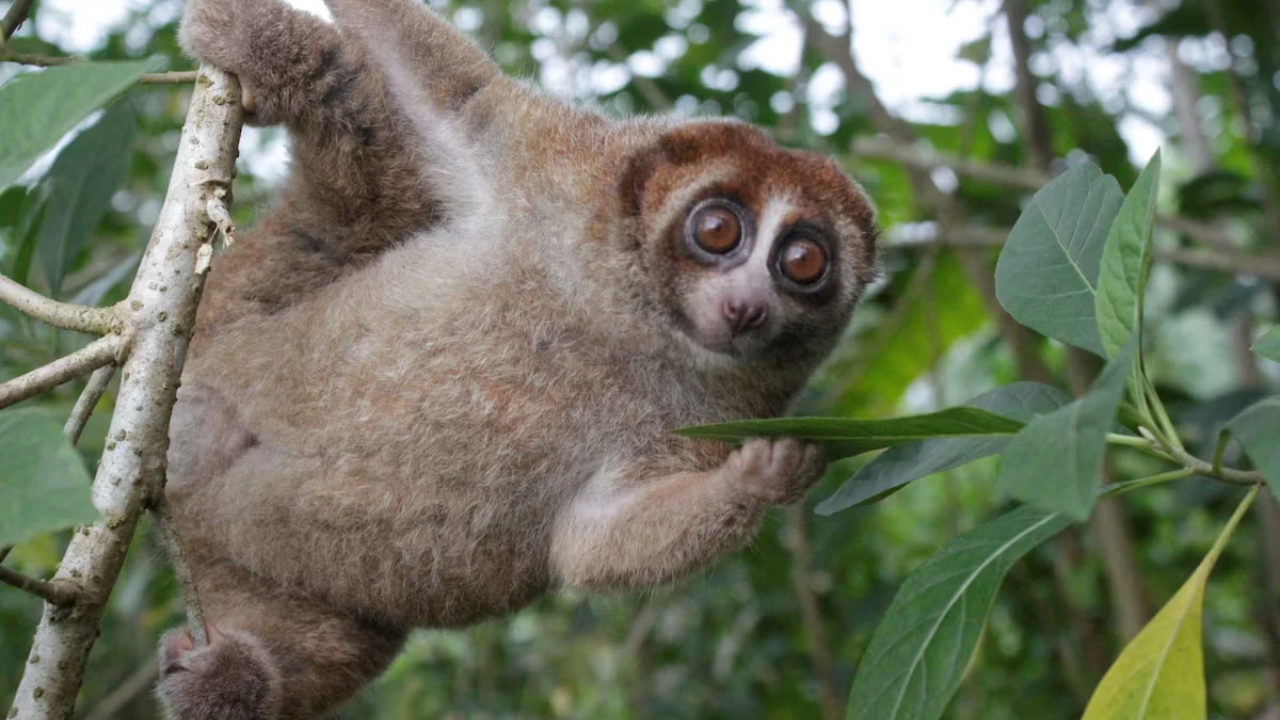
Celebratory wildlife headlines love a resurrection story. A supposedly vanished species pops up in a rescue center, a press release goes out claiming "more than 90 venomous primates rediscovered," and everyone pats themselves on the back before moving on to the next feel-good click.
That narrative is broken. It confuses bureaucratic data gaps with biological extinction, and it frames the symptom of an ecological collapse—dozens of wild animals piling up in rehabilitation cages—as a conservation victory.
The Bangka slow loris (Nycticebus bancanus) did not magically reappear from the dead. It was always sitting in the forests of Bangka Island and southwestern Borneo. What actually happened is far less romantic and infinitely more urgent: taxonomists finally stopped lumping distinct species together, while agricultural expansion and illegal wildlife trafficking pushed so many animals out of the canopy that rescue centers could no longer ignore the body count.
If you want to understand why this species is actually on the brink, stop celebrating the rescues and start looking at why those cages are full.
The Myth of the "Rediscovered" Primate
When mainstream outlets run stories about a "rediscovered" species, they imply a team of khaki-clad explorers hacked through an untouched jungle to find a hidden population. Reality looks much more like a spreadsheet audit mixed with a police raid.
For decades, taxonomists treated most slow lorises across Southeast Asia as a single widespread species, Nycticebus coucang, or later as minor subspecies of the Bornean slow loris (Nycticebus menagensis). It was not until detailed morphological and genetic revisions—spearheaded by primatologists like Rachel Munds, Anna Nekaris, and Vincent Nijman—that Nycticebus bancanus was elevated to full species status in 2013.
Because its taxonomic recognition is relatively recent, historical field surveys rarely tracked it as an independent entity. Conservation databases showed a blank space. Local poachers, however, never needed a Latin binomial to know what they were catching.
When wildlife rescue organizations on Bangka Island and in neighboring provinces logged over 90 individuals over recent years, they were not uncovering a secret thriving population. They were tallying refugees. Every single loris sitting in a rescue enclosure represents a tree cut down, a snare set, or a smuggler intercepted on a ferry. Calling 90 displaced animals a "rediscovery" is like calling a crowded emergency room a medical breakthrough.
Why "Venomous" Is the Wrong Hook
Every single headline about slow lorises leans on the same parlor trick: the world's only venomous primate.
Yes, it is biologically fascinating. Slow lorises possess a brachial gland on the inside of their upper arms that secretes a pungent oil. When threatened, the animal raises its arms, licks the gland, and mixes that secretion with saliva. The resulting compound mimics the allergen Fel d 1 (the same protein found in cat dander) and delivers a necrotic, potentially anaphylactic bite.
Media outlets hammer this trivia because "venomous" sells clicks. In doing so, they completely miss how that exact biological defense mechanism seals the animal's fate in the illegal pet trade.
Because slow lorises are venomous, wildlife traffickers routinely rip out their front teeth with nail clippers or pliers before selling them in markets in Jakarta, Medan, or online via encrypted messaging apps. Without teeth, the loris cannot deliver venom. Without teeth, it also cannot eat wild tree gum, bark, or insects, meaning it cannot be released back into the wild.
Even worse, the venom adaptation evolved alongside a specific anti-predator behavior: freezing. Instead of fleeing when spotted by a flashlight, a Bangka slow loris freezes and covers its face with its arms to bring its brachial glands near its mouth. Against a civet or a python, that works. Against a poacher with a headlamp and a burlap sack, freezing is a death sentence. You literally just walk up and pluck them off the branch.
The Real Threat Isn't Just "Habitat Loss"—It's Tin and Palm Oil Economics
Generic conservation reporting loves the phrase "habitat loss threatens." It is safe, vague, and absolves specific industries of direct blame. On Bangka Island, habitat loss is not an abstract force of nature; it is an industrial extraction machine driven by two global commodities: tin and palm oil.
Bangka and neighboring Belitung produce roughly 90 percent of Indonesia's tin, supplying roughly a third of the global market. Every smartphone, laptop, and electric vehicle battery relies on solder made from tin mined out of Bangka's soil. Open-pit tin mining—both corporate and unregulated artisanal dredging—strips away topsoil, poisons watersheds, and fractures forest corridors into isolated islands of scrub.
Where tin miners leave off, oil palm plantations take over. Slow lorises are strictly arboreal. Unlike macaques, they do not sprint across open highways or raid garbage dumps on the edge of town. If you sever the canopy by fifty meters, you have built a wall a Bangka slow loris cannot cross without risking fatal predation on the ground.
I have watched conservation initiatives burn through hundreds of thousands of dollars funding "awareness campaigns" in local villages while ignoring the macroeconomic reality on the ground. You cannot lecture a subsistence miner about primate biodiversity when global tech supply chains are paying cash for every kilogram of cassiterite ore pulled out of the forest floor.
The Rescue Trap: Why Rehabilitation Centers Can't Save Nycticebus bancanus
Here is the uncomfortable truth that wildlife NGOs rarely put in their fundraising newsletters: rescue and release is a losing game for slow lorises.
When authorities confiscate 90 Bangka slow lorises from illegal traders or displaced mining zones, those animals enter a brutal triage pipeline:
- Dental Trauma Assessment: Roughly 30 to 50 percent of confiscated lorises in Indonesian markets have clipped or extracted teeth. Those animals are permanently unreleasable. They require lifelong sanctuary care, draining budgets that could fund forest patrols.
- Behavioral Maladaptation: Lorises held in captivity for months lose their spatial mapping skills and develop stereotypic stress behaviors. When released into unfamiliar forest patches, post-release monitoring studies conducted by groups like the Little Fireface Project show staggering mortality rates if habitat quality is suboptimal.
- Carrying Capacity Saturation: You cannot dump 90 rescued lorises into the few remaining protected forest fragments on Bangka. Slow lorises are fiercely territorial and use their venom primarily against each other in brutal intra-species combat over territory and mates. Overstocking a fragmented forest turns a release site into a gladiator arena.
Admitting this does not mean abandoning rescue centers. Law enforcement needs somewhere to place confiscated wildlife, or police stop bothering to make arrests. The downside of criticizing the rescue-first narrative is that cynical policymakers might use it as an excuse to defund wildlife sanctuaries altogether. That would be catastrophic. Sanctuaries are essential—they just cannot be mistaken for a population recovery strategy.
Dismantling the Common Questions Around the Bangka Slow Loris
When a story like this trends, readers inevitably search for quick answers. Most of those questions are built on flawed premises.
"Are Bangka slow lorises dangerous to humans?"
Only if you try to grab one. A Bangka slow loris weighs roughly 600 to 700 grams—about the size of a guinea pig with long limbs. It will never chase you, drop from a tree to attack you, or enter your house looking for a fight. Bites occur almost exclusively when poachers, illegal pet owners, or careless handlers grab them bare-handed. In documented medical cases, severe reactions stem from anaphylactic shock rather than the tissue necrosis seen in viper bites. Leave them in the trees, and the risk is zero.
"Can you keep a slow loris as a pet if it's bred in captivity?"
No. First, all species of Nycticebus are listed under CITES Appendix I, banning international commercial trade, and are strictly protected under Indonesian law. Second, "captive-bred" slow lorises on social media are almost universally wild-caught animals laundered through fake breeding claims. Lorises reproduce painfully slowly—typically one offspring every 12 to 18 months—making commercial captive breeding economically unviable for smugglers when wild animals can be stolen from the forest for free.
"Is the Bangka slow loris going extinct?"
The IUCN Red List classifies Nycticebus bancanus as Critically Endangered, with a suspected population decline exceeding 80 percent over three generations (roughly 24 years). Unless canopy connectivity is restored on Bangka and tin mining concessions are forced into strict ecological remediation, functional extinction in the wild is not a distant theoretical risk—it is the baseline trajectory.
What Actually Works (And Why Nobody Wants to Fund It)
If counting 90 rescued lorises is just tallying casualties, what does real conservation look like for a cryptic, nocturnal, canopy-dependent primate? It looks boring, unphotogenic, and politically inconvenient.
- Artificial Canopy Bridges: Instead of waiting decades for clear-cut corridors to regrow, engineers and conservationists can install simple, high-tensile rope and rubber hose bridges across roads and mining access tracks. Field trials in Java and Borneo prove slow lorises use them within weeks, instantly reconnecting isolated breeding populations for a fraction of the cost of captive breeding programs.
- Supply-Chain Accountability for Tin: Tech manufacturers audit their supply chains for conflict minerals in Central Africa while turning a blind eye to ecological devastation on Bangka. Real leverage lies in forcing electronics brands to tie tin procurement contracts to verifiable zero-deforestation zoning and post-mining reforestation.
- Targeting Digital Brokers, Not Just Poachers: Arresting a farmer who caught a loris in a snare changes nothing; ten more will take his place tomorrow. Law enforcement resources must focus on the middlemen operating open-secret wildlife groups on Facebook, WhatsApp, and Telegram who coordinate air freight out of Pangkalpinang to Jakarta.
- Shadow Forest Protection: Small, unglamorous land leases and community-managed agroforestry buffers—such as shade-grown rubber and traditional fruit orchards—keep mature tree canopies intact while letting local farmers earn an income. Slow lorises thrive in complex agroforests; they starve in monoculture oil palm.
Stop Applauding the Body Count
The next time a wildlife headline celebrates the "rediscovery" of dozens of rare animals inside rescue crates, read between the lines. Those 90 Bangka slow lorises were never lost. They were evicted from a forest being torn apart to feed global demand for cheap electronics and cooking oil, intercepted on their way to becoming viral props on TikTok.
Counting them is an autopsy of a shrinking ecosystem, not a sign of life. Keep the trees standing, bridge the gaps in the canopy, and cut off the buyers—or the only place left to "rediscover" Nycticebus bancanus will be inside a museum jar.