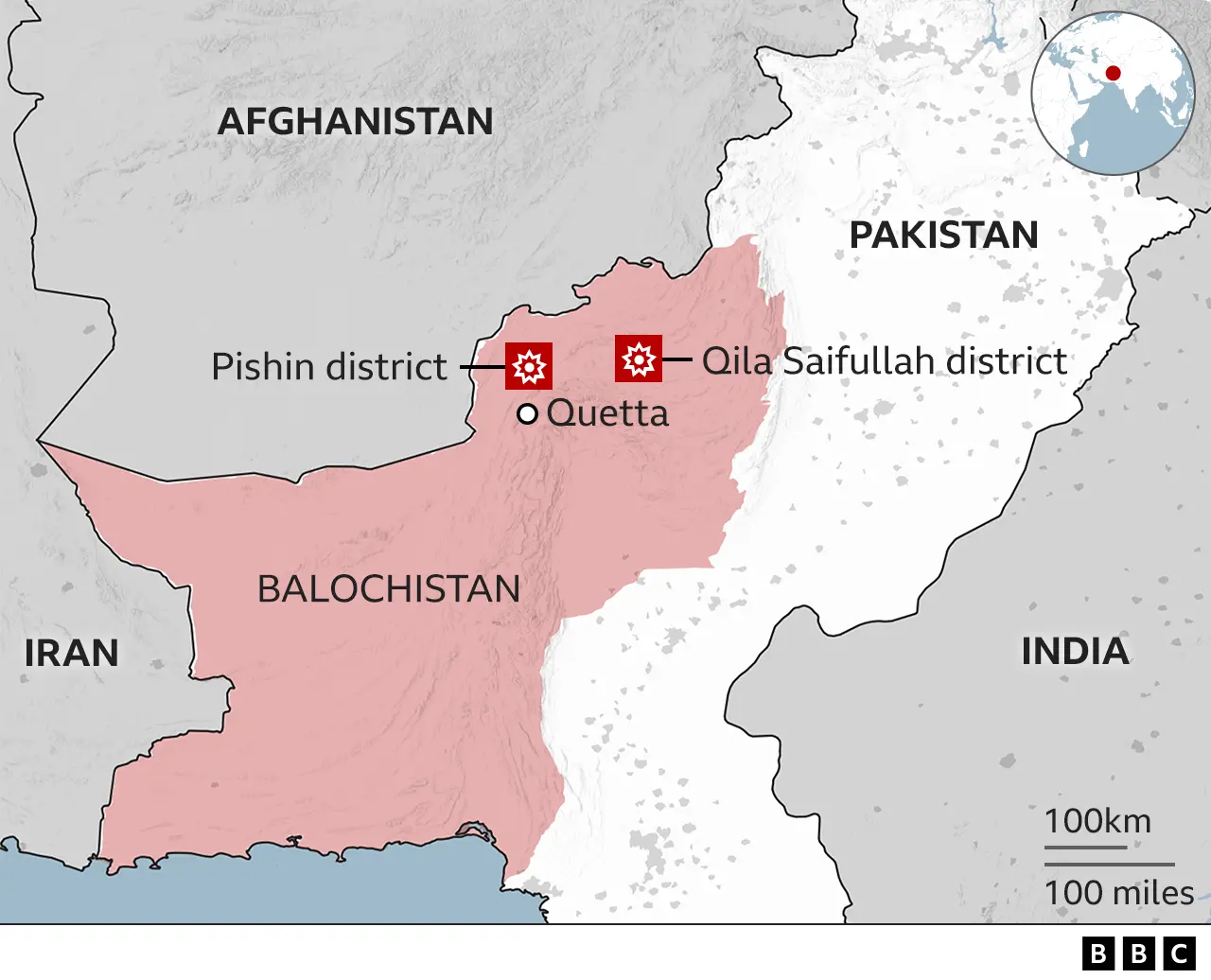
Families in Balochistan don't just mourn the dead anymore. They mourn the missing. This isn't some slow-burning political dispute you can ignore from a distance. It's a systematic campaign where people vanish into thin air, often in broad daylight, leaving behind nothing but empty chairs and terrified relatives. When we talk about enforced disappearances and extrajudicial killings in Balochistan, we aren't just looking at statistics. We're looking at a complete breakdown of the rule of law in Pakistan's largest, most resource-rich, yet most neglected province.
The numbers are staggering and, frankly, they're getting worse. Human rights groups like Amnesty International and the Human Rights Commission of Pakistan (HRCP) have been sounding the alarm for years, but 2024 and 2025 saw a sharp uptick in these incidents. If you've been following the news, you've likely seen the images of the "Long March" led by Baloch women. They walked hundreds of miles to Islamabad, not for money or power, but simply to ask where their brothers and sons are.
The Grim Reality of State Policy
The core of the problem is a "pick up and dump" policy that has become the standard operating procedure for security forces in the region. It usually starts with a raid. Someone—a student, a doctor, a political activist—is taken. No warrant is shown. No charges are filed. For months or years, the family hears nothing. Then, sometimes, a body is found in a remote area, often showing signs of torture. This is what an extrajudicial killing looks like in practice.
It's a cycle of violence that feeds itself. The state claims it's fighting separatism and terrorism. Activists argue that the state’s own actions are what drive people toward radicalization. When you take away the legal route for grievance, you're basically telling an entire population that the law doesn't apply to them.
The Voice for Baloch Missing Persons (VBMP) has documented thousands of cases. While the government's official Commission of Inquiry on Enforced Disappearances often reports lower numbers, the discrepancy itself is telling. The official commission has been widely criticized for its inability to hold anyone accountable. Out of thousands of cases, how many security officials have been prosecuted? Basically none. That lack of accountability is a green light for more disappearances.
Why the World Stays Silent
You might wonder why this doesn't lead every international news cycle. Balochistan is a black hole for information. Journalists who try to cover these stories face immense pressure, threats, and sometimes become "missing persons" themselves. The Pakistani state maintains a tight grip on the narrative, often labeling any talk of human rights abuses as foreign-funded propaganda.
Then there's the geopolitical angle. Balochistan is home to the Gwadar Port, a crown jewel of the China-Pakistan Economic Corridor (CPEC). With billions of dollars in investment at stake, there's a massive incentive for both Islamabad and Beijing to keep the province under "control" at any cost. This economic interest often trumps human rights concerns in the eyes of international observers.
The irony is thick. The province provides the natural gas that heats homes in Lahore and Karachi, yet many Baloch villages still burn wood for fuel. This economic alienation creates a fertile ground for dissent, which the state then meets with force. It's a textbook example of how not to handle regional grievances.
The Psychological Toll on a Generation
Living in Balochistan today means living with a constant sense of dread. It's not just the person who is taken who suffers. It's the "half-widows"—women who don't know if their husbands are dead or alive. It's the children growing up without fathers, waiting for a knock on the door that never comes.
I've talked to people who say they don't even like to see their sons become too educated or too vocal. In their minds, being "too smart" or "too active" makes you a target. That is a devastating way for a society to function. It's a brain drain by force. When you pick up the university students, you're literally disappearing the future of the province.
The recent protests led by Mahrang Baloch and the Baloch Yakjehti Committee (BYC) have changed the energy on the ground. This isn't just a fringe movement of armed rebels anymore. This is a civil society movement led by young people and women who are tired of being afraid. They're using social media to bypass the media blackout, and it's working. The world is finally starting to see the faces behind the numbers.
Broken Legal Systems and Empty Promises
Pakistan’s judiciary has occasionally shown flashes of backbone. High Court judges have sometimes summoned top officials to explain the whereabouts of missing persons. But these moments are rare and usually end in frustration. The "Establishment"—a common term for the military and intelligence services—operates with a level of autonomy that the civilian courts struggle to challenge.
Legislation meant to criminalize enforced disappearances has been introduced, but it's often watered down or contains "poison pill" clauses that could be used to target the families of the victims instead of the perpetrators. If the law says disappearing someone is a crime, but the people doing the disappearing are the ones enforcing the law, the law is just paper.
Concrete Steps Toward Real Change
If there's ever going to be a resolution, it won't come from another empty government commission. Real change requires a few non-negotiable shifts in how the state operates.
- Closing Secret Detention Centers: Every person detained must be produced before a magistrate within 24 hours, as required by the Pakistani constitution.
- International Oversight: Since local commissions have failed, the UN Working Group on Enforced or Involuntary Disappearances needs unfettered access to the province.
- Repeal of Draconian Laws: Laws that give security forces overly broad powers of arrest and detention without trial need to be scrapped.
- Accountability for the Takers: We need to see actual trials of personnel involved in illegal abductions. One high-profile conviction would do more for public trust than a thousand speeches.
Don't let the complexity of the politics cloud the simplicity of the human rights issue. A state that kidnaps its own citizens is a state in crisis. You can support the cause by staying informed through independent outlets and supporting organizations like Amnesty International that continue to track these abuses. Demand that your own representatives ask questions about Balochistan when discussing foreign aid or trade deals with Pakistan. The silence is what allows the disappearances to continue.