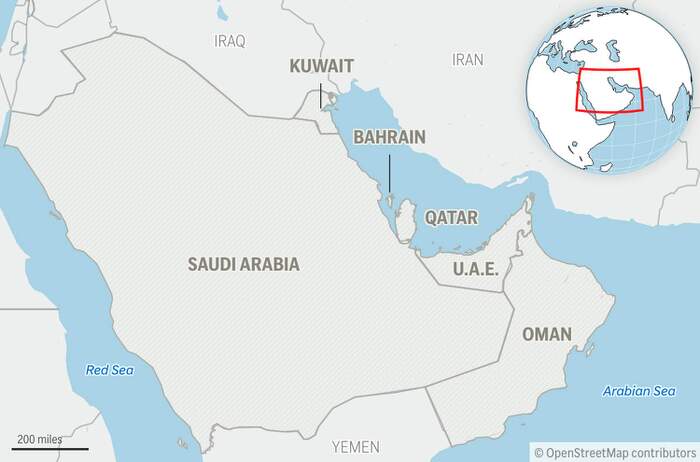
The media machine loves a clean countdown. A two-month lull ends, a strike lands on a American-linked site in Bahrain, and right on cue, the pundit class rushes to publish the same recycled panic: regional escalation is imminent, deterrence has failed, and Washington must brace for direct war.
It is a comfortable, predictable script. It is also completely wrong. For a different perspective, read: this related article.
Calling Iran’s periodic target practice in the Persian Gulf an "unprovoked escalation" or a "shattering of peace" fundamentally misunderstands how statecraft works in the Middle East. These strikes are not designed to start a full-scale war. They are carefully calibrated pressure release valves engineered to maintain a delicate, lucrative status quo for both Tehran and Washington.
Treating every localized strike as the opening salvo of World War III ignores three decades of military doctrine. Further analysis on the subject has been shared by TIME.
The Myth of the "Deterrence Gap"
The conventional wisdom claims that when Iranian-backed groups launch a drone or missile at a target in Manama, American deterrence has broken down.
Deterrence has not broken down. It is functioning exactly as intended.
True deterrence is not about preventing every cheap, low-velocity drone from hitting a perimeter wall. True deterrence prevents catastrophic systemic failure—specifically, the full-scale interdiction of the Strait of Hormuz or direct, decapitating strikes on major military installations housing thousands of active troops.
When Tehran chooses to strike high-visibility, low-yield targets after an eight-week pause, it is sending a carefully audited bill, not launching a war.
Consider the mechanics:
- Low-Cost Probes: Utilizing inexpensive uncrewed aerial vehicles forces defense systems to fire multi-million-dollar interceptors. The asymmetric math favors the sender, but the strategic damage remains near zero.
- Pre-Signaled Intent: Notice how these actions routinely follow predictable political milestones or localized shadow-war skirmishes. They are reactions, not strategies.
- Calculated Collateral: Targets are chosen specifically because they deliver headline noise without crossing the explicit red lines that force an overwhelming military response.
I have spent years watching policy defense analysts spin their wheels over these periodic flare-ups, calling for massive retaliatory surges every time a localized target takes structural damage. What they routinely miss is that military posture is not binary. It is an ongoing pricing mechanism.
Iran is not trying to expel the Fifth Fleet from Bahrain with a handful of strikes. They know they cannot. What they are doing is keeping the cost of containment high enough to retain leverage in back-channel diplomatic negotiations.
The Bahrain Real Estate Trap
Why Bahrain? The lazy analysis assumes Bahrain is targeted simply because it hosts the U.S. Navy Central Command.
That is only half the story.
Bahrain represents the ultimate structural vulnerability in the regional defense architecture: a fragile domestic political dynamic sitting atop critical Western security infrastructure. Tehran targets Bahrain because every footprint left there ripples through both Sunni monarchy circles and local political fault lines.
When an offensive strike hits a target in Bahrain after a lull, the immediate goal is psychological fragmentation:
- Signal to regional hosts that the American security umbrella is a lightning rod, not a shield.
- Force defense networks to redeploy expensive air defense batteries away from other strategic assets.
- Keep the political leadership in Manama perpetually balancing security commitments against regional optics.
Washington falls into a self-made trap by treating these events purely as tactical threats rather than diplomatic theater. Every time officials issue dramatic statements promising severe consequences—and then follow up with generic sanctions—they erode actual credibility.
If you want to understand why these lulls start and end, stop looking at troop movements and start tracking the flow of informal regional dialogue. A two-month break does not mean Tehran ran out of hardware; it means diplomatic channels were active. When those conversations hit a temporary stalemate, the drones start flying again. It is diplomacy by other means, stripped of formal politeness.
Dismantling the "Escalation Ladder" Illusion
Security analysts love to draw neat diagrams showing an escalation ladder—Step A leads to Step B, which leads to total war at Step Z.
In the real world, the ladder does not exist. It is a treadmill.
Tehran and Washington have been running on this exact treadmill since 1979. Both sides know the physical limits of the track. Iran cannot survive an all-out conventional conflict with the United States, and the United States has zero political appetite for another prolonged ground conflict or nation-building nightmare in the Middle East.
Therefore, both actors operate within a tightly controlled box:
| Strategy | Iran's Playbook | U.S. Response Playbook |
|---|---|---|
| Primary Objective | Maintain regional influence, project strength domestically | Maintain open shipping lanes, project alliance stability |
| Tactical Method | Asymmetric strikes, proxy networks, targeted disruption | Precision counter-strikes, economic sanctions, defense posturing |
| Red Line | Direct regime survival threat | Mass U.S. casualties, blockade of major maritime chokepoints |
| Desired Outcome | Leverage in sanction relief and regional security architecture | Containment without ground troop deployment |
The idea that a single strike after a two-month pause fundamentally changes this matrix is pure media sensationalism. It creates clicks, drives defense contractor stock prices, and gives talking heads five minutes of outrage on cable news, but it changes nothing on the ground.
The Real Cost of Bad Analysis
The real danger here is not that this strike sparks a regional war. The real danger is that western policy makers buy into their own exaggerated press releases and make a miscalculated tactical move.
If you react to routine strategic posture adjustments as if they are unprecedented acts of war, you leave yourself only two choices: humiliating inaction or reckless overreaction.
Here is how to actually evaluate events in the Gulf moving forward:
- Ignore the "Lull" Narrative: Two months without a public strike is not peace; it is recalibration. Do not buy into the idea of a "sudden breakdown."
- Watch the Ordnance, Not the Outrage: Measure the physical weight and precise location of the weapons used. A low-yield drone hitting an empty warehouse is a memo. A anti-ship cruise missile hitting a destroyer is a war statement. Learn the difference.
- Track the Financial Levers: The real conflict takes place in shadow banking networks, oil smuggling corridors, and international currency clearings. The physical strikes are just the marketing campaign for those economic battles.
The status quo in the Persian Gulf is volatile, noisy, and deeply frustrating. But it is not unpredictable. Stop reacting to every carefully staged flare-up as if the world is ending, and start looking at who benefits from keeping the tension on a permanent simmer.
By the way, if you want to keep track of these structural breakdowns and stay updated as we dissect regional policy tactics, signing in to your Google Account makes it easy to save articles and return to these deep dives later.
The strike in Bahrain isn't the start of a new war. It is business as usual in a region where conflict is the primary currency of negotiations. Accept the math, ignore the theater, and focus on the structural reality underneath.


