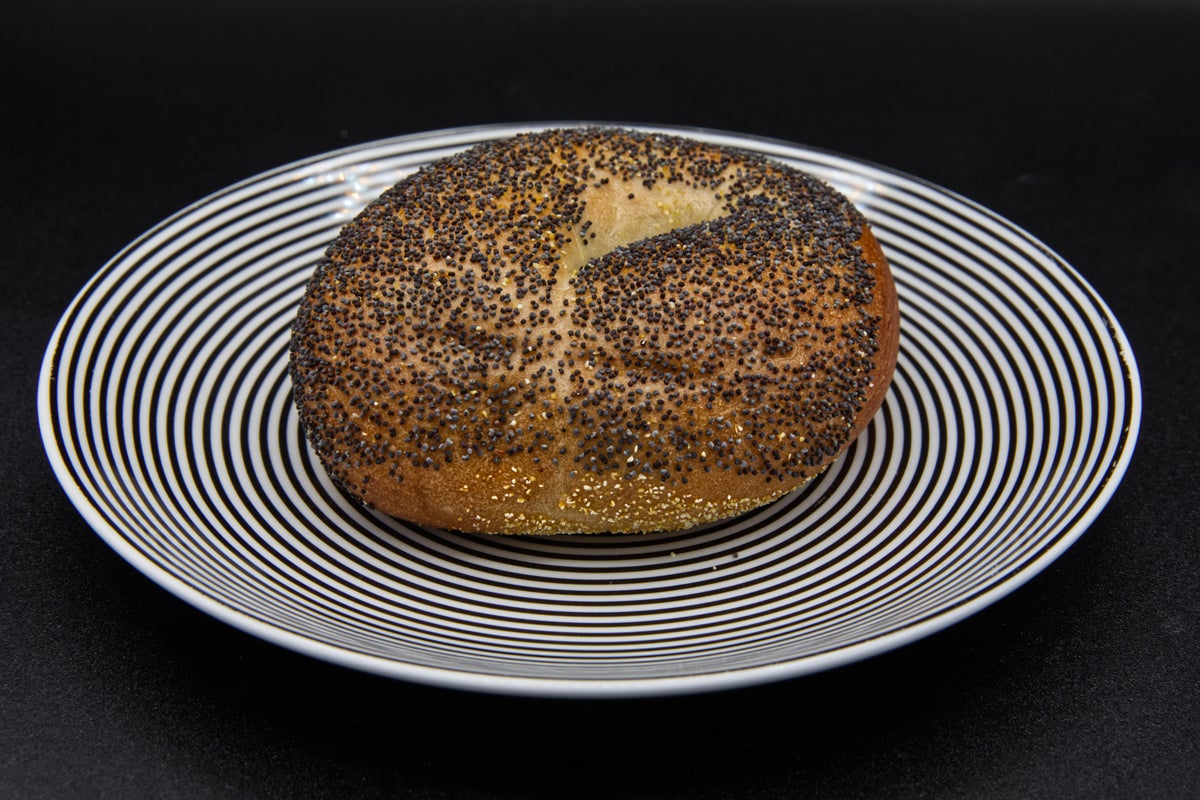
The modern American bagel is a lie. What rolls off the conveyor belts of fast-casual chains and sits encased in supermarket plastic is not a bagel at all, but a circular roll of soft, sweetened bread masquerading as a cultural icon. The authentic, dense, chewy Jewish immigrant staple that conquered New York City a century ago has been systematically engineered out of existence by industrial automation, fast-proofing techniques, and a national palate conditioned to prefer soft, sugary carbs over traditional, malt-boiled dough. The standard supermarket bagel is now just a donut with a identity crisis.
To understand how a provincial, working-class food became a multi-billion-dollar American breakfast default, you have to look past the warm nostalgia of the Lower East Side. The real story belongs to automated machinery, aggressive refrigeration logistics, and the corporate flattening of regional culinary identity.
The Steam Injection Sabotage
Traditional bagels require a grueling, multi-step process. You mix high-gluten flour, water, yeast, salt, and malt. You shape them, then let them retard in a cold room for 24 to 48 hours. This slow fermentation develops the complex flavor. Next comes the non-negotiable step: boiling them in malted water to gelatinize the exterior starch, locking in the shape and creating the shiny, thick crust. Only then do they hit the oven deck.
It is labor-intensive. It is slow. And for mass-production corporations, it was a financial bottleneck.
In the 1960s, a schoolteacher turned inventor named Daniel Thompson changed the industry forever by perfecting the automated bagel-forming machine. Suddenly, a machine could pump out thousands of dough rings an hour, doing the work of an entire crew of skilled union bakers.
But automation brought a fundamental mechanical problem. Traditional, stiff bagel dough wrecked the machines. To keep the gears turning without jamming, manufacturers had to add more water and reduce the gluten content. The dough became softer, wetter, and looser.
The real coup de grâce occurred in the baking process. Industrial wholesale bakeries abandoned the boiling vats entirely. Instead, they adopted rack ovens equipped with automatic steam injection. By blasting the raw dough rings with steam inside the oven, they mimicked the shine of a boiled bagel without the logistical nightmare of a water bath.
The result was a structural mutation. Steam baking allows the interior dough to expand rapidly, creating a light, airy, voluminous texture. It saves millions in production costs, but it robs the food of its defining characteristic. The heavy, chewy crumb disappeared, replaced by the pillow-soft texture of standard white sandwich bread.
How Freezing Vaporized Local Bakeries
For the first half of the twentieth century, the bagel was geographically trapped. It belonged to New York, Montreal, and a few scattered urban enclaves with high concentrations of Eastern European Jewish immigrants. The recipe did not travel well. A real bagel goes stale within six to eight hours of leaving the oven as the starches recrystallize.
The Lender family of New Haven, Connecticut, broke this geographical barrier by introducing the frozen bagel to the masses. By freezing the dough before or after baking, they could ship the product across the country without it turning into a brick on the grocery shelf.
The Massive Expansion of the American Appetite
| Attribute | Traditional New York Bagel | Modern Industrial Bagel |
|---|---|---|
| Weight | 3 to 4 ounces | 6 to 8 ounces |
| Preparation | Kettle-boiled, plank-baked | Steam-injected rack oven |
| Texture | Crisp crust, dense, chewy interior | Soft, uniform, airy, bread-like |
| Shelf Life | 6 to 8 hours | Several weeks (preservatives) |
As the food went national, it underwent a dramatic physical expansion. The bagels of the 1910s weighed roughly three ounces. They were small, salty, and dense, meant to be eaten as a quick snack. Today, the average coffee shop bagel weighs six to eight ounces.
This size inflation changed how the food functioned in the American diet. It ceased to be a modest vehicle for cream cheese or smoked fish. It became an oversized, standalone meal container.
To make these massive portions palatable to a broad audience, commercial bakers stripped away the traditional, slightly sour flavor profile. They added sugar, corn syrup, and dough conditioners. They introduced blueberry, French toast, and chocolate chip varieties—flavors that would have baffled the old-world bakers of the New York Bagel Bakers Union Local 338.
The Illusion of Water Mythologies
Spend ten minutes talking to a New York expat, and they will inevitably claim that the city’s tap water is the secret ingredient behind its superior baked goods. They point to the low calcium and magnesium levels in the Catskill water supply, arguing that soft water prevents the gluten in the flour from tightening up too much.
This is largely a marketing myth.
While water chemistry does affect dough rheology in minor ways, modern commercial bakeries outside of New York can easily duplicate the mineral profile of Catskill water using basic filtration and conditioning systems. The true differentiator is not the municipal water supply, but the willingness to adhere to the time-consuming method of cold retarding and kettle boiling. New York still has a higher concentration of bakeries running traditional operations, but the geography itself possesses no magical culinary properties.
The Breakfast Sandwich Hegemony
The ultimate assimilation occurred when fast-food corporations realized the bagel could compete directly with the English muffin and the biscuit. By slicing a soft, oversized bagel in half, they had the perfect structural base for bacon, egg, and cheese sandwiches.
This pivot secured the food's position at the top of the morning market, but it also finalized its architectural decline. A traditional, dense bagel makes a terrible sandwich wrapper. When you bite into a properly boiled bagel filled with egg, the structural resistance of the crust squeezes the ingredients out the sides.
To build a functional breakfast sandwich, the bread must be soft enough to yield easily to a human bite. The fast-food industry demanded a softer product, and industrial bakers happily obliged. The modern bagel surrendered its texture so it could hold a microwave-heated egg patty.
The tragedy of this commercial success is the complete erasure of consumer expectation. An entire generation of Americans has grown up believing that a bagel is simply a round piece of bread with a hole in the middle. The distinct, toothsome resistance that defined the food for centuries has been traded away for shelf life, manufacturing efficiency, and corporate scale. The immigrant staple did not just conquer the American breakfast table; it was completely dismantled and rebuilt in the image of the industrial factory.