Australia is currently staring down the barrel of a multi-billion-dollar agricultural collapse, and the trigger is not drought or flood, but a complete failure of industrial foresight. As conflict in the Middle East escalates, the country’s literal lifeblood—urea—is being choked off at the source. Within the first 100 words, the reality is this: Australia has zero domestic urea manufacturing capability left, imports 64% of its supply from the Persian Gulf, and is now watching its winter cropping season evaporate as ships stall in the Strait of Hormuz.
This is not a sudden "black swan" event. It is a predictable outcome of decades spent off-shoring critical manufacturing to the lowest bidder. For the Australian farmer, urea is not just a chemical; it is the difference between a high-protein wheat crop and a worthless patch of weeds. Without it, the yields that prop up the national economy simply won’t happen.
The AdBlue Scare Was Just a Warning
In late 2021, the nation panicked when a shortage of AdBlue—the urea-based diesel exhaust fluid—threatened to park every modern truck in the country. The government scrambled, Incitec Pivot temporarily ramped up production at Gibson Island, and the crisis was "solved." But the solution was a band-aid on a gunshot wound.
Gibson Island closed for good in 2022 because it couldn't secure affordable domestic gas. Think about the irony. Australia is one of the largest exporters of Liquified Natural Gas (LNG) in the world, yet its only nitrogen fertilizer plant was shuttered because gas prices were too high. This is the central absurdity of our current economic policy. We ship the raw materials to Asia and the Middle East, only to buy back the finished product at a massive premium, plus shipping, plus the "geopolitical risk tax" we are paying today.
The current spot market for urea in places like Geelong has spiked to over $1,300 per tonne. Just two months ago, farmers were budgeting for half that. The math for a grain grower is brutal. If the cost of nitrogen doubles while the price of wheat stays flat, the "record season" everyone was hoping for becomes a debt trap.
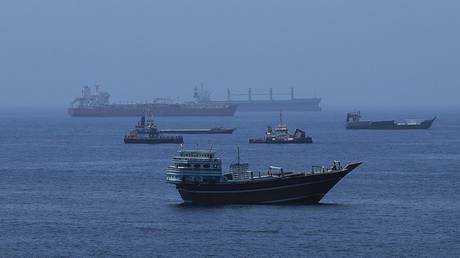
The Hormuz Choke Point
Why does a war in the Middle East matter more to a farmer in the Mallee than a local rain event? Because Australia’s import profile is dangerously concentrated. ABS data confirms that nearly two-thirds of our urea comes from Saudi Arabia, Qatar, the UAE, Bahrain, and Oman.
When the Strait of Hormuz becomes a combat zone, the insurance premiums on those tankers don’t just rise—they become prohibitive. Some shipping lines are already refusing to enter the Gulf. Even if the government uses the Export Finance Australia (EFA) to underwrite these cargoes, you cannot insure against a closed waterway.
While China used to be our fallback, they effectively banned urea exports years ago to protect their own food security. They saw this coming. We didn't.
The Illusion of Sovereign Capability
There is a lot of talk about the Perdaman project in Karratha. It is a massive, $6 billion undertaking that promises to make Australia self-sufficient in urea. It is a beacon of hope, but it is currently a construction site. It won't be producing a single pellet of urea until at least 2027.
What do we do for the 2026 season? The 2027 season?
The government’s recent announcement of a "Strategic Reserve" for essential materials is a move in the right direction, but you cannot build a reserve from an empty cup. You have to buy the urea to store it, and right now, everyone else in the world is trying to do the same thing. India, which buys 40% of its urea from the same region, is currently outbidding everyone on the spot market. Australia, with its relatively small volumes and long shipping distances, is at the back of the queue.
The Tactical Shift on the Ground
Farmers are not sitting idle, but their options are limited and expensive. We are seeing a desperate pivot toward alternatives that were once considered niche.
- Ammonium Sulphate (AmSul): Demand has spiked, but 99% of this also comes from China. We are swapping one dependency for another.
- Liquid Nitrogen (Flexi-N): Domestically produced liquid fertilizers are being rationed. It’s a cleaner, more precise way to deliver nitrogen, but the infrastructure to store and apply it isn't universal.
- Legume Banking: The smartest operators are looking at their 2027 rotations now, planning massive plantings of lupins and chickpeas to "fix" nitrogen in the soil naturally. It’s a long game in a short-term crisis.
The reality is that precision agriculture—using sensors and variable rate technology to put exactly the right amount of urea in the right place—is no longer a luxury. It is a survival strategy. If you only have half the fertilizer you need, you have to make it twice as effective.
The Cost of Cheap
We are paying the price for the "Efficiency Myth." For thirty years, the mantra was that it doesn't matter where something is made as long as it’s cheap. We optimized our supply chains for cost, not for resilience.
Now, we see that "cheap" urea from the Middle East is actually the most expensive commodity in the world when you can't get it. The loss of Gibson Island wasn't just a business failure; it was a national security failure. The fact that we have to wait for a 2027 startup to regain even a shred of domestic independence is an indictment of a decade of policy drift.
The current crisis will likely ease if the conflict de-escalates, but the lesson should be permanent. You cannot claim to be a "food bowl" for the world if you don't own the recipe for the soil. Until the Karratha plant is pouring pellets into trucks, the Australian agricultural sector remains a hostage to fortune, balanced precariously on the movement of ships through a 33-kilometer-wide stretch of water half a world away.
The immediate action step for the industry is a brutal audit of every kilogram of nitrogen on hand. There is no more room for "insurance" applications or wasteful broadcasting. Every pellet must count, because the next shipment isn't a guarantee—it’s a prayer.