Every few months, defense strategists and policy wonks get high on their own supply of maritime anxiety. The current panic centers on subsea fiber optic cables running across the Indo Pacific. The lazy consensus is that Australia needs to spearhead a massive, state-backed cable shield to protect these physical lines from sabotage, espionage, and gray zone warfare.
It sounds authoritative. It sounds proactive. It is also entirely wrong.
I have watched governments hemorrhage millions on physical security perimeters that solve yesterday's war while leaving today's backdoor wide open. If you think a state adversary is going to dispatch a mini submarine to slice an underwater cable with wire cutters in three thousand meters of water, you are watching too many bad spy thrillers. Physical cable cuts happen, mostly by commercial anchors and errant fishing trawlers. When targeted sabotage does happen, it is a nuisance, not an existential threat.
The obsession with building a physical shield around subsea infrastructure misses the entire architecture of modern data transmission.
The Physical Fallacy of Underwater Protection
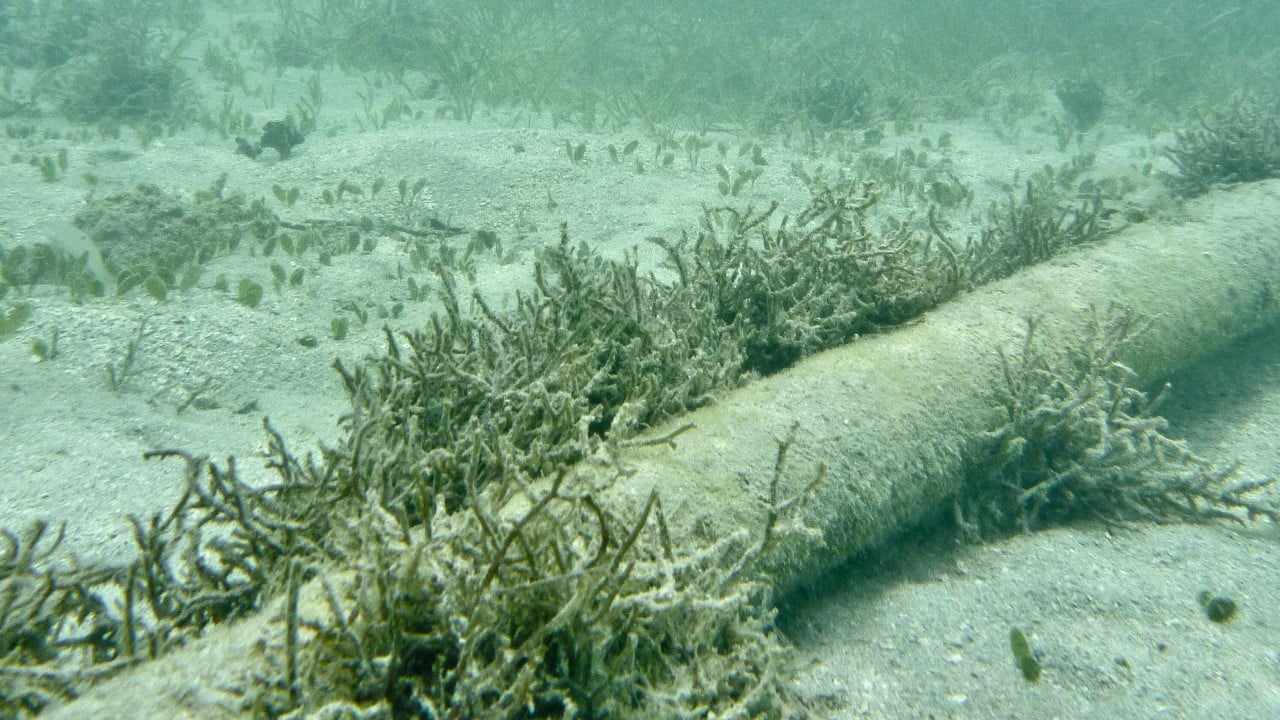
Let us look at how submarine cable networks actually operate. A subsea cable is not a fragile copper straw sitting unprotected on a lonely ocean floor. It is a heavily armored, repeaters-studded bundle of glass fibers buried in shallow waters and laid directly on sediment in the deep ocean, spanning thousands of kilometers.
The defense establishment wants us to believe that a naval cordon or a network of acoustic sensors can protect these thousands of miles of seabed. This is pure theater. You cannot patrol the trench of an ocean floor the way you patrol a highway.
When a cable fails—whether due to an earthquake, a mudslide, or a malicious actor—global routing protocols simply reroute the traffic. The internet was explicitly engineered to route around damage. Redundancy is baked into the very physics of packet switching. If cable A goes dark, traffic instantly shifts to cable B, C, or satellite constellations.
Focusing on a physical shield is like building a medieval stone wall around a server rack. It feels good to politicians who want to look tough on a press release, but it does nothing to address where the actual vulnerability lives.
Where the Real Danger Lurks
The threat to Australia's digital sovereignty is not happening at the bottom of the Timor Sea. It is happening at the top of the rack, inside the landing stations, and through the routing tables.
Data does not care about physical borders; it cares about path optimization and protocol trust. If an adversary wants to intercept, redirect, or corrupt data flowing through the Indo Pacific, they do not need to touch the wet plant. They compromise the landing station infrastructure, poison the Border Gateway Protocol, or subvert the hardware manufacturing supply chain upstream.
Imagine a scenario where a state-sponsored actor quietly compromises the management firmware of the optical transponders sitting inside a domestic landing station. Every terabyte of data passing through that cable is decrypted, copied, or altered at the edge before it ever hits a secure server. Your cable shield is sitting out in the ocean doing star wars patrols while your actual traffic is being read in real time by a server three towns over.
We are spending national security capital on the hardware equivalent of locking the screen door while the front window is wide open.
The Cost of Bureaucratic Security Theater
When Canberra talks about leading a regional cable shield, what they actually mean is creating another layer of procurement red tape, granting no-bid contracts to defense contractors who have never managed a Tier 1 network, and erecting administrative barriers to commercial cable maintenance.
Commercial operators already spend enormous sums protecting their assets because downtime costs money. Private consortia running these cables do not need a government committee telling them how to secure a splice. They need stable regulatory environments, fast permit approvals for repairs, and freedom from geopolitical interference that blocks efficient routing.
Instead, state involvement usually distorts the market. It encourages companies to rely on government subsidies rather than engineering resilience. It turns a technical routing problem into a geopolitical football.
The Counter-Intuitive Playbook
If Australia actually wants to secure its digital lifeline across the Indo Pacific, it needs to stop thinking like a 19th-century naval empire and start thinking like a modern distributed network architect.
Here is what actually works:
- Embrace Decentralization over Hardening: Stop funneling critical regional data through single landing hubs. Spread the landing points across diverse geographic locations, using independent backhaul providers.
- Zero Trust at the Landing Station: Treat every piece of hardware inside a cable landing station as already compromised. Enforce strict cryptographic verification, end-to-end encryption, and continuous behavioral monitoring of network traffic flows.
- Sovereign Route Diversity: Fund multi-path redundancy that relies on distinct technological mediums, ensuring that if a subsea corridor is compromised, traffic shifts seamlessly to alternative satellite or terrestrial vectors without missing a beat.
- Hardware Transparency: Audit the manufacturing provenance of every optical component, repeater, and switch. The vulnerability is in the silicon, not the armor jacket.
The next time you hear a defense analyst warn about vulnerabilities in the Indo Pacific submarine cable network, ask them a simple question. Are they talking about the glass in the ocean, or are they talking about the routers on the shore? If they focus on the water, they are selling you a distraction.
Stop funding underwater walls. Fix the endpoints.