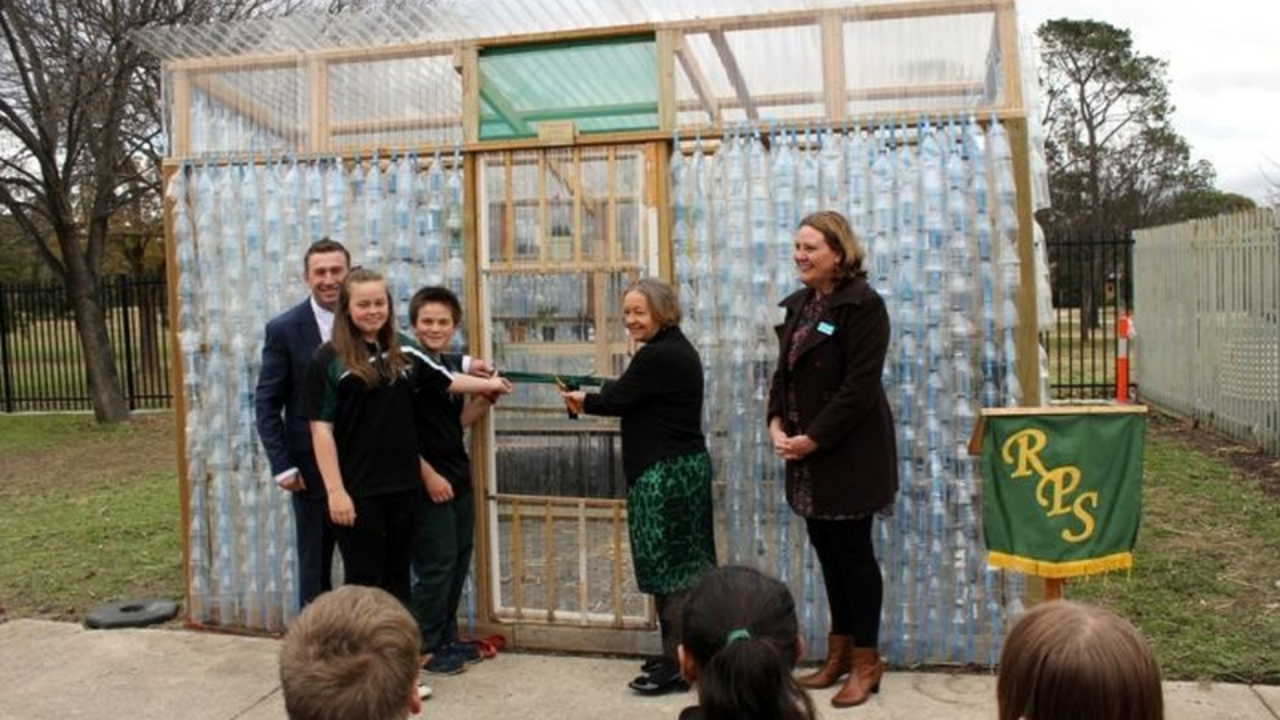
Most school recycling projects end up in a council bin after a week of enthusiasm. You know the drill. Someone brings in a box, kids drop a few items inside, and everyone forgets about it by Friday. But back in 2015, a group of Australian high school students decided to do something completely different with their plastic waste. They didn't just toss two thousand plastic bottles into a recycling chute. They saved every single one, wired them together, and built a fully functional greenhouse.
Eleven years later, that structure is still standing. It doesn't just sit there looking quirky for school tours either. It actively feeds the school garden.
Let's look at why this project actually worked when so many environmental initiatives quietly fail.
The Reality of Plastic Waste Projects
Building anything structural out of single-use plastic sounds terrible on paper. Plastic degrades under UV light, brittle bottles snap, and lightweight materials blow away in a decent storm. Most DIY bottle greenhouses collapse within two winters.
So how did this school pull it off? They treated waste like timber.
Instead of gluing things together or hoping tape would hold structural loads, the students engineered a rigid framework. They threaded bottles onto bamboo stakes or high-tensile wire, creating tightly packed columns that acted as insulated walls. Air trapped inside the plastic chambers provided a surprisingly effective thermal buffer.
You're probably wondering if the bottles yellowed and cracked into microplastics. Some definitely did. Maintenance is part of the deal. The difference here is that the school treated the greenhouse as a living, breathing piece of infrastructure rather than a static art installation. When a bottle degraded, they swapped it out. It's hands-on sustainability. Not the kind printed on a glossy corporate brochure.
Why This Matters for Modern Education
Schools love talking about sustainability. They buy smart boards, print worksheets on recycled paper, and invite local politicians to plant a tree on Earth Day.
Kids see right through that. It's performative.
When you ask students to haul two thousand bottles, clean them, design a load-bearing wall, and grow actual food inside it, you change the stakes. Physics, biology, and chemistry stop being chapters in a textbook. They turn into survival metrics for your tomato plants.
The greenhouse approach forces students to deal with real-world constraints:
- Drainage issues when it pours.
- Pest control without industrial pesticides.
- Structural integrity against wind loads.
- Community resource management.
You can't fake those outcomes. If the design fails, the plants die. That level of direct feedback creates genuine competence.
Building Your Own Community Micro-Project
If you want to replicate this kind of initiative in your own backyard or local community space, stop waiting for a massive grant. You don't need one.
Start by gathering materials locally. Local cafes and sports clubs go through thousands of bottles a week. Reach out to them directly. Set a hard limit on your timeline so enthusiasm doesn't die out. Two thousand bottles sounds like a lot until you realize a single local sports match generates half that in an afternoon.
Focus heavily on your frame first. The bottles are just insulation and light diffusion. Your timber, metal, or PVC skeleton has to carry the actual weight of the structure plus wind resistance.
Keep your crops simple at the start. Leafy greens, herbs, and hardy root vegetables tolerate temperature fluctuations much better than delicate tropical plants.
Real environmental change doesn't happen in a boardroom. It happens when people get their hands dirty fixing a physical problem right in front of them. Eleven years of continuous harvest proves that discarded trash beats brand-new plastic every single time if you've got the patience to build something that lasts.