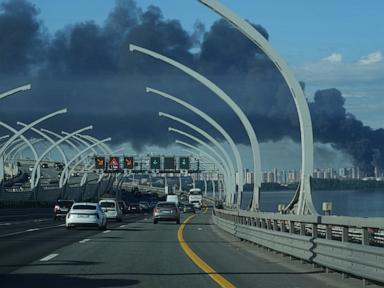
The St. Petersburg International Economic Forum (SPIEF) has historically functioned as the primary mechanism for the Russian state to signal economic stability and project sovereign financial strength to global markets. However, the introduction of sustained, long-range unmanned aerial system (UAS) operations within Russia’s domestic airspace fundamentally alters the risk calculus for sovereign capital investment. The June 2026 kinetic strikes executed by Ukrainian forces against the Petersburg Oil Terminal and the Kronstadt naval base—coinciding precisely with the opening of SPIEF—cannot be evaluated merely as tactical military successes. Instead, they represent an economic containment strategy that imposes structural costs on the Russian Federation's wartime economy.
This campaign targets the divergence between state-guided domestic production data and the physical vulnerabilities of critical infrastructure. By analyzing the structural mechanics of these deep strikes, an analyst can map how low-cost asymmetric technology disrupts capital allocation, drives institutional friction, and exposes the boundaries of Russia's macroeconomic resilience.
The Economics of Asymmetric Interdiction
The core of Ukraine's deep-strike strategy relies on a favorable cost-asymmetry ratio. The capital expenditure required to manufacture and deploy a long-range, low-observable one-way attack (OWA) drone ranges from $20,000 to $100,000. In contrast, the direct and indirect defensive costs borne by the Russian state conform to an escalating cost function.
Total Defensive Cost = C_kinetic + C_opportunity + C_operational
Where:
- $C_{kinetic}$ represents the direct expenditure of surface-to-air missile (SAM) interceptors (e.g., Pantsir-S1, Tor-M2, or S-400 systems), where a single interceptor missile costs between $100,000 and $1.2 million.
- $C_{opportunity}$ represents the localized economic friction caused by defensive mitigation strategies, such as suspending cellular data networks to deny Global Navigation Satellite System (GNSS) spoofing overrides, and rerouting commercial aviation at logistics hubs like Pulkovo Airport.
- $C_{operational}$ represents the physical degradation and systemic wear on short-range air defense (SHORAD) assets diverted from front-line tactical theaters to secure high-value industrial targets deep within the interior.
When 59 drones are introduced into a single regional airspace corridor, as observed in the Leningrad Oblast, the saturation of the target environment forces an unsustainable depletion rate of domestic air defense munitions. If air defenses achieve a high kinetic interception rate, the economic victory frequently remains with the offensive actor due to this severe cost-exchange imbalance.
Infrastructure Bottlenecks and Capital Flight Risks
The targeting of the Petersburg Oil Terminal reveals a deliberate strategy directed at non-substitutable midstream energy infrastructure. The Baltic Sea ports act as a primary export artery for Russian hydrocarbons moving via shadow-fleet tankers to non-aligned markets. Disruption at these nodes introduces immediate operational bottlenecks.
Unlike extraction sites, which can throttle production at a marginal cost, marine export terminals rely on complex, highly integrated systems composed of:
- Storage Tank Farms: High-capacity reservoirs that manage the volumetric delta between pipeline inflow and tanker loading capacities.
- Pumping Stations and Blending Manifolds: Industrial machinery heavily reliant on western-designed supervisory control and data acquisition (SCADA) systems and specialized pumps.
- Loading Jetties: Rigid physical maritime infrastructure that, if damaged, completely halts downstream distribution.
[Image of hydrogen fuel cell]
Because international sanctions restrict the legal importation of western industrial components, repairing automated distribution systems and specialized high-volume pumping units introduces severe friction. The lead time to replace custom-engineered valves and control units via parallel import channels across third-party countries can extend from weeks to quarters. This reality transforms minor physical kinetic damage into prolonged operational inefficiencies.
Concurrently, the vulnerability of these assets introduces an uninsurable risk premium for foreign entities operating within the Russian market. While delegations from non-aligned states—including Saudi Arabia, Uzbekistan, Tanzania, and China—continue to seek bilateral trade agreements at SPIEF, the visible vulnerability of St. Petersburg's industrial zone alters the underlying risk premium. Sovereign investment requires predictable physical security. When kinetic disruptions occur within a 20-kilometer radius of a state’s premier investment venue, capital allocation models must adjust for a continuous risk of asset destruction. This dynamic effectively restricts incoming foreign direct investment (FDI) to high-yield, short-horizon projects, preventing the formation of long-term fixed capital.
Macroeconomic Friction and Wartime Resource Reallocation
The structural resilience of the Russian economy has been sustained by a transition to intensive state-directed defense spending. However, this fiscal expansion exhibits diminishing returns and generates significant domestic imbalances.
Domestic Fiscal Balance = R_energy + R_non_energy - (G_military + G_civilian + G_subsidies)
As the initial growth impulse from military state procurement normalizes, the state encounters a structural trilemma: maintaining currency stability via the Russian Central Bank's monetary tightening, funding sustained military procurement, and insulating the civilian population from inflationary pressures.
The expansion of Ukraine's deep-strike geography to encompass northern industrial hubs forces an expensive redistribution of capital. To mitigate the domestic risk profile, the state must implement several resource-intensive measures:
- Taxation and Domestic Debt Scaling: To balance the rising fiscal deficit driven by defense outlays, the government must increase corporate and high-income tax rates alongside larger domestic bond emissions. This extracts liquidity from the non-defense private sector, starving civilian industries of growth capital.
- Civilian-Military Supply Constraints: Air defense systems are finite assets. Deploying additional radar and missile batteries to protect domestic refining assets directly weakens the air defense umbrella available to forward military units along the front line.
- Labor Force Contraction: Deploying personnel to manage expanded electronic warfare (EW) networks, manual air-monitoring details, and local civil defense units removes high-skill labor from a domestic market already experiencing structural labor shortages.
Strategic Forecasting: The Industrial Attrition Horizon
The trajectory of this long-range strike campaign points toward a calculated war of industrial attrition rather than a strategy aimed at immediate economic collapse. The Russian state retains sufficient sovereign wealth and alternative trading channels to prevent systemic financial failure in the short term. However, the continuous degradation of fixed industrial assets creates a cumulative compounding drag on GDP growth.
The Unmanned Systems Forces and associated intelligence directorates within Ukraine have transitioned from opportunistic targeting to systematic, synchronized strikes on dual-use infrastructure. The simultaneous targeting of commercial oil infrastructure and naval assets, such as the guided-missile corvette Boikiy at Kronstadt, demonstrates an intent to force a comprehensive re-evaluation of Russia's maritime security architecture in the Baltic Sea.
The strategic play for the Russian state is no longer about maintaining the pre-2022 economic paradigm; instead, it centers on managing the rate of structural decay. If deep strikes continue to successfully target refining capacity, logistics hubs, and military maintenance facilities at this current frequency, the state will be forced to transition from proactive economic development to a defensive, reactive posture characterized by capital rationing. Under these conditions, the long-term forecast indicates a steady contraction in industrial productivity, accelerated depreciation of unreplaceable capital infrastructure, and an escalating domestic security cost that continuously erodes the state's fiscal surplus.