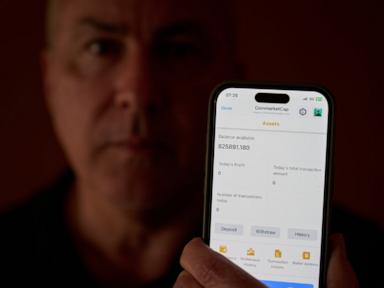
Organized crime isn't what it used to be. Forget shadowy alleys, secret handshakes, or classic mafia dons orchestrating bank heists in trench coats. Today, international criminal groups are operating like Silicon Valley tech giants, running multi-billion-dollar service platforms that make traditional law enforcement look completely helpless.
A report released by the United Nations Office on Drugs and Crime (UNODC) lays out the terrifying reality. Cyber-enabled scam networks and syndicate operations originating in Southeast Asia caused an estimated $88.3 billion to $114.1 billion in losses across the Asia-Pacific region in 2025 alone. That is higher than the gross domestic product of several nations. If you liked this article, you might want to look at: this related article.
They aren't just stealing money from naive internet users anymore. These networks have turned crime into a service-based franchise. They buy and sell data, rent out deepfake software, automate phishing scams, and run underground crypto clearinghouses. When police raid one compound, the syndicates simply move their operations underground into luxury villas, or jump borders to places like East Timor, Africa, or the Pacific Islands.
If you think this is just a regional issue in Southeast Asia, you're dead wrong. The tentacles of these tech-driven operations are reaching into Western bank accounts, European job boards, and American living rooms every single day. For another look on this story, refer to the latest coverage from Al Jazeera.
The Corporate Franchising Model of Modern Crime
For decades, organized crime syndicates stuck to their specific territories and trades. One gang moved illicit drugs, another smuggled migrants, and a third focused on extortion. That old model is dead.
According to Delphine Schantz, the UNODC Regional Representative for Southeast Asia and the Pacific, organized crime has shifted into what looks like corporate franchising. Syndicates now run specialized, interconnected departments. One unit handles human trafficking to staff the centers. Another buys leaked personal data. A third manages encrypted communications and software development. A fourth launders the cash through complex web3 protocols and underground banking systems.
"Their operating model looks like corporate franchising: imagine specialized departments for laundering money, trafficking people, smuggling migrants, and harvesting data, all plugged into the same, service-based interconnected network," Schantz noted during the report launch in Bangkok.
This shift from physical trafficking to digital service provision means criminals leave almost no paper trail. It's plug-and-play crime. An ambitious crew doesn't need to build a scam framework from scratch. They can buy pre-packaged phishing kits on Telegram, rent access to malicious botnets, hire AI voice-cloning software, and buy stolen target lists within minutes.
How Artificial Intelligence Became the Ultimate Offense
The biggest driver of this massive expansion is artificial intelligence. The UNODC report points out that criminal groups have rapidly integrated generative AI and deepfake technology into their daily operations.
In the past, online scams were relatively easy to spot. You'd get a poorly written email full of spelling mistakes, sent by someone claiming to be an overseas prince. That era is over. Today, scammers use AI translation engines to target people across dozen languages simultaneously without losing natural tone or grammar.
They deploy real-time deepfake video and cloned audio during phone calls. When a retiree gets a call from what sounds like their grandchild crying for emergency bail money, or an investor talks on video to a "financial adviser" with a believable accent, they aren't talking to a real human. They are talking to an AI persona controlled by an operator sitting in a compound thousands of miles away.
The UNODC warns that the threat is getting worse fast. Syndicates are moving toward agentic AI systems. These autonomous tools can sweep social media, pick out vulnerable targets, write customized persuasive messages, execute complex social-engineering attacks, and move stolen cryptocurrency through automated mixers—all with minimal human supervision.
Human Trafficking Inside the Industrial Scam Factory
Behind the high-tech wizardry lies a brutal human rights nightmare. The software might be automated, but the manual effort required to run thousands of individual chats and target accounts relies on forced labor.
Hundreds of thousands of people from over 80 countries have been trafficked into fortified scam compounds dotting Southeast Asia. Promised legitimate jobs in customer service, IT, or marketing, victims arrive in regional hubs only to have their passports confiscated. Armed guards keep them trapped inside massive multi-acre compounds equipped with dormitories, bars, and barbed-wire walls.
Victims are given daily extortion targets. If they fail to make their quotas, they face severe physical abuse, starvation, and solitary confinement. UN human rights assessments reveal that families back home are often video-called by traffickers showing their loved ones being beaten to demand ransom payments.
What makes this network so resilient is its recruitment strategy. As syndicates expand their reach into Europe and North America, they are actively recruiting operators fluent in German, French, Polish, Spanish, and English. The scam centers aren't just targeting local pockets anymore; they're running global call centers powered by modern slavery.
Why Law Enforcement Raids Aren't Working
When local authorities or military forces raid a high-profile scam compound in border regions of Myanmar, Cambodia, or Laos, headlines proclaim victory. The reality on the ground is very different.
Crackdowns don't destroy these criminal groups; they just force them to adapt. UNODC counter-terrorism analyst Seong Jae Shin pointed out that while large industrial compounds have been busted, the operations haven't stopped. Instead of massive compounds housing thousands of workers, syndicates break down into smaller, decentralized units. They lease private residential villas, boutique hotels, and gated homes where they blend into normal suburban communities.
When regional pressure in the Mekong region becomes too intense, these groups engage in what researchers call "jurisdiction shopping." They move operations to areas with weak regulatory oversight, fragile governance, or high levels of official corruption. The report highlights recent moves into East Timor, small Pacific Island nations, and parts of West Africa.
Corruption remains the single biggest enabler of this entire industry. Local authorities, border agents, and political elites in vulnerable regions often take cuts of the profits, tipping off criminal bosses before raids happen or fast-tracking trafficked workers through airport customs.
The Trillion-Dollar Illicit Ecosystem
It's a mistake to treat cyber scams as isolated online fraud. The money generated by these operations flows directly into other organized crime sectors, creating a self-funding loop.
The UNODC estimates that alongside scam revenues exceeding $88 billion, illicit drug sales in Southeast Asia and surrounding regions—primarily methamphetamine, heroin, and ketamine—bring in up to $109 billion annually. Scammers use the same underground money brokers to launder drug proceeds that they use to move stolen cyber fraud cash.
They use modified telecommunication devices like IMSI-catchers (or Stingrays) mounted in normal passenger cars to spoof cell towers, firing off millions of fraudulent text messages to phones nearby while driving through major cities like Bangkok. They buy stolen credit card databases from dark web markets, use encrypted messaging apps like Telegram as public marketplaces for illegal tools, and funnel cash through unhosted cryptocurrency wallets.
The criminal economy is so tightly integrated that taking down a single scam operation leaves the rest of the supply chain intact. The software seller, the data broker, the corrupt border guard, and the crypto washer keep operating, waiting for the next criminal outfit to buy their services.
What Needs to Happen to Break the Cycle
Governments are playing catch-up using twentieth-century legal tools against a twenty-first-century decentralized threat. Stopping this ecosystem requires moving past simple law enforcement raids on physical buildings.
- Target the financial layer instead of just the physical compounds. Tracking and freezing illicit cryptocurrency flows, cracking down on unverified over-the-counter crypto desks, and holding financial institutions accountable for failing to flag suspicious transactions cuts off the profit motive.
- Force tech companies and messaging platforms to take responsibility. Platforms like Telegram and social media networks must actively moderate illicit markets operating openly on their channels, disabling automated phishing bots and scam recruitment ads.
- Establish cross-border legal frameworks. Regional police forces can't stop transnational syndicates when their jurisdiction stops at the border. International task forces need real-time data sharing agreements to track human trafficking routes and cyber infrastructure across continents.
- Strengthen oversight in Special Economic Zones (SEZs). Governments must eliminate lawless pockets where criminal syndicates operate under the cover of unregulated casinos and private developments.
Until global policy focuses on the service infrastructure—the data brokers, financial rails, and tech platforms that make organized crime effortless—these syndicates will continue to outpace the law.