War used to be fought for dirt and oil. Now it is fought for electricity, server nodes, and the metadata that keeps modern armies moving.
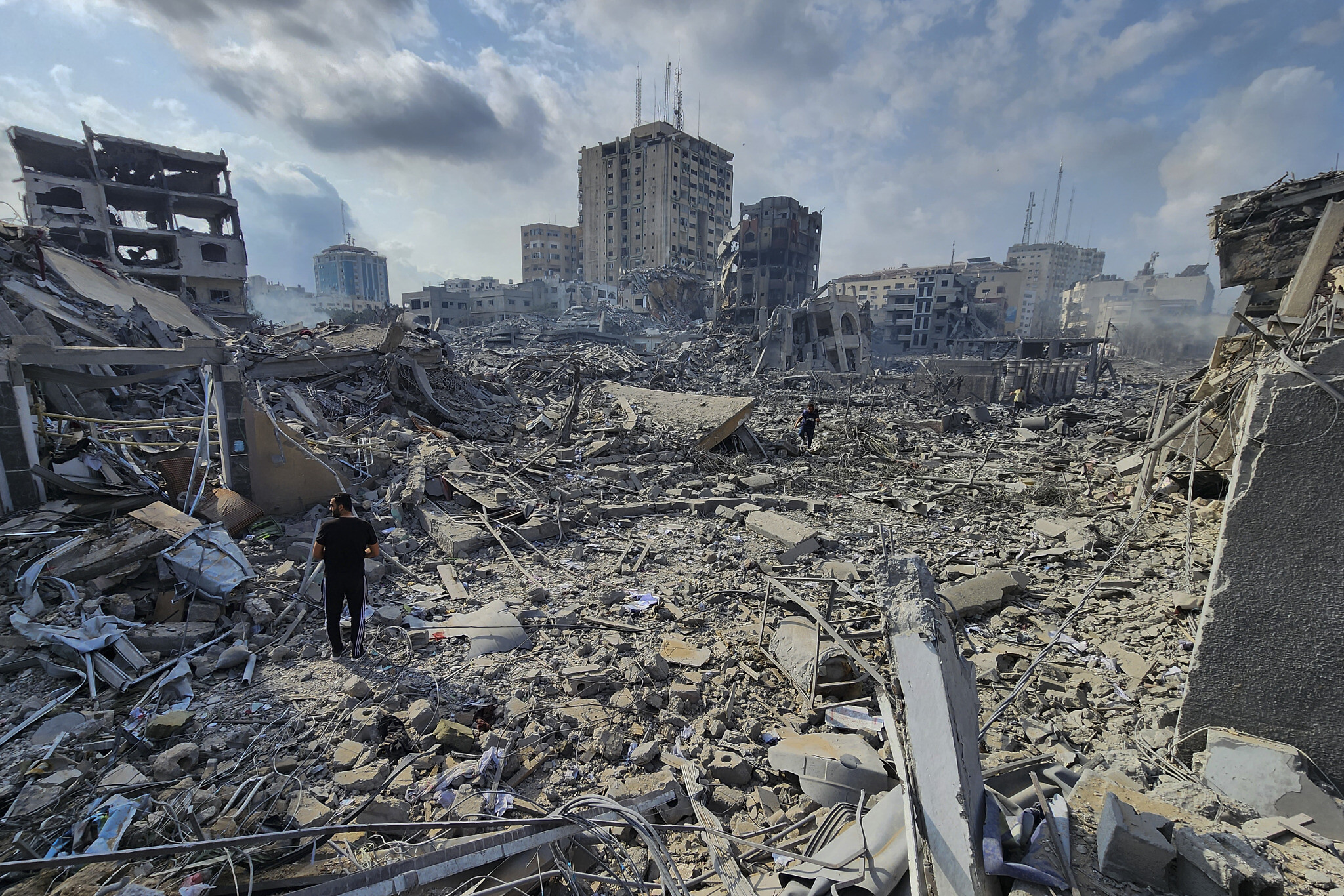
When a Russian strike tore through buses carrying civilians in Kramatorsk, the immediate horror of the human toll was quickly compounded by a parallel military maneuver occurring thousands of miles away from the front lines of transit. While rescue workers pulled bodies from mangled metal in Ukraine's industrial east, Ukrainian drones and long-range missiles struck a vital Russian military data center. This was not a coincidence. This was the grim arithmetic of modern attrition, where physical infrastructure and digital intelligence are two sides of the same bloody coin.
For months, the war has settled into a grinding war of logistics. Every movement of personnel, every ammunition convoy, and every artillery shell coordinated on encrypted channels relies on distributed data processing. When military planners talk about command and control, they are no longer talking about generals peering over paper maps in concrete bunkers. They are talking about server arrays, fiber-optic trunk lines, and cloud architecture spread across contested territories.
The strike in Kramatorsk targeted transportation nodes used to shift troops and resources through the Donbas. It was a brutal reminder that Russia's campaign continues to treat civilian transit corridors as legitimate targets in its effort to choke Ukrainian operational depth. These buses were not moving front-line assault units; they were carrying people trying to survive in a war zone where civilian life has been systematically militarized by default. Every road is a supply line. Every bridge is a target.
Yet, the simultaneous push by Kyiv against Russian digital infrastructure reveals a calculated shift in strategy. Ukraine understands that blinding the adversary is just as effective as killing the soldier pulling the trigger. The data center targeted by Ukrainian strikes served as a critical hub for regional military communications and logistics tracking. By dismantling these nodes, Kyiv disrupts the automated decision-making loops that Russian commanders depend on to direct artillery and drone swarms.
The intersection of kinetic warfare and digital targeting has rewritten the rules of engagement. Modern warfare runs on data. The servers housing logistics databases, troop rosters, and satellite telemetry are just as valuable as an ammunition depot. When a data center goes dark, battalion commanders lose their spatial awareness. Supply trucks stall because their digital waybills are trapped in a corrupted database. Artillery batteries go silent because the targeting software cannot sync with reconnaissance drone feeds.
This creates a terrifying feedback loop. As digital targets become higher priority, conventional military targets—like civilian transport, industrial zones, and municipal power grids—absorb the collateral damage of a nation desperate to protect its electronic nerve center while severing the enemy's. The civilian population of Ukraine remains caught in the crossfire of this dual war: one fought with steel and high explosives on muddy roads, and the other fought with electronic pulses against silicon chips.
The reality on the ground is stark. International humanitarian law is designed for a world of clear distinctions between combatants and non-combatants, between military assets and civilian transport. But when civilian buses share asphalt with military logistics trucks, and when military intelligence servers are housed in urban or semi-industrial sectors, those legal boundaries blur into insignificance.
We are watching the emergence of total cyber-kinetic integration. Every explosion in Kramatorsk echoes across a server farm in Russia, and every smoking crater of a data center brings another wave of retaliatory kinetic strikes against Ukraine's remaining infrastructure. There are no safe distances anymore. The front line is everywhere there is a road, and everywhere there is a wire.