The smell of burning timber does not stay in the air. It settles into the weave of cotton shirts, behind the ears, and deep inside the sinus cavities until every breath for three days tastes like charcoal and wet ash.
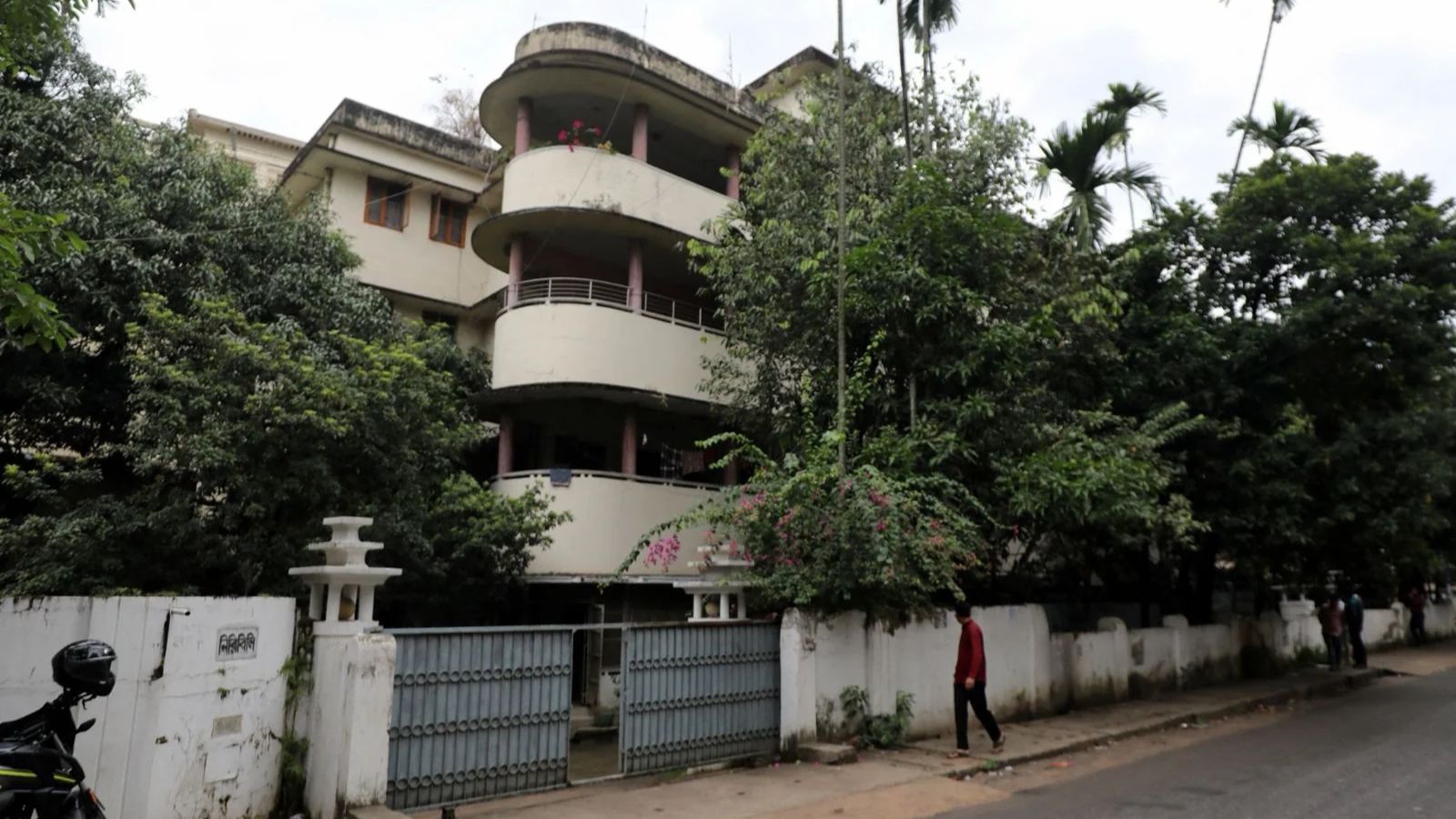
In February 2025, that smoke hung low over Hathazari, a subdistrict just north of Chittagong in southeastern Bangladesh. Specifically, it rose from the village of Bathua, where a crowd of protesters set fire to the ancestral home of Muhammad Yunus. You might also find this related article useful: The Resource Governance Deficit in Conservation Strategy.
To the international press, the incident was a brief, jarring wire dispatch. A Nobel Peace Prize laureate, the architect of modern microfinance, and the chief adviser leading Bangladesh’s interim government had seen his family home torched amid widening political unrest. The facts fit neatly into a three-paragraph update.
They missed everything that actually mattered. As extensively documented in detailed reports by Reuters, the results are significant.
When a crowd burns an empty ancestral house, they are not trying to harm a politician who lives miles away in a guarded state residence in Dhaka. They are trying to incinerate a symbol. And when you look closely at what burned in Bathua—and why the people holding the matches felt compelled to strike them—you begin to see the terrifying fragility of a nation trying to reinvent itself after fifteen years of autocratic rule.
The Weight of a Tin Roof
To understand why a house in a quiet Chittagong village became a flashpoint, you have to picture what an ancestral home means in rural Bengal.
Imagine a hypothetical resident of Hathazari—let us call him Tariq, a forty-two-year-old hardware shop owner whose family has lived two miles from the Yunus homestead for four generations. To Tariq, the house in Bathua was never a monument to global economics. It was simply the place where Dula Mia, a local goldsmith, raised fourteen children, including a bright, quiet boy named Muhammad who went off to study economics and eventually came back with an idea about lending twenty-seven dollars to poor women in neighboring Jobra.
For decades, that homestead stood as quiet proof that someone from the mud lanes of Chittagong could alter the financial gravity of the world. Even when Yunus fell out of favor with Sheikh Hasina’s government, endured over a hundred legal cases, and was stripped of his leadership at Grameen Bank, the house remained intact. Brick, wood, corrugated tin, and memory.
Then came the summer of 2024.
Student-led protests erupted across Bangladesh, met with lethal force by state security apparatus. Hundreds died in the streets. On August 5, 2024, Sheikh Hasina fled the country by helicopter, ending fifteen years of uninterrupted, increasingly authoritarian rule. Three days later, Muhammad Yunus returned from Paris to take the oath as Chief Adviser of an interim government.
Hope, in those first forty-eight hours, felt intoxicating. People painted murals on walls that had been blank with fear for a decade. Traffic was directed by university students in the pouring monsoon rain. Everyone believed the fever had broken.
But revolutions do not pay the electric bill.
The Arithmetic of Impatience
Six months into the transition, the euphoria in places like Hathazari had curdled into a familiar, gnawing anxiety.
Think of a post-revolutionary economy like a house whose foundation has been violently shifted during an earthquake. Even after the shaking stops, the doors will not close properly, the pipes leak behind the drywall, and every attempt to patch the plaster reveals deeper structural rot.
By early 2025, ordinary Bangladeshis were living inside that cracked house. Inflation hovered stubbornly near double digits. Food prices—rice, lentils, cooking oil, green chilies—ate through daily wages before sunset. Factories shuttered or slowed down amid labor disputes and banking sector turmoil left behind by years of crony loans.
Meanwhile, the political vacuum created by the collapse of the Awami League did not stay empty. Rival factions, newly emboldened student groups, religious hardliners, and remnants of the old regime began testing the boundaries of the interim government’s authority. In early February 2025, mobs demolished and burned the Dhanmondi 32 residence in Dhaka—the historic home of Bangladesh’s founding leader, Sheikh Mujibur Rahman—in a wave of fury triggered by an online speech from the exiled Hasina.
Violence in Bangladesh rarely stays contained within the capital. It travels down the highways like a brushfire.
In Hathazari, political grievances quickly fused with economic exhaustion and local factionalism. For those who had supported the previous administration, Yunus was the usurper who dismantled their political world. For some who had cheered the revolution, he was moving too slowly, bogged down in commission reports and institutional reforms while the price of eggs climbed week after week.
When the crowd marched toward Bathua, they were carrying the accumulated weight of both betrayals.
What Fire Actually Destroys
I have stood in the aftermath of political arson in South Asia, and the strangest thing is always the silence that follows the noise.
While the fire is burning, there is roar and spectacle. Men shout slogans into phone cameras. Flames lick through wooden window frames, popping the glass with sharp, pistol-like cracks. Smoke billows black against the palm trees, visible from the main road. Neighbors stand at a careful distance, their faces lit orange, unsure whether intervening means saving a neighbor's property or painting a target on their own backs.
Then the roof collapses inward. The crowd disperses down the narrow paths toward the bazaar. And by morning, all that remains is a blackened skeleton of brick walls, twisted sheets of tin, and the sour stench of burnt furniture.
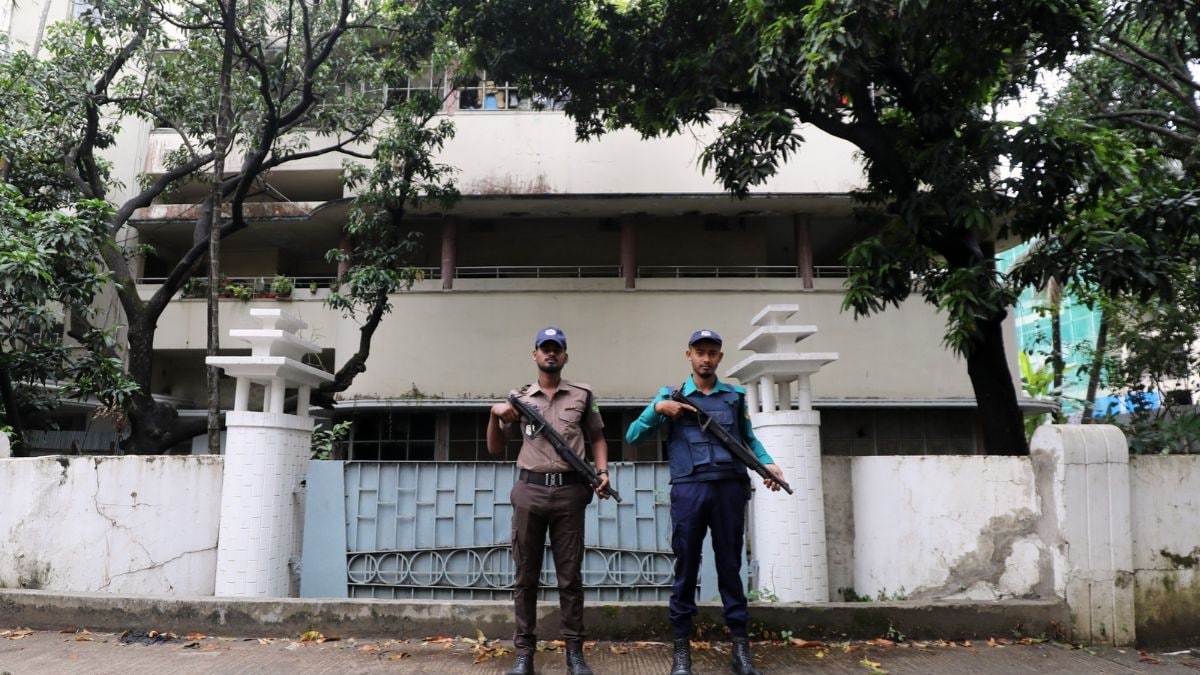
Local firefighters and police arrived to secure the perimeter, launching investigations into the arson attack. Officials in Dhaka condemned the lawlessness, reiterating calls for restraint and order as the interim administration struggled to assert control over a fractured police force. Remember, this was a police force that had largely collapsed in August 2024—many officers had fled their posts after being used as instruments of state violence, leaving law enforcement demoralized, understaffed, and terrified of confronting angry crowds.
When there is no referee on the field, every foul turns into a brawl.
Consider what happens next in a town like Hathazari after the cameras leave. The headlines move on to the next diplomatic summit in Dhaka or the next debate over election timelines. In Bathua, however, the soot stays on the walls.
The Invisible Stakes of the Transition
It is easy, from thousands of miles away, to look at the burning of Muhammad Yunus’s ancestral home and reduce it to a simple story of political chaos. That framing is lazy, and it misses the deeper tragedy unfolding across Bangladesh.
Yunus was never supposed to be a traditional politician. His entire life’s work was built on the premise that small, predictable systems—a tiny loan, a weekly repayment meeting, a solar panel on a thatched roof—could lift people out of desperation if given stability and trust. At eighty-four years old, he was handed a country of 170 million people whose institutions had been hollowed out from the inside.
Courts lacked credibility. The central bank had been bled dry. The civil service was paralyzed by competing loyalties.
Rebuilding those institutions takes years of unglamorous, agonizingly slow legal and economic surgery. Yet politics in the street operates on the timeline of an empty stomach. Voters and protesters do not want a white paper on central bank independence; they want affordable rice by Friday and justice for their dead by Monday.
That gap—between the speed of institutional repair and the speed of human anger—is where democracies go to die.
When protesters set fire to the house in Bathua, they were attacking the physical anchor of the man trying to bridge that gap. Even though Yunus had not lived there permanently for decades, the house represented continuity. It proved he was not an abstraction imposed by foreign diplomats or urban elites; he was a son of Chittagong soil. Burning it was an attempt to sever that root, to turn him into an outsider in his own homeland.
The Reckoning in the Smoke
Honestly, it is hard to look at the trajectory of Bangladesh since 2024 without feeling a deep, unsettling uncertainty. Anyone who claims to know exactly how this story ends is selling something.
Revolutions are messy, contradictory things. The same public energy that toppled an entrenched autocracy can, without guardrails, turn inward and consume the very spaces meant to nurture a freer society. You cannot easily tell a generation that just overthrew a government with bare hands and paving stones to suddenly go home, wait patiently, and trust bureaucratic due process.
Yet without restraint, every grievance becomes an excuse for a match. Today it is the home of a deposed leader’s father in Dhaka. Tomorrow it is the ancestral home of an interim chief adviser in Chittagong. The day after that, it is the shop of a minority merchant, the office of a local newspaper, or the house of a neighbor who voted the wrong way ten years ago.
Fire does not read political manifestos. Once lit, it simply looks for dry wood.
In the days after the attack in Bathua, residents walked past the charred compound on their way to the morning market. Some shook their heads in quiet disgust at the destruction of a landmark that had brought pride to their district for half a century. Others kept their eyes fixed on the dirt road ahead, unwilling to speak aloud in a climate where allegiance shifts with the wind.
Inside the scorched walls, rain from an unseasonal squall pooled in the ashes of old wooden beams, turning the gray dust into black mud. The brick foundation—thick, stubborn, and scorched—remained standing in the wet grass, waiting to see whether anyone would have the courage to build on it again.