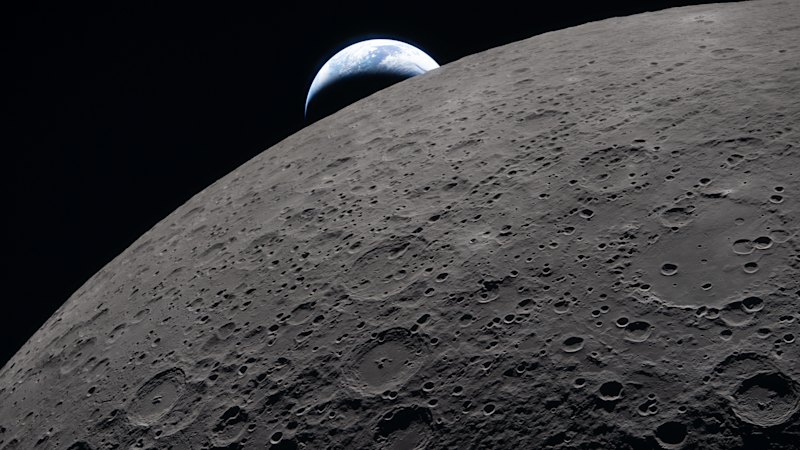
The wait is almost over. After days of hurtling through the vacuum of space, the four astronauts of the Artemis II mission are barreling back toward Earth. They’ve spent the last week doing something no human has done since 1972: seeing the far side of the Moon with their own eyes. It’s a massive win for NASA and a clear signal that the days of just "visiting" low Earth orbit are dead. We’re going back to the deep stuff, and this crew is currently sitting inside a capsule that’s about to turn into a fireball as it hits our atmosphere.
This isn't just a joyride. It’s a grueling test of the Orion spacecraft and the systems we need to eventually put boots on Mars. While the world watched the grainy footage of the lunar flyby, Reid Wiseman, Victor Glover, Christina Koch, and Jeremy Hansen were busy monitoring life support systems that have to work perfectly. If one thing fails at these distances, there's no "quick" way home. They’re on a trajectory that relies on physics and heat shield integrity, and right now, they’re on the home stretch.
Why Artemis II is a Bigger Deal Than Apollo
People like to compare everything to Apollo. I get it. The 1960s were iconic. But Artemis II is fundamentally different because it’s not a one-off sprint to beat the Soviets. It’s the foundation of a permanent presence. When the crew swung around the lunar far side, they weren’t just looking for a place to plant a flag. They were testing the communication relays and navigation tech that will support the Gateway—a space station that will eventually orbit the Moon.
The sheer scale of the Orion capsule compared to the old Apollo Command Module is worth noting. It’s roomier, sure, but it’s also packed with modern flight computers that can handle most of the heavy lifting. That said, the "re-entry" phase remains the most dangerous part of the whole trip. Orion will hit the atmosphere at roughly 25,000 miles per hour. That generates temperatures near 5,000 degrees Fahrenheit. You can’t simulate that kind of heat perfectly on Earth. You just have to build the shield, trust the math, and pray the tiles hold.
The Crew Proved Humans Still Outperform Robots
We hear all the time that we should just send rovers. Robots don’t need oxygen. They don’t need to poop in a bag. They don’t get homesick. But Artemis II showed exactly why we still send people. During the mission, the crew had to manage complex manual maneuvers and troubleshoot minor sensor glitches that would have stalled a pre-programmed drone.
Christina Koch and Victor Glover aren't just passengers; they’re highly trained engineers who can feel when the ship isn't vibrating quite right. That human intuition is why we’re pushing for the Moon again. They’ve been conducting biological experiments in deep space, studying how high-radiation environments affect the human body outside the protection of Earth’s Van Allen belts. It’s gritty, uncomfortable work. Space isn't a sci-fi movie. It’s a cramped, noisy, metal box that smells like ozone and sweat.
Breaking Down the Skip Reentry
One of the coolest—and most nerve-wracking—parts of this return journey is the "skip reentry" maneuver. Instead of just diving straight into the atmosphere like a rock, Orion will basically "bounce" off the upper layers of the air, much like a stone skipping across a pond.
- Initial Entry: The capsule hits the atmosphere to slow down.
- The Skip: It pops back up briefly to shed heat and adjust the landing site.
- Final Descent: It dives back in for the final splashdown.
This technique allows NASA to target a very specific landing zone in the Pacific Ocean, regardless of where they entered the atmosphere. It makes recovery much easier for the Navy teams waiting on the USS San Diego. It’s a sophisticated piece of flying that requires precise timing and perfectly functioning thrusters.
What Happens the Second They Hit the Water
The moment those three massive orange and white parachutes deploy, the mission isn't over. It’s just moving to the next phase. The Pacific Ocean is a big place, and even with GPS, finding a tiny charred capsule in the swells takes coordination. The recovery team has been practicing this for years. They use inflatable rafts to stabilize the capsule because the last thing you want after a week in space is to get seasick while waiting for a helicopter.
The physical toll on the astronauts will be immediate. After days in microgravity, their bones and muscles have started to shift. Gravity is going to feel like a ton of bricks the moment they stop bobbing in the waves. They’ll be whisked away for medical evaluations, not just for their own health, but to provide data for the Artemis III mission—the one that will actually land on the surface.
The Reality of the Artemis III Timeline
Let’s be real for a second. Everyone wants to know when we’re landing. NASA says soon, but missions like Artemis II are the reality check. If this return isn't flawless, Artemis III gets pushed back. We're looking at a complex dance between NASA’s SLS rocket, Lockheed Martin’s Orion, and SpaceX’s Starship HLS.
The success of the Artemis II home stretch proves the hardware is viable. It proves we can get humans to the Moon and back safely. But the landing craft is a whole different beast. We should enjoy this win, but don't expect a Moon walk next month. The data from this splashdown will take months to analyze. Engineers will pull every sensor log to see how the heat shield held up and how the radiation shielding performed.
Tracking the Splashdown Yourself
If you want to follow the final hours of the mission, NASA’s live stream is the only place to be. You’ll hear the "loss of signal" (LOS) period when the ionized gas around the capsule blocks all radio waves. Those few minutes of silence are always the longest.
- Watch the clock: Check the NASA TV schedule for the precise de-orbit burn time.
- Look for the chutes: The deployment of the drogue chutes is the first sign that the crew is safe.
- Listen to the recovery comms: The chatter between the recovery ship and the capsule is where the real drama happens.
The Artemis II crew is bringing us one step closer to a multi-planetary existence. They’re the pioneers of a new era, and they’re almost home. Pay attention to the telemetry data during the skip reentry; it’s the most advanced atmospheric entry ever attempted with a crewed vehicle. Once they’re on the deck of the recovery ship, the real work of planning the lunar landing begins. Keep your eyes on the Pacific.