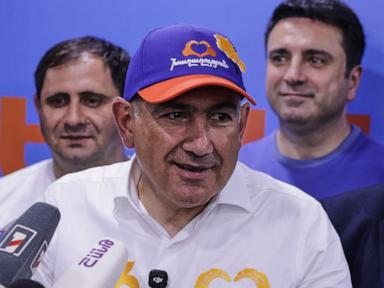
The mainstream media is treating the Armenian election results like a triumphant breakthrough. Nikol Pashinyan’s Civil Contract party secured roughly 49.8% of the vote, locking in enough seats to govern alone. Western analysts are already writing the script: a brave, pro-Western democracy rejects Russian leverage, embraces peace with Azerbaijan, and chooses regional integration over revanchist wars.
It is a beautiful narrative. It is also completely wrong.
What the establishment interprets as a mandate for a Western-oriented opening is actually the systemic paralysis of a traumatized electorate. Pashinyan did not win because the country is enthusiastic about his "peace agenda." He won because the alternative was a cabal of Moscow-backed oligarchs.
I have watched nations operate under the duress of existential military shock. When a population is forced to choose between the leader who presided over the loss of Nagorno-Karabakh and a billionaire opposition tied to a foreign master like Samvel Karapetyan, they do not vote for a vision. They vote for the executive who is least likely to drag them into an immediate civil war.
Pashinyan claims his election victory frees Armenia from the "conflict trap." In reality, his structural approach to governance and regional diplomacy is digging the trench deeper.
The Myth of the Anti-Oligarch Democrat
The lazy consensus praises Pashinyan as the street-level journalist who dismantled the old corrupt elite during the 2018 Velvet Revolution. Look closer at the mechanics of his administration.
Over the last several years, the Prime Minister’s style of governance has transformed. It is deeply personalized, erratic, and explicitly hostile to the construction of durable state institutions. Days before the votes were even counted, Armenian investigators issued arrest warrants for members of the opposition on vote-buying charges. Immediately after claiming victory, Pashinyan openly called for the arrest of his main political rivals, branding them a "three-headed war party."
This is not democratic institutionalism. It is a textbook populist consolidation of power.
When an executive uses judicial levers to aggressively decapitate opposition parties right around an election cycle, it damages the state’s internal stability. True political stability requires a functioning, native opposition. By systematically targeting political rivals instead of reforming the judiciary to operate independently, Pashinyan has ensured that the state cannot survive without him. If his administration collapses, there is no institutional net to catch the country—only a vacuum that Moscow’s proxies are waiting to fill.
The Peace Deal Fallacy
The centerpiece of the current Western applause is Pashinyan’s pursuit of a definitive peace treaty with Azerbaijan and the normalization of ties with Turkey. The common foreign policy wisdom dictates that cutting losses over Nagorno-Karabakh unlocks vast economic opportunities and insulates Armenia from Russian pressure.
This logic completely misunderstands the regional dynamic in the South Caucasus.
A peace deal requires two willing partners. Azerbaijan is not operating on a timeline of mutual reconciliation. Baku’s core demand for a lasting peace involves forcing Armenia to amend its constitution to erase references to historical claims. Pashinyan’s election victory gave him a working majority of around 61 seats, but it denied him the supermajority needed to push through constitutional changes without a national referendum.
Imagine a scenario where Pashinyan signs a peace treaty that requires a referendum to alter the Armenian constitution. The opposition, though defeated in the general election, retains a massive, emotionally charged base capable of weaponizing national grief. Forcing a referendum on constitutional surrender will not bring stability. It will trigger widespread domestic civil unrest, paralyzing the state and providing the exact pretext neighboring autocracies need to intervene under the guise of restoring order.
Furthermore, the idea that signing away territory automatically stops aggression is historically illiterate. Concessions made from a position of absolute military asymmetry rarely satisfy an expansionist neighbor; they merely reset the baseline for the next demand.
The Western Security Mirage
The European Union recently announced an initial €50 million support package to help Yerevan withstand Russian economic retaliation. Washington continues to offer diplomatic endorsements. The consensus view is that these moves signal a genuine diversification of Armenia's security framework.
Let’s look at the hard numbers.
Armenia remains structurally bound to Russia for its survival. Moscow controls the country’s railway networks, owns substantial portions of its energy infrastructure, and remains its dominant trading partner. A €50 million cash injection from Brussels is a rounding error compared to the economic shock Russia can deliver by closing the Upper Lars border crossing or manipulating gas prices during winter.
More importantly, the West has no mechanism to guarantee Armenia’s physical security. During the 2023 escalation that led to the exodus of over 100,000 ethnic Armenians from Nagorno-Karabakh, Western capitals offered statements of deep concern and sent humanitarian aid. They did not send troops, weapons, or hard security guarantees.
Suspending participation in the Russian-led Collective Security Treaty Organization (CSTO) without securing a binding bilateral defense treaty with a major Western power is an extraordinary gamble. It alienates a vindictive regional hegemon while relying on a Western bloc that is structurally incapable of projecting military force into a landlocked Caucasus nation surrounded by hostile or indifferent actors.
The Reality of the "Lesser Evil" Voter
People frequently ask why Pashinyan continues to win elections despite presiding over catastrophic national trauma. The standard answer is that the electorate explicitly rejects the Kremlin.
The honest answer is simpler: the Armenian political market is totally broken.
Voter turnout stood at 58.9%. More than 40% of the electorate looked at the entire political spectrum and stayed home. Those who did show up did not vote out of ideological alignment with the Civil Contract party. They voted out of an intense fear of the alternatives.
Samvel Karapetyan's Strong Armenia Alliance and Robert Kocharyan’s bloc represent an explicit return to the oligarchic vassalage that characterized pre-2018 Armenia. The voters know this. They chose to retain a flawed, populist incumbent because they believed he was the only barrier preventing the total capture of the state by foreign intelligence assets.
Running a country on the fuel of "at least I am not the other guy" works for an election cycle. It does not work for long-term state-building. By framing every political contest as an existential battle between democracy and foreign-backed treason, Pashinyan has poisoned the possibility of a healthy domestic political discourse.
The international community is celebrating a victory for regional integration and democratic resilience. They are missing the structural reality. Armenia has not escaped its strategic trap; it has merely re-elected the architect of its current configuration.