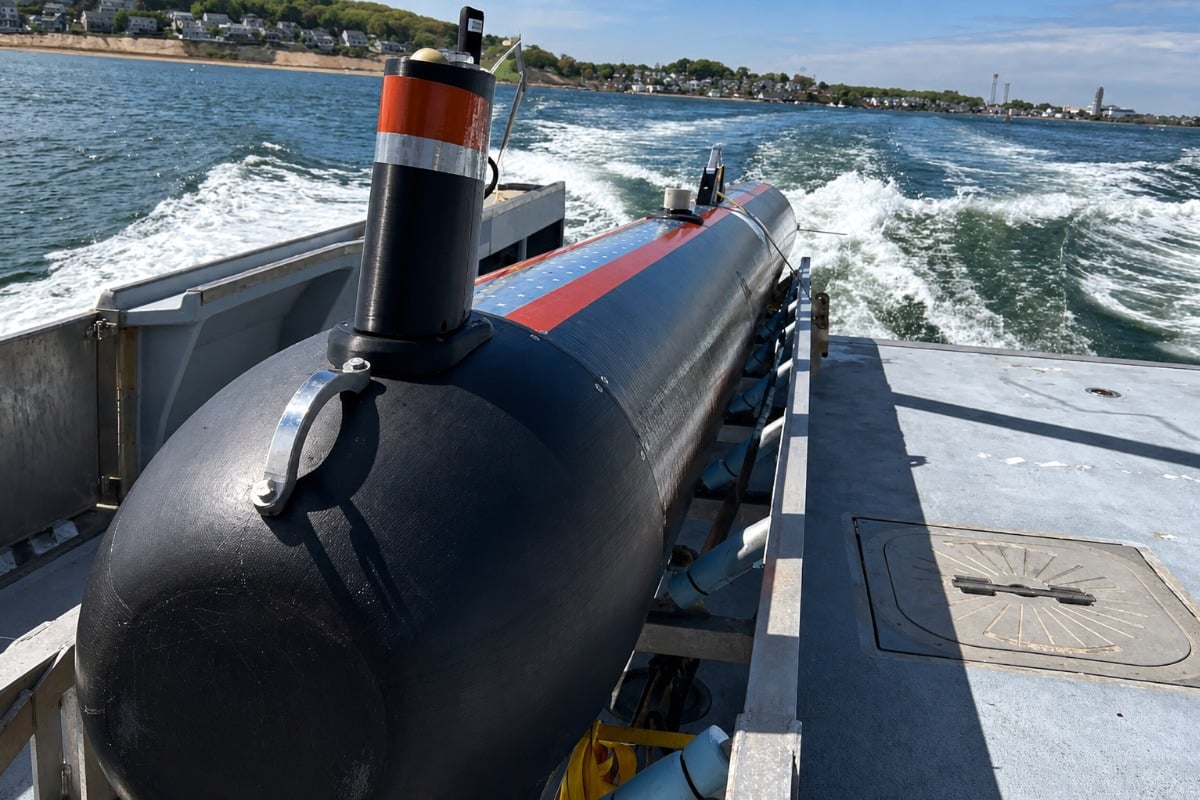
The procurement of autonomous Extra-Large Unmanned Undersea Vehicles (XLUUVs) engineered for covert mine countermeasure and offensive minelaying operations represents a fundamental shift in naval denial strategies. Traditional mining operations require surface ships, manned submarines, or airborne assets, each carrying distinct radar, acoustic, or visual signatures that alert adversaries to the contours of a minefield. By shifting the deployment vector to a high-endurance, uncrewed submersible platform, the operational objective changes from reactive defense to proactive, untraceable choke-point interdiction.
The strategic utility of an autonomous minelayer rests on a single variables calculus: maximizing the probability of undetected placement while minimizing the lifecycle cost per square mile of denied maritime territory. To understand the operational reality of these platforms, one must look past the engineering novelty and examine the structural friction points of unmanned underwater warfare. If you liked this article, you should read: this related article.
The Three Pillars of Autonomous Undersea Interdiction
An autonomous minelaying system relies on three tightly coupled engineering pillars. Failure in any single domain invalidates the platform's strategic utility.
       +-------------------------------------------------------+
       |       Autonomous Undersea Interdiction System         |
       +-------------------------------------------------------+
                                   |
         +-------------------------+-------------------------+
         |                         |                         |
         v                         v                         v
+-----------------+       +-----------------+       +-----------------+
| Hydroacoustic   |       | Sub-Surface     |       | Payload         |
| Anonymity       |       | Dead Reckoning  |       | Dispensation    |
+-----------------+       +-----------------+       +-----------------+
1. Hydroacoustic Anonymity
The primary survival mechanism of an XLUUV is the minimization of its acoustic signature. Unlike manned submarines that can adjust internal machinery speeds based on human acoustic intelligence monitoring, an autonomous vessel must rely on passive, deterministic noise-isolation systems. This requires skewing propulsion design toward low-RPM, high-torque permanent magnet motor topologies and using non-cavitating propulsor designs. For another angle on this story, see the recent coverage from TechCrunch.
The acoustic cost function dictates that as speed increases, the cavitation inception speed thresholds lower, exponentially increasing the probability of detection by fixed passive sonar networks like the Sound Surveillance System (SOSUS) or modern distributed acoustic sensing (DAS) fiber-optic cables.
2. Sub-Surface Dead Reckoning and Inertial Navigation
GPS signals attenuate within millimeters of the ocean surface. An autonomous submarine operating at depth for weeks or months must navigate using an Inertial Navigation System (INS) paired with a Doppler Velocity Log (DVL).
The mathematical reality of INS tracking is time-dependent drift. Without external fixes, the positional error accumulates linearly or quadratically over time. In a minelaying context, positional drift creates two vulnerabilities:
- The Deployment Mapping Failure: The vehicle miscalculates its own coordinates, laying mines outside the designated tactical boundary, thereby threatening friendly assets or failing to block the target corridor.
- The Bathymetric Collision Risk: In shallow or complex littoral environments, positional drift leads to groundings or collisions with underwater topography.
To mitigate this drift without surfacing to expose an antenna to satellite GPS, these platforms use terrain-relative navigation (TRN). TRN algorithms match active or passive bathymetric sonar scans against pre-loaded onboard digital elevation models. The limitation here is data density: the platform can only navigate reliably in areas that have already been mapped with high precision by survey vessels.
3. Payload Dispensation and Buoyancy Compensation
Laying a mine alters the physical mass and center of gravity of the host vessel. If a 50-ton XLUUV drops a series of two-ton bottom mines, the sudden loss of mass induces a positive buoyancy surge, forcing the vehicle upward into the photic zone or the thermal layer where it becomes highly vulnerable to radar or visual detection.
The vehicle requires an active, high-capacity ballast compensation system capable of drawing in seawater at a volumetric rate exactly matching the mass displacement of the ejected payload. This system must operate silently, avoiding the use of loud hydraulic pumps that would compromise the vehicle’s acoustic signature during the vulnerable payload drop phase.
The Operational Cost Function of Choke-Point Denial
The tactical deployment of autonomous minelaying assets is governed by the economics of friction. Manned fast-attack submarines (SSNs) are high-demand, low-density assets. Using an SSN costing upwards of two billion dollars to lay mines in shallow littoral waters is an inefficient allocation of capital and risk.
| Vector Platform | Risk Profile | Payload Capacity | Deployment Endurance | Capital Cost |
|---|---|---|---|---|
| Manned SSN | Critical (Human Life/Strategic Asset) | Moderate | Medium (Crew limited) | Extremely High |
| Airborne Asset (P-8/B-52) | High (Air Defense Vulnerability) | High | Low (Hours) | High |
| Autonomous XLUUV | Negligible (Hardware Only) | High | High (Months) | Low to Medium |
The autonomous minelayer alters this matrix by transferring the risk profile from human capital to attritable hardware. The economic cost function of an XLUUV mission can be structured as follows:
$$C_{mission} = C_{hull} \cdot P_{loss} + C_{payload} + C_{logistics}$$
Where:
- $C_{hull}$ is the replacement cost of the XLUUV.
- $P_{loss}$ is the probability of vehicle detection and destruction.
- $C_{payload}$ is the cost of the smart mines deployed.
- $C_{logistics}$ represents the overhead of deployment via surface tenders or shore infrastructure.
Because $P_{loss}$ does not carry the political or strategic weight of human casualties, the acceptable threshold for $P_{loss}$ is significantly higher than that of a manned platform. This allows commands to deploy XLUUVs into highly contested anti-access/area-denial (A2/AD) zones, such as the Taiwan Strait, the GIUK Gap, or the Persian Gulf, where a manned asset would be denied entry due to risk-aversion protocols.
Technical Bottlenecks and Failure Modes
The transition from human-in-the-loop operations to pure algorithmic execution introduces severe engineering constraints.
The Communications Asymmetry
An autonomous undersea asset operates in a state of near-total information isolation. Radio frequencies do not penetrate seawater effectively, limiting communication to Very Low Frequency (VLF) arrays or acoustic modems. VLF allows only one-way, low-baud rate data bursts at shallow depths, while acoustic modems are limited by water salinity, temperature gradients, and short ranges (typically under a few kilometers).
If the tactical situation changes—for instance, if a neutral civilian convoy alters its route into the targeted minefield zone—the command structure has no reliable method to abort the mission or retarget the XLUUV in real-time. The vehicle must either possess advanced onboard computer vision and acoustic signature processing to classify targets autonomously before dropping payloads, or it must operate on rigid, pre-programmed logic that cannot adapt to dynamic maritime environments.
Battery Energy Density Boundaries
The operational endurance of an XLUUV is bound by the energy density of its propulsion system. Silver-zinc, lithium-ion, or fuel-cell systems power these large platforms.
Lithium-ion chemistries provide the necessary energy density for multi-month endurance but introduce the risk of thermal runaway. In a sealed titanium or composite pressure hull at depth, an internal battery fire is catastrophic and unquenchable. Fuel cells utilizing stored hydrogen and oxygen offer silent operation and high efficiency but require complex, high-pressure storage systems that decrease the volumetric efficiency of the payload bay.
Strategic Realities of the New Undersea Commons
The introduction of uncrewed minelayers forces a recalculation of maritime gray-zone warfare. The primary utility of these systems is not total destruction of an enemy fleet, but the imposition of severe cognitive and logistical friction.
When an adversary discovers or suspects that an autonomous minelayer has entered a choke point, they are forced to halt commercial and naval traffic until a comprehensive mine countermeasure (MCM) sweep can be executed. The economic penalty of delaying commercial shipping lanes or bottlenecking a carrier strike group inside a port exceeds the manufacturing cost of the XLUUV itself.
The vulnerability of this strategy lies in forensic attribution. If an autonomous vehicle is captured intact due to a software freeze, navigation failure, or battery depletion, the internal drive arrays, software architecture, and hardware components become immediate intelligence windfalls for the adversary.
The ultimate deployment matrix for these vehicles requires implementing hard self-destruct mechanisms or sanitization subroutines that wipe navigation logs and cryptographic keys the moment a critical system failure or capture condition is detected by internal telemetry. Without these failsafes, the deployment of autonomous minelayers introduces an unacceptable risk of technology proliferation to peer adversaries.



_(cropped).jpg/440px-Rob_O'Neill_(40543587961)_(cropped).jpg)