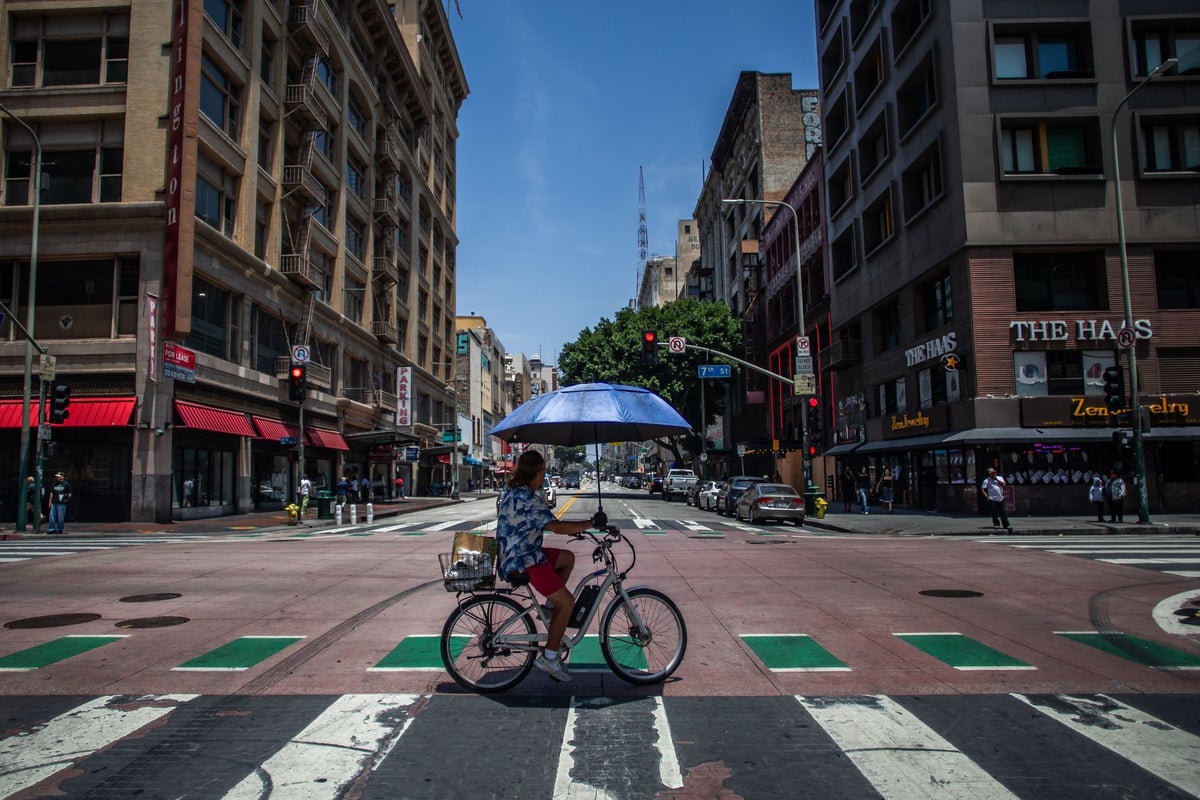
The post-pandemic collapse of downtown San Francisco is not a temporary slump, but the predictable result of a decades-long reliance on a single industry. Recent global urban health surveys consistently rank the city’s core at the bottom of international recoveries. To understand why a premier global hub now resembles a ghost town after 5 PM, one must look past the superficial headlines about retail theft and remote work. The crisis is structural, baked into the very concrete and zoning laws of the city.
For thirty years, local government officials turned the financial district into a monoculture. They optimized every square foot for tech companies and commuter wealth, ignoring the basic tenets of resilient urban planning. When the pandemic hit and tech workers realized they could code from anywhere, the illusion shattered. The city didn't just lose workers; it lost the foundational economic engine that kept its core alive.
The Myth of the Lack of Foot Traffic
Blaming the current stagnation entirely on remote work misses the deeper failure of municipal design. San Francisco’s downtown died faster and harder than London, New York, or Paris because those cities possess something the California metropolis systematically priced out: residential density within the commercial core.
Data from mobile phone activity trackers reveals that European cities rebounded because people actually live next door to where they work. In downtown San Francisco, the residential population of the financial district was practically negligible before 2020. It was a playground for daytime commuters who took their tax dollars back to Oakland, Marin County, or the South Bay every evening.
Downtown Recovery Index (Selected Cities, Percentage of Pre-Pandemic Activity)
+------------------+---------+
| London           | 88%     |
| New York         | 82%     |
| Paris            | 91%     |
| San Francisco    | 47%     |
+------------------+---------+
When the offices emptied, the restaurants, dry cleaners, and corner stores lost 90 percent of their customer base overnight. The economic ecosystem did not just contract. It vanished.
The Office Conversion Trap
Politicians repeatedly pitch the idea of turning empty skyscrapers into luxury apartments. It sounds like an elegant solution. It is, in reality, a financial and architectural nightmare.
Most modern office towers feature massive floor plates with deep interior spaces far from any windows. Residential building codes require bedrooms to have direct access to natural light and ventilation. To convert a standard 1980s financial high-rise, developers have to cut massive light wells through the center of the structure. This process destroys rentable square footage and costs more than building a new tower from scratch.
Furthermore, the financial math does not add up for regional banks holding the debt on these properties. If a building owner accepts that their $300 million office tower is now worth only $60 million as a residential conversion prospect, they must default on their loan. The resulting hit to the financial sector prevents the very investments needed to reshape the neighborhood.
The Doom Loop is a Real Estate Lie
The term "doom loop" has become a favorite phrase for national media outlets looking for a quick headline. The narrative suggests that falling tax revenues lead to cut services, which leads to urban decay, causing more flight. The reality is far more corporate.
What the city is experiencing is a massive valuation correction. For a decade, venture capital flooded the city, allowing startups to pay exorbitant rents for trendy brick-and-beam spaces in the South of Market neighborhood. Landlords borrowed money based on those hyper-inflated rents. Now, the market is correcting to historical norms.
The problem is that the city budget expanded along with that tech bubble. City Hall grew accustomed to payroll tax revenues that were never sustainable. Instead of diversifying the tax base, local leadership spent years funding temporary fixes while ignoring the underlying rot in commercial real estate values.
The Tax Structure That Penalizes Presence
San Francisco's unique gross receipts tax structure actually incentivizes companies to leave. The tax is calculated based on whether employees are physically located within city limits.
If a company retains a large downtown footprint, its tax liability skyrockets. If that same company closes its office and tells everyone to work from home in Oakland or San Jose, its tax burden drops significantly. The city essentially weaponized its tax code against its own downtown recovery efforts.
The Retail Exodus Beyond the Headlines
Every major retail departure from Union Square makes national news. Nordstrom, Westfield, and Whole Foods became symbols of a dying city. The common narrative blames public safety alone, but the truth involves a massive shift in consumer behavior and corporate strategy.
Long before the pandemic, e-commerce was eroding the necessity of flagship department stores. The retailers that closed their downtown locations were already struggling nationwide. The absence of daytime foot traffic from nearby offices simply accelerated an inevitable corporate restructuring.
Walking down Market Street reveals a stark contrast. While massive corporate chains flee because their business models no longer support high urban rents, smaller, localized businesses are trapped in leases they cannot afford to break. The city has failed to provide the nimble zoning relief required to let these spaces transition into entertainment, performance arts, or community gathering spaces.
The Broken Public Transit Link
A downtown is only as vibrant as the systems that bring people to it. The Bay Area Rapid Transit (BART) system was designed explicitly to funnel suburbanites into the center of San Francisco. It is a hub-and-spoke model built for a world that no longer exists.
The Death Spiral of Commuter Rail
With ridership hovering at a fraction of pre-pandemic levels, BART faces a massive fiscal cliff. The agency relies heavily on fares to fund operations, a stark contrast to European transit systems that receive heavy government subsidies.
BART Farebox Recovery Ratio Over Time
+------+-----+
| 2019 | 60% |
| 2026 | 22% |
+------+-----+
To bridge the budget gap, transit authorities face a grim choice. They can cut service frequency, making the train less attractive to the remaining riders, or they can raise fares, pricing out the working-class residents who actually need the service. Either option ensures that the downtown core remains isolated from the rest of the region.
The Missing Residential Solution
Fixing downtown requires a total rejection of the policies that created it. The city must stop trying to lure tech giants back to mid-market offices. Those workers are gone, and they are not returning to a five-day in-office week.
The only viable path forward is the aggressive, state-mandated rezoning of the entire commercial district to allow for high-density, mixed-income housing without the usual years of bureaucratic review. The city needs to streamline the approval process so that smaller developers can build low-cost housing options for students, artists, and service workers.
This change requires confronting the city’s notoriously slow planning department. For decades, neighborhood groups used the California Environmental Quality Act to block housing projects, preserving their own property values at the expense of urban vitality. The downtown core is the one area of the city with the infrastructure to support massive density, yet it remains bound by regulations designed to protect a suburban mindset.
The empty towers of the financial district should serve as a monument to the dangers of economic specialization. A city that builds its identity around a single lucrative trend will always find itself defenseless when that trend inevitably shifts. San Francisco does not need more tech conventions or temporary pop-up markets; it needs a fundamental rewriting of its urban DNA.