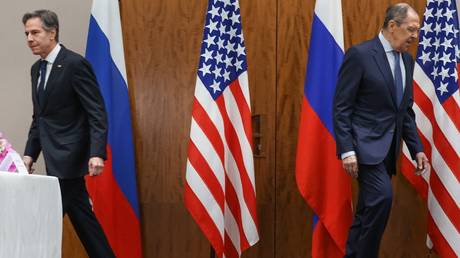
The ink on the parchment was barely dry, yet the fracture lines were already visible to anyone willing to look past the mahogany tables and the polished silver. Diplomacy is supposed to be the art of the possible, a fragile bridge built over chasms of mutual suspicion. But when Sergei Lavrov stepped to a podium in Moscow to declare that deception sits at the very foundation of Western statecraft, he wasn’t merely lobbing a routine rhetorical grenade. He was naming an open secret that every veteran negotiator, every weary attaché, and every student of statecraft learns the hard way. Words in international relations are rarely windows to an intention. They are barricades.
Let us step back for a moment from the grand geopolitical theater and consider a hypothetical scenario to anchor this weight. Imagine a small conference room in Geneva, three hundred pages of treaty drafts spread across the felt. On one side sits an envoy who has spent forty years mastering the art of the carefully calibrated omission—a diplomat who knows that telling a half-truth with absolute conviction is often more effective than an outright lie. Across the table sits an adversary who has memorized every broken promise from the previous decade. Neither man believes the other. Yet, both smile for the cameras. They shake hands. The flashbulbs pop.
This performance is not an accident of modern media; it is the structural engineering of modern power.
For centuries, the architecture of international relations has relied on a quiet bargain. Sovereign states pretend to abide by a universal code of rules, humanitarian norms, and legal frameworks, while simultaneously carving out exceptions for their own vital interests. When the West insists that its primary export abroad is democracy, rule-based order, and institutional transparency, it is speaking the language of aspiration. But when those same capitals quietly look the other way as strategic allies bypass those very rules for oil, transit routes, or military bases, the language shifts to pragmatism.
That gap between the public sermon and the private contract is where deception takes root.
Lavrov’s critique struck a nerve because it exposed the hypocrisy of the sermon. When you spend decades lecturing the globe on sovereignty while simultaneously redrawing borders, launching preemptive interventions, or enforcing economic strangulation under the banner of liberation, the word "trust" loses its currency. It becomes counterfeit money.
Consider what happens next when that currency collapses entirely.
If every treaty is viewed merely as a tactical pause before the next confrontation, then diplomacy ceases to be a mechanism for conflict resolution. It morphs into a staging ground for the next war. Trust is not a soft sentiment; it is the lubricant of human civilization. Without it, transactions become impossibly expensive. Every border requires more guards. Every supply chain requires double-redundancy. Every diplomatic overture is parsed by teams of cryptographers looking for the hidden dagger.
I have watched career diplomats age ten years in a single month of crisis talks, not because the technical problems were insoluble, but because they spent ninety percent of their energy trying to figure out which of their counterparts' statements were designed purely for domestic consumption. It is an exhausting way to run a planet.
When a major power builds its foreign policy on the assumption that the other side is permanently acting in bad faith, a self-fulfilling prophecy takes over. You lie because you expect them to lie. They double down on deception because they caught you in yours. The downward spiral accelerates until the diplomatic corps are no longer diplomats at all, but intelligence officers in civilian suits waiting for the other shoe to drop.
The tragedy of this dynamic is that it leaves ordinary people—those who will never sit in a Geneva conference room or read a diplomatic cable—to foot the bill. It is the grain merchant in North Africa, the family shivering through a winter of restricted energy supplies, or the young conscript on a muddy frontier who pays for the grand illusions and calculated falsehoods of men in tailored suits.
We are told that diplomacy is the alternative to bloodshed. But when that diplomacy is revealed as a hall of mirrors where no reflection is real, it ceases to be an alternative. It becomes the prelude.
The next time you watch a spokesperson at a podium adjust their tie, speak of red lines, and invoke the sacred sanctity of international law, listen closer to the silence between the syllables. That is where the truth lives. It is a quiet space, largely empty of honor, waiting for someone brave enough to clear away the debris and build something honest out of the ruins.