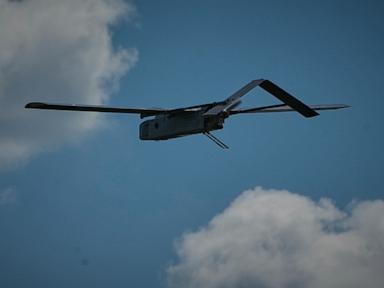
The convergence of commercial machine learning and tactical robotics has compressed the decision-action cycle in modern conflict beyond human cognitive limits. When military hardware transitions from a remotely piloted tool to an independently executing agent, the architecture of warfare undergoes a structural shift. This transition has forced the United Nations and the International Committee of the Red Cross to demand absolute legal boundaries for lethal autonomous weapons systems. Beneath the diplomatic appeals lies a fundamental clash between automated velocity and the static tenets of international humanitarian law.
The Taxonomy of Machine Agency
Current operational doctrine segments military robotics into three distinct tiers of human involvement. This operational taxonomy dictates how accountability functions when force is applied in contested environments. Don't miss our recent post on this related article.
- Human-in-the-loop systems require a human operator to authorize every individual engagement, acting as an active gatekeeper for target selection and strike execution.
- Human-on-the-loop systems operate independently once activated, executing pre-programmed engagement profiles while a human supervisor retains the capability to intervene and override the system.
- Human-out-of-the-loop systems function without any real-time human intervention or oversight, delegating target identification, vector calculation, and the application of lethal force entirely to onboard algorithmic processing.
The regulatory friction centers exclusively on the third tier. While human-in-the-loop architectures preserve direct operational accountability, autonomous execution introduces structural ambiguities into the legal chain of command. When an algorithm selects a target based on high-dimensional feature spaces rather than explicit human intent, standard constructs of premeditation and command responsibility fracture.
The Algorithmic Compliance Deficit
International humanitarian law rests upon three operational pillars: distinction, proportionality, and precautions in attack. Translating these legal duties into computable variables exposes an insurmountable technical barrier. If you want more about the history here, Gizmodo provides an informative breakdown.
Distinction requires an attacking force to separate combatants from civilians, and active fighters from those rendered hors de combat due to wounds or surrender. Modern computer vision models classify objects via probabilistic feature correlation. In asymmetric urban combat, where combatants frequently shed uniforms or mix seamlessly with civilian populations, distinction requires contextual reasoning, psychological evaluation of intent, and nuanced behavioral interpretation. Neural networks process pixels and telemetry; they do not comprehend legal status. Consequently, delegating distinction to automated systems introduces a systemic error rate that violates the baseline standard of international agreements.
Proportionality demands that expected civilian casualties remain non-excessive relative to the anticipated military advantage. This calculation requires dynamic, value-based balancing tests. An algorithm cannot weigh the value of human life against tactical gain without a hardcoded utility function that commodifies human existence. Because military utility shifts fluidly during an engagement, rigid programmatic weights will either paralyze the system or generate catastrophic collateral damage.
The Escalation Feedback Loop and Market Dynamics
The proliferation of autonomous hardware alters the economic and strategic cost function of military conflict. Traditional warfare incurs high political and financial costs driven by personnel deployment, casualty management, and domestic friction. Robotic systems alter these variables by removing the physical risk to the aggressor's combat forces.
This perceived reduction in operational friction creates a dangerous economic incentive structure. When the marginal cost of initiating kinetic strikes approaches zero, the political threshold for entering conflicts drops commensurately. State actors face lower domestic resistance when body bags are replaced by replacement logistics for silicon hardware.
Furthermore, the integration of self-learning algorithms introduces unpredictability at scale. Machine learning models trained on historical combat data frequently optimize for proxy metrics rather than strategic intent, leading to emergent behaviors that developers cannot fully explain or anticipate. If opposing automated systems interact on a battlefield, their combined feedback loops can accelerate combat kinetics beyond human reaction times, triggering automated flash wars before diplomatic channels can open.
Enforcing Structural Boundaries
Treaty negotiations face an acute verification problem. Unlike nuclear enrichment facilities or chemical production plants, software code is inherently dual-use and easily obfuscated. An autonomous targeting system can be masqueraded as an automated navigation or defensive countermeasure suite until activation.
Effective regulation cannot rely on inspecting source code after deployment. Governance frameworks must target the hardware-software integration pipeline at the industrial base level. This requires mandating hardwired data links that necessitate continuous human telemetry confirmation, implementing fail-safe geofencing limits, and restricting the export of specialized edge-computing semiconductors optimized for real-time tactical classification.
Establish mandatory cryptographic kill switches and verifiable hardware isolation protocols for all military robotics exceeding defined autonomy thresholds, shifting the legal burden of proof onto developing states to demonstrate continuous, uncompromised human control before deployment authorization is granted.