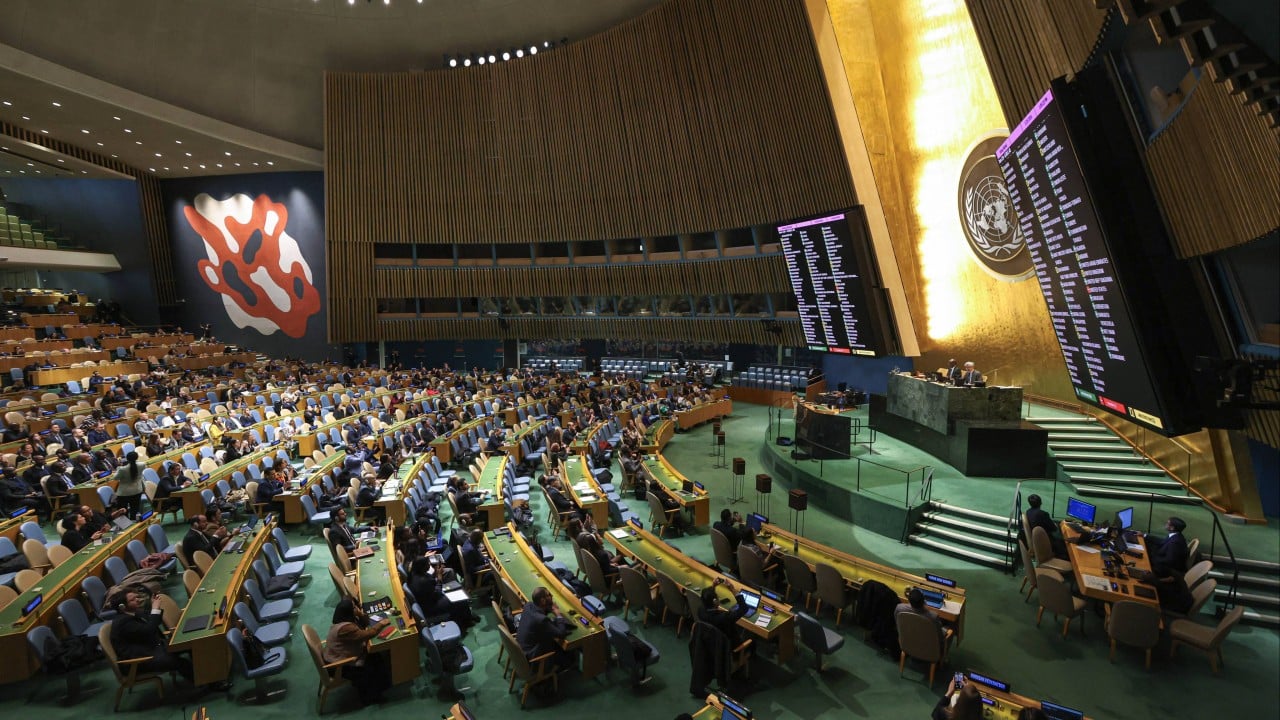
The convergence of high-speed machine learning architectures and automated ordnance mechanics has compressed the decision-making cycle in modern combat to sub-millisecond intervals, creating an acute regulatory vacuum. International diplomatic bodies, including joint delegations from the United Nations and the International Committee of the Red Cross, have escalated their demands for preemptive legislative boundaries governing lethal autonomous weapons systems.
This friction exposes a deeper structural failure. Traditional international humanitarian law relies on human agency, individual criminal liability, and real-time cognitive reasoning. When machine autonomy replaces human operational judgment, the foundational architecture of accountability collapses.
The Mechanics of the Regulatory Deficit
The primary driver behind the push for binding international restrictions is the velocity gap between technical proliferation and legislative enforcement. While state actors debate definitions in diplomatic forums, the commercial availability of edge-computing chips and modular guidance software accelerates weapon autonomy.
Three structural variables define this escalation:
- Algorithmic Opacity: Deep neural networks operate through non-linear feature extraction, meaning the internal weighting of a target-acquisition algorithm cannot be fully reconstructed or explained post-hoc by its operators.
- Asymmetric Proliferation: Unlike nuclear material, dual-use artificial intelligence frameworks are decentralized, software-based, and easily modified from commercial drone architectures into kinetic strike systems.
- The Latency Paradox: Human reaction times average 200 to 300 milliseconds. Modern guidance systems process environmental variables in microseconds. Retaining a human-in-the-loop introduces a performance bottleneck that military planners are incentivized to eliminate.
These variables create a race dynamic where tactical necessity overrides strategic restraint.
The Failure Modes of Machine Distinction
International humanitarian law rests on core doctrines: distinction between combatants and non-combatants, proportionality of force, and military necessity. Translating these abstract legal standards into binary code introduces critical error vectors.
Distinction requires assessing intent, surrender status, and civilian vulnerability. A wounded combatant attempting to crawl away from a firefight is legally hors de combat. An automated targeting system relying on computer vision and thermal signatures struggles to interpret psychological cues, contextual surrender, or civilian proximity in dense urban terrain.
Proportionality calculations demand an estimation of anticipated civilian casualties relative to concrete military advantage. This is not a static mathematical equation; it is a value-based judgment requiring situational empathy and moral weight. Delegating this computation to deterministic or probabilistic software turns loss of life into a statistical output rather than a legally weighed consequence.
[Raw Sensor Data]
       ↓
[Feature Extraction (CNN/Edge TPU)]
       ↓
[Probabilistic Target Classification]
       ↓
[Execution Threshold Met?] → YES → [Kinetic Strike] (No human cognitive review)
Without an explicit statutory prohibition, military procurement shifts toward systems that remove human cognitive friction entirely, shifting the burden of error onto civilian populations who bear the downstream consequences of algorithmic misclassification.
Enforcement Bottlenecks and State Incentives
The Convention on Conventional Weapons serves as the primary diplomatic venue for these discussions, yet its consensus-based model empowers minor factions or major military powers to stall binding instruments indefinitely.
Enforcing a ban on software-defined weaponry faces monumental verification challenges. Unlike physical manufacturing plants for chemical or nuclear warheads, autonomous combat capabilities exist as lines of code that can be written, encrypted, and transferred across borders instantaneously. Inspections cannot reliably audit military software inventories without compromising classified operational capabilities.
Consequently, states unwilling to sign restrictive treaties gain an asymmetric tactical advantage. In environments like Ukraine, Sudan, and the Middle East, unmanned aerial and ground platforms already perform reconnaissance, route-clearing, and limited strike queuing. The step from supervised autonomy to fully independent lethal engagement is an incremental software update rather than a revolutionary hardware redesign.
Strategic Realignment
To prevent the normalization of unsupervised machine killing, international policy must abandon vague moral appeals and focus on verifiable operational constraints.
Diplomatic efforts must abandon the pursuit of unachievable blanket bans on dual-use artificial intelligence and instead enforce strict operational parameters: mandatory physical kill-switches, restricted operational geofencing, immutable black-box audit logging of target selection data, and absolute human liability for any kinetic engagement. If command accountability is decoupled from machine output, the legal framework governing armed conflict dissolves entirely.